

Ahead of the announcement of measures as part of the “economic D-Day” declared by U.S. President Donald Trump, Treasury Secretary Scott Bessent published an op-ed Monday morning in the Financial Times, again warning countries against maintaining economic ties with Iran. “Now we are entering the endgame. At dawn begins an economic D-Day — the single greatest financial offensive ever marshalled against an adversary,” he wrote.
Bessent, who is expected to announce the measures the United States will take at a news conference at 8 p.m. Israel time Monday, addressed countries that maintain economic cooperation with the Islamic Republic. “To become a sanctuary for terror is to become, in the eyes of the United States, a global pariah,” he warned. He argued that any connection to Iran, whether intentional or through what he described as “willful ignorance,” will accelerate the economic isolation of those countries and entities.
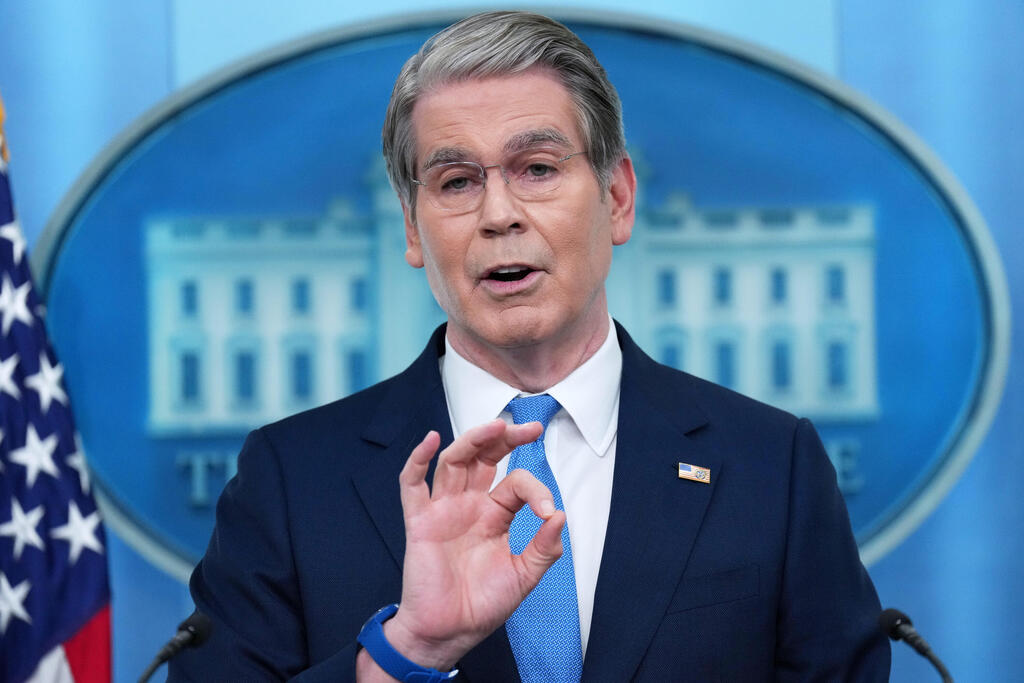
Bessent did not name the parties against which the sanctions will be directed, in line with the administration’s previous announcements. “The Iranian regime maintains a network of proxies that perpetuate its terror. The U.S. has paid an especially grievous price but we are scarcely alone in facing this scourge. Too often, though, we find ourselves alone in our resolve to thwart it,” he wrote.
He warned that if Tehran attacks in response to the measures, it will face a determined response. He added that countries that believe ties with Iran are a safe path are mistaken. By contrast, he argued, countries and entities that cut their financial and commercial ties with Iran “will breathe new life” into their economies. “The world should understand that our objective is to sever every economic lifeline that sustains the tyrannical regime until Tehran stands alone,” he concluded.
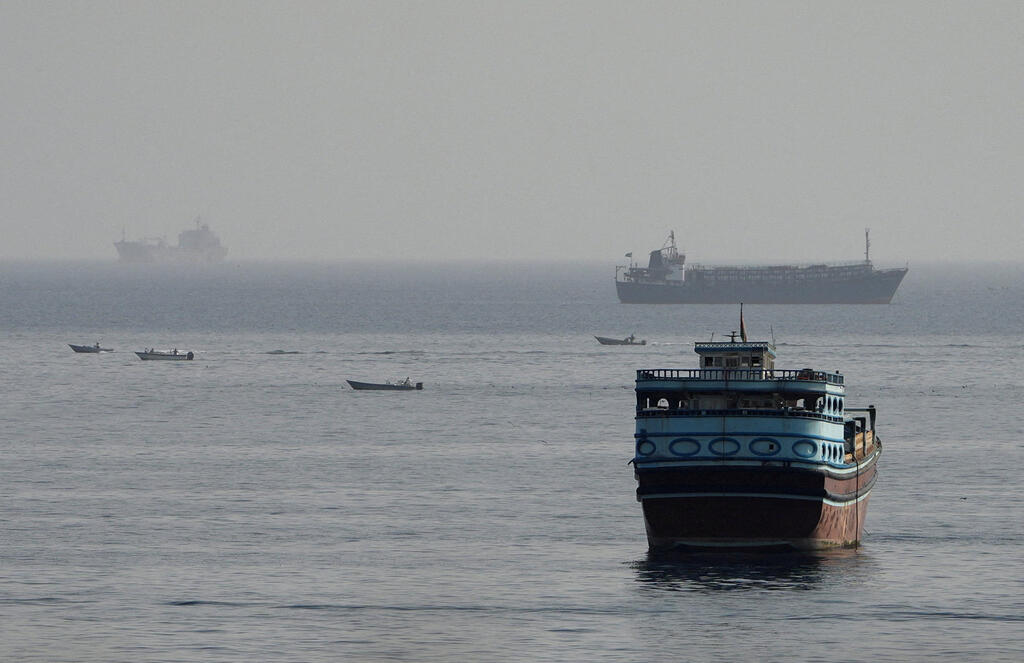
Vessels in the Strait of Hormuz
(Photo: REUTERS/Stringer)
Mohsen Rezaee, secretary of Iran’s Supreme National Security Council, warned Sunday that “if the economic war continues, not a drop of oil will leave the Persian Gulf and the Strait of Hormuz. If Trump takes new aggressive measures, we will respond with force. If neighboring countries cooperate with the economic war, we will attack their interests. Any cooperation or support on their part will be interpreted as war.”
Meanwhile, data published by maritime tracking company Kpler showed that fewer than 20 commercial vessels passed through the Strait of Hormuz over the previous two days. “Commercial traffic through the Strait of Hormuz remained at reduced levels,” the United Kingdom Maritime Trade Operations (UKMTO) said in a report. “Independent tracking data indicated suppression with single-digit numbers transiting in both directions. There remained a continued risk of drifting or uncharted mines in and near the TSS, with mine danger areas still active. ”