


IDF Chief of Staff Lt. Gen. Eyal Zamir issued an unusually sharp warning Thursday over the military’s funding crisis, saying the IDF is effectively operating with “empty coffers” and that the shortage is already damaging preparedness.
His remarks come as the government prepares to inject roughly 40 billion shekels, about $12 billion, in additional funding into the defense establishment, a move that would lift the 2026 defense budget to 184 billion shekels, the second-highest in Israel’s history after the 188 billion shekels spent in 2024.
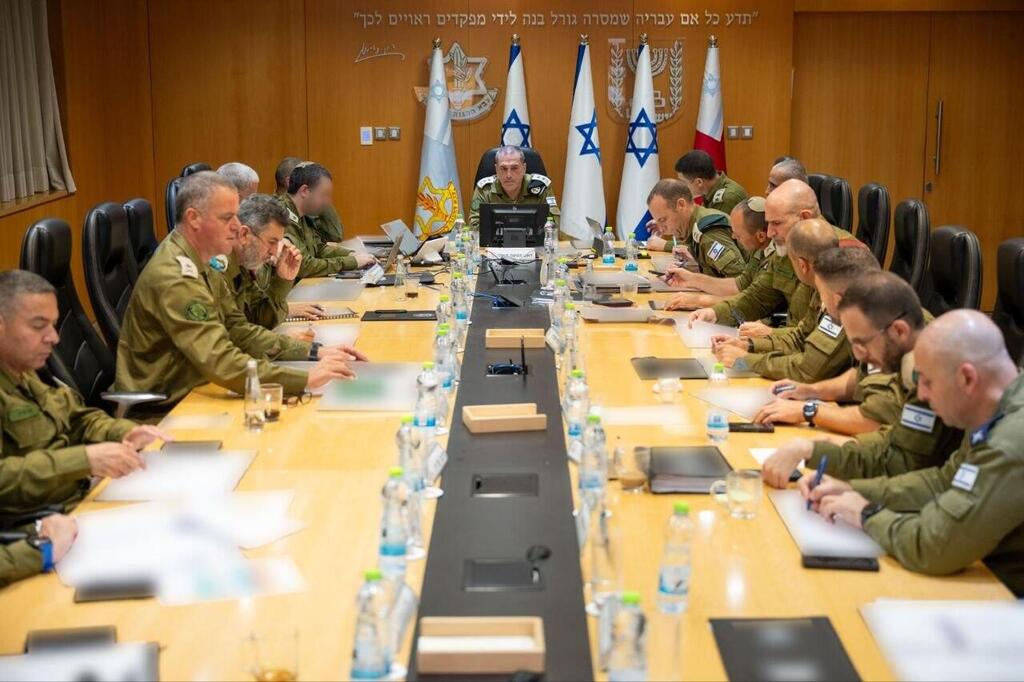
IDF Chief of Staff Eyal Zamir during a multi-front situation assessment
(Photo: IDF)
“Unfortunately, these days we are also engaged in a battle over the budget,” Zamir said during a multi-front situation assessment. “At a time when the IDF and its personnel are stretched across all fronts, we are having to deal with ‘empty coffers.’ Such a situation harms the IDF’s readiness.”
The warning underscores the depth of the dispute between the defense establishment and the Finance Ministry. The additional funding was agreed last week by Prime Minister Benjamin Netanyahu and Finance Minister Bezalel Smotrich after months of delayed decisions and mounting distrust between the Treasury and defense officials.
Under an earlier arrangement, the Finance Ministry was to transfer 15 billion shekels immediately, while a decision on an additional 25 billion shekels was postponed until later in the year. Treasury officials wanted to test whether the military’s forecasts and spending demands were excessively pessimistic or inflated.
That mistrust has not disappeared. Finance Ministry officials increasingly view the defense budget as difficult to control and have raised concerns that spending pressures shaped by the trauma of October 7 could create long-term risks for the economy.
The military, meanwhile, says the funding gap is already having operational consequences. Defense officials have warned that missile and artillery-shell production lines at Israeli defense companies could slow or stop without new orders, while the Defense Ministry is carrying roughly 15.5 billion shekels in debt to Israel’s three largest defense manufacturers: Israel Aerospace Industries, Rafael and Elbit Systems.
The additional money is intended to replenish depleted weapons stocks, cover ongoing military activity and maintain readiness across Israel’s borders. It is also expected to ease some of the financial pressure on defense companies that have delayed payments to suppliers and subcontractors.
Beyond the immediate funding dispute, the defense establishment is seeking approval for a much larger multiyear procurement and force-building program estimated at between 350 billion and 400 billion shekels. That planning includes additional aircraft, helicopters, missiles, munitions, unmanned systems and naval platforms, as well as preparations for the possibility that current U.S. military assistance arrangements will change after 2028.
Zamir tied the funding issue directly to the broader security picture. He said the IDF is advancing preparations across multiple fronts, from Iran and Lebanon to Gaza, and remains on high alert because of regional volatility.
He also ordered heightened readiness in the West Bank ahead of the upcoming holiday period, including placing an additional regular division headquarters on alert and preparing units and battalions for immediate reinforcement if needed.
The IDF will maintain full operational staffing throughout the holidays, with no planned reduction in combat forces or suspension of activity.