


The High Court of Justice convened Monday afternoon to hear petitions against the government’s move to dismiss Attorney General Gali Baharav-Miara, but the session ended in less than two minutes after the government refused to appear.
Chief Justice Yitzhak Amit opened the hearing by asking whether anyone was present on behalf of Justice Minister Yariv Levin. When no representative stepped forward, Amit said the court saw “no reason to hold a one-sided hearing before an open goal” and promptly adjourned. The short session was broadcast live at the request of journalists.
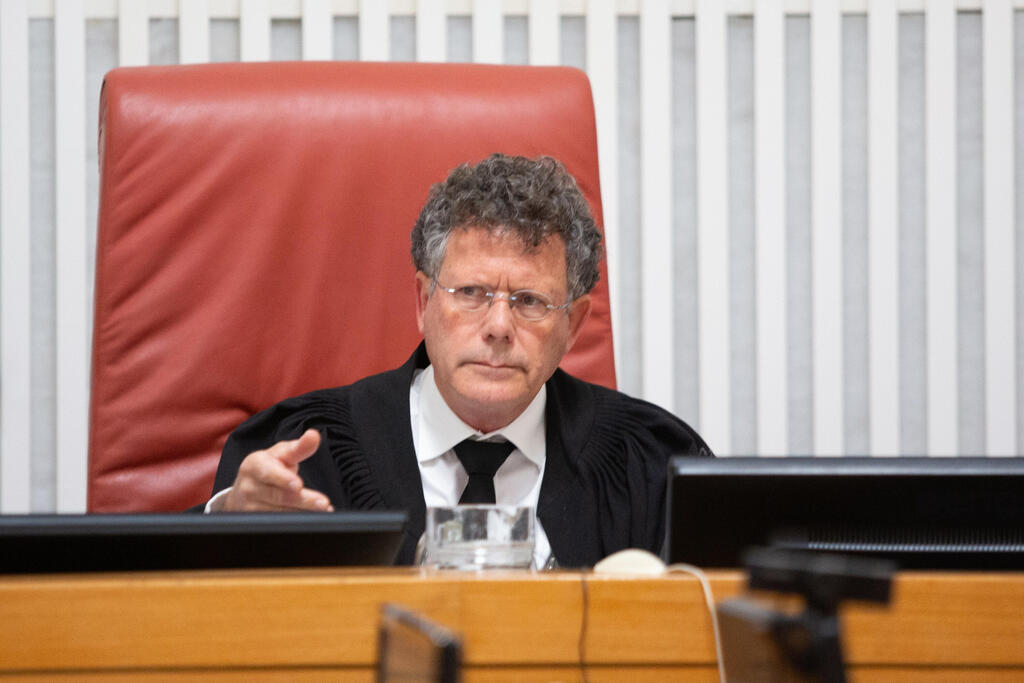
Seven justices assembled for what was meant to be an expanded hearing: Chief Justice Amit, Deputy Chief Justice Noam Sohlberg and Justices Khaled Kabub, David Mintz, Alex Stein, Ofer Grosskopf and Gila Canfy-Steinitz.
Justice Minister Levin and Diaspora Affairs Minister Amichai Chikli issued a joint statement afterward, refusing to recognize Amit’s authority as court president and accusing the court of staging “an absurd performance.” “The government did not participate,” they said. “There is no judicial process anywhere in the world in which a dismissed government official subordinates the entire legal apparatus to represent her, rather than the government, and prevent her removal.”
They argued that the government cannot participate in “a process whose outcome is predetermined — turning the government into the only body in Israel forced to accept a legal adviser it does not trust and who refuses to represent it.”
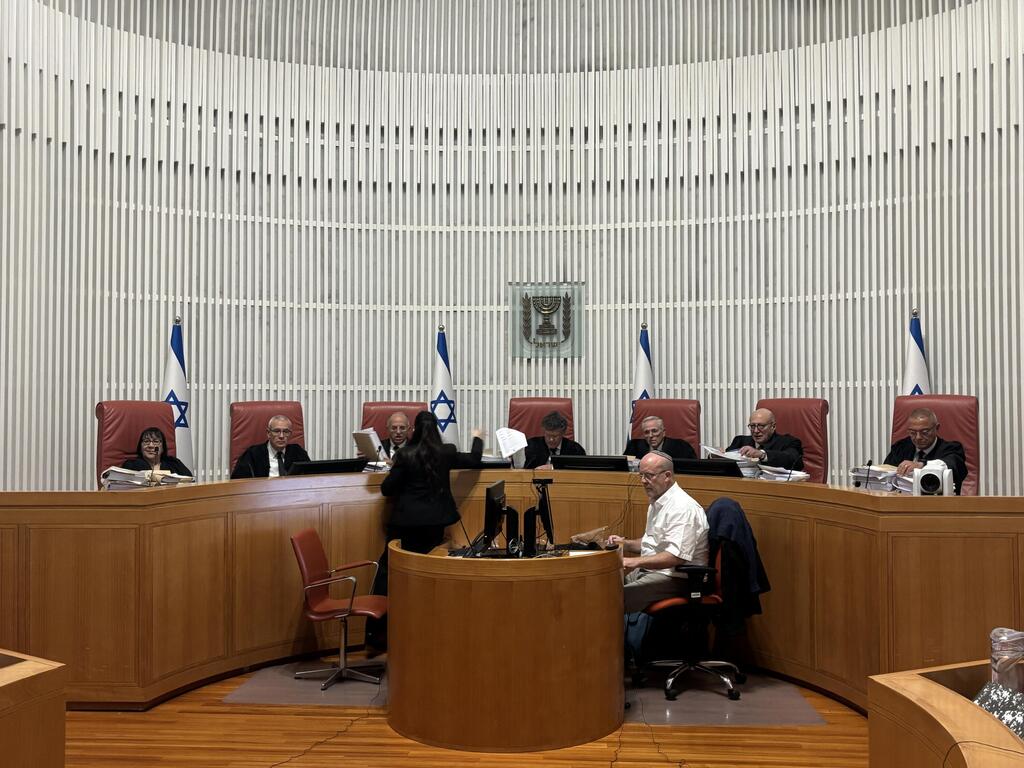
High Court of Justice in session
(Photo: Gil Yochanan)
The ministers further claimed that Baharav-Miara, whom they referred to as “dismissed,” is acting in a conflict of interest by obstructing a major ongoing investigation, and accused the court of cooperating “in deliberate and ongoing foot-dragging.”
Following the aborted hearing, right-wing activists blocked the vehicle of Israel Bar Association Chairman Amit Becher as he left the High Court premises. Ten court security officers were needed to disperse them. A similar confrontation occurred last week after a separate High Court hearing on the appointment of retired judge Josefh Ben-Hamo to oversee an investigation into former military advocate general Maj. Gen. Yifat Tomer-Yerushalmi's part in leaking sensitive video footage to the media.
In August, the government unanimously approved Baharav-Miara’s dismissal. She did not attend that meeting, nor did Prime Minister Benjamin Netanyahu. At the time, Levin said the government could not accept a situation in which the court “forces on the government an attorney general who is completely political, who enjoys no confidence, who does not cooperate and who obstructs the government’s work.”
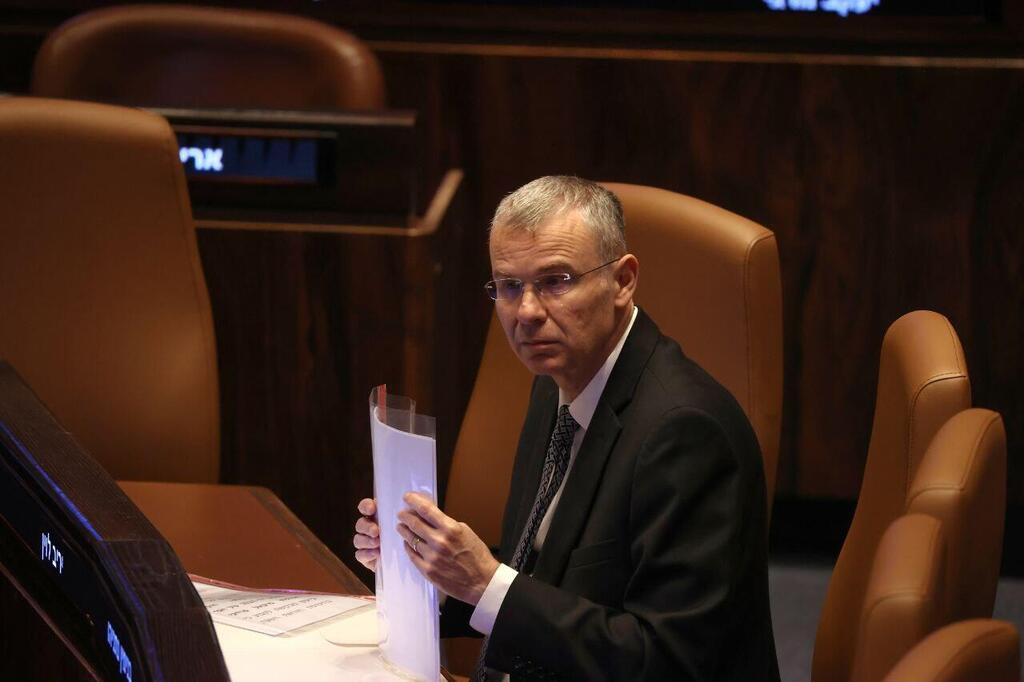
Justice Minister Yariv Levin
(Photo: Alex Kolomoisky)
The High Court issued an injunction on her dismissal and clarified that the government may not interfere with the attorney general’s powers until a final ruling is issued. Sohlberg, then serving as acting court president, added that “no substitute or acting attorney general may be appointed.” Shortly afterward, State Attorney Amit Aisman sent a letter to all prosecutors condemning the dismissal attempt as “an extremely unusual, unprecedented event” that threatens the core principles of prosecutorial independence and the rule of law.
Before the government vote, Baharav-Miara petitioned the High Court for an injunction blocking the move, arguing that making the attorney general’s removal a purely political process “is unlawful and would enable political deals and scandals such as the Bar-On–Hebron affair” — a 1997 political scandal in which senior officials allegedly attempted to appoint a pliant attorney general who would craft a favorable plea deal for a political ally. She said the government had failed to convene a professional, independent committee to review her performance, as required, and instead advanced “a full political takeover of the process.”