

Adi Shoham, a psychologist specializing in trauma therapy who was abducted from Kibbutz Be’eri on October 7, has spoken publicly for the first time since her release. Shoham, her mother, and her two young children — Yahel and Naveh — were taken from her parents’ home, and her husband, Tal Shoham, was kidnapped separately. Tal survived 505 days in captivity before being released in January 2025.
In an interview on Pgisha (Meeting)with Roni Kuban on Kan 11, her first since being freed, Shoham explained the reason for her silence over the past two years: phone threats from Hamas directed at her husband. The program is scheduled to air Saturday night after the news.
Gallery
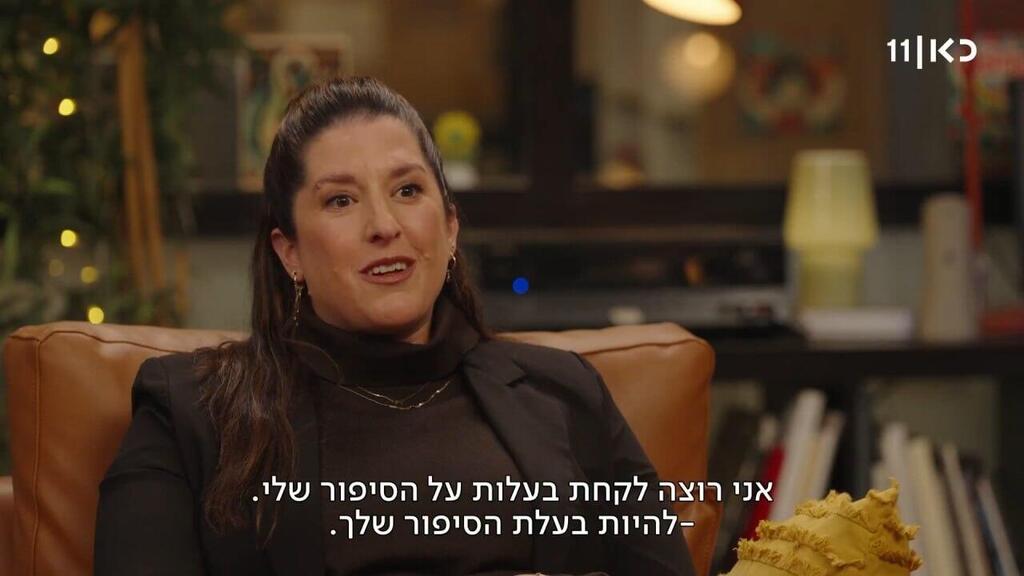
Former Hamas hostage Tal Shoham breaks her silence in an interview with the Kan public broadcaster
(Photo: From Kan 11)
“At first, I was very afraid to speak,” Shoham says of her first broadcast interview in nearly two years. “Even when we were still in Gaza, the captors made us do all kinds of simulations of what we were supposed to say, and it was clear to me that those were things I did not want to say. Even after I returned, I received messages and phone calls threatening Tal’s life.”
She recalls the very first phone call she answered from Hamas: “I saw a number from abroad. After that, I didn’t answer anymore, and I received WhatsApp messages threatening his life. I was very afraid that if I said the wrong thing or something offensive, it would come boomerang on him. Today I’m in a place where I feel I want to tell my story — our story. I want to take ownership of my story.”
The kidnapping and dramatic rescue
Shoham shared details of the kidnapping of herself and her children — and the dramatic moment she managed to snatch them back from the Hamas captor.

Former Hamas hostage Adi Shoham with husband, Tal, and children Naveh and Yahel
(Photo: Family album)
“I lift my head, and I see Yahel about 20 meters ahead of me, being held by a Hamas terrorist like you’d hold a toddler. She was three years old. She sees me past his shoulder and reaches her arms out to me — to take her. In that moment I didn’t think about anything, I ran to her and took her. The terrorist pulled her back to him, and I started screaming: ‘Mommy, child, mommy, child.’ I pulled her, and he pulled her — I pulled her again and he pulled. Many times, and I was screaming. In the end, he released her and I held her.”
“I start walking with her again, and I see Naveh on the other side, about 10 meters ahead, being held by another terrorist by the arm and walking with him,” she continues. “Naveh’s back was to me, he couldn’t see me, but he was terrified. And the same thing — I ran there and pulled him toward me, and again he pulled him back from me. And I was shouting ‘Mommy, child, mommy, child,’ and that’s how the pulling went. It was really like some primal scream coming out of me.”
According to Shoham, “It was like a mother’s instinct — my children must be here. I didn’t think, I didn’t consider what would happen if I did this or that — I just pulled them toward me.”
Reaction to Operation Arnon
Shoham also addressed Operation Arnon in June 2024, during which hostages Noa Argamani, Almog Meir Jan, Andrey Kozlov and Shlomi Ziv were heroically rescued. “I heard the news and my stomach turned — what’s happening with the rest? I opened my phone and saw the faces of two from the family that held us — and videos from the home where we had been.”
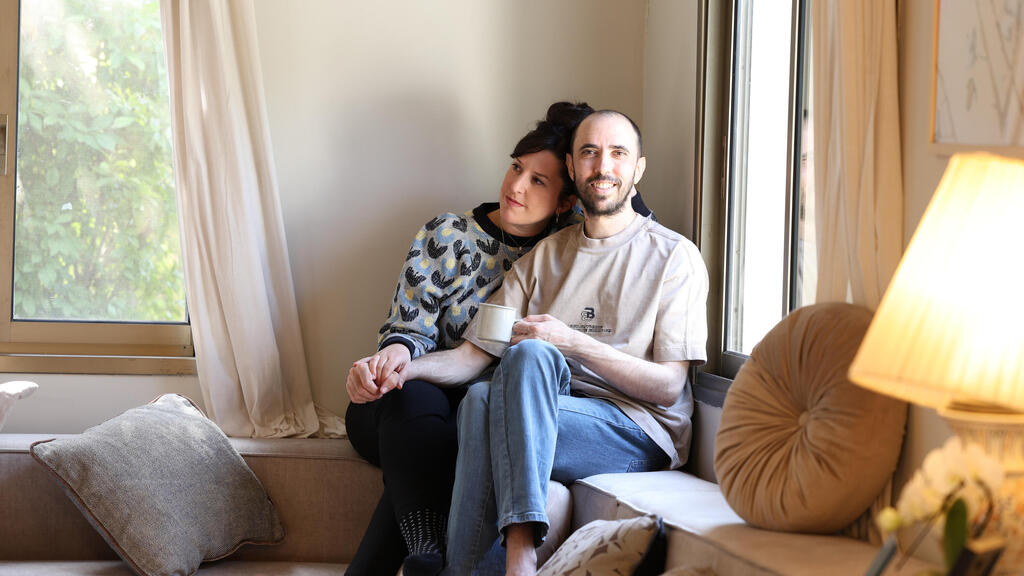
Adi Shoham with husband, Tal, who was held by Hamas for 505 days
(Photo: Avigail Uzi)
“I know Tal was very close to there because that’s what they told me after we returned. So why didn’t they rescue him too? And why was he put at such risk in that rescue?” she says. “There is always joy for those who are already out of that mess, right? And of course deep appreciation for those who were there and rescued — deep appreciation,” she clarifies, adding the ongoing fear for the remaining captives left behind.
According to Shoham, “that was the moment they went down into the tunnels — to a military regime far harsher than anything before — and that was the moment their lives were really in danger. And I lost it. Before that, there was sporadic information. There were signs of life. There were signs of life at times. But after that, it took a very long time before they could tell me that Tal was alive.”