


State Comptroller Matanyahu Englman issued a harsh report Wednesday criticizing Prime Minister Benjamin Netanyahu, Finance Minister Bezalel Smotrich and former Defense Minister Yoav Gallant, holding them responsible for failures in handling the civilian front since the outbreak of the Iron Swords war on October 7, 2023.
“Hundreds of thousands of residents experienced firsthand the failures of the government of Israel in managing the civilian domain during the Iron Swords war,” Englman wrote in the report published Wednesday dealing with the government’s management of civilian affairs during the war.
Netanyahu called the report “an irrelevant document” and its conclusions “baseless,” saying “the timing of its publication is puzzling and raises questions.”
Gallery

State Comptroller Matanyahu Englman's report criticized Benjamin Netanyahu, Bezalel Smotrich and Yoav Gallant
(Photos: Reuters, Alex Kolomoisky, Chaim Goldberg/Flash 90, Said Khatib/AFP)
Englman, who is expected to release additional reports in the coming weeks, responded: “The State Comptroller and the audit teams will continue fulfilling their public role despite attacks from the prime minister, the opposition chairman and other reviewed officials in recent times. Oversight of the political, military and civilian leadership will continue as I made clear from the outset.”
During tours across the country, Englman found shortages of manpower in essential factories, a lack of professional psychological support, a shortage of government representatives at sites housing evacuees, and failures in the payment of grants and compensation. Despite the National Emergency Authority’s assessment that civilian preparedness was “medium to good,” Englman said the government’s response required significant improvement.
Englman found numerous deficiencies in the performance of Netanyahu, ministers and other senior officials. Unlike most comptroller reports in recent years, this one specifically named officials tied to the failures and detailed the shortcomings for which each was responsible.
The ongoing failures, he wrote, came at the expense of ordinary Israelis in need of urgent assistance. Government decisions made after the outbreak of the war failed to achieve their goals and ultimately collapsed due to a dysfunctional framework lacking proper preparation.
Englman wrote that, throughout Netanyahu’s long years in office, he failed to ensure that longstanding gaps in civilian emergency management—known since the Second Lebanon War—were resolved, including through his power to set the government’s agenda. In particular, authority and responsibility for managing the civilian aspects of the home front during war were never fully defined.
Netanyahu, who has served as prime minister for 13 of the 14.5 years between March 2009 and the outbreak of the war, “was obligated to act to ensure a response to years of deficiencies in civilian emergency management,” Engelman wrote.
The report also criticized short-term premiers Naftali Bennett and Yair Lapid. Bennett, during his year in office from June 2021 to June 2022, and Lapid, during his half-year tenure from June 2022 until December 2022, “did not act on this issue either.”

Former Defense Minister Yoav Gallant
Gallant’s failures
Englman wrote that Gallant and his predecessors, who oversaw the National Emergency Authority and Home Front Command, “failed to regulate their status for years,” preventing them from adequately addressing civilian gaps during the war. The National Emergency Authority did not function as a comprehensive civilian emergency body, while the Home Front Command, despite its significant resources, failed to provide sufficient support for evacuees, and its representatives’ roles were unclear.
Smotrich’s Failures
Englman wrote that Smotrich did not use his authority as head of the socio-economic cabinet to activate the mechanism created by government decision to handle civilian affairs during the war. He failed to implement the decision to establish and operate a civilian war room, nor did he return to the government to request clarification on which body should take responsibility.
The comptroller stressed that, given the war’s duration, Netanyahu himself should have intervened to ensure the cabinet’s decision was implemented.

Finance Minister Bezalel Smotrich
(Photo: Yair Sagi)
The socio-economic cabinet under Smotrich largely failed in its mission, meeting infrequently and rarely addressing the civilian war room or coordinating ministries’ activities. It ignored pressing needs raised by ministers, such as housing and employment, and made no policy decisions in its area of authority.
Engelman wrote that if Smotrich was unable to fulfill his duties, “he should have reported back to the government so it could decide which body would lead civilian management.”
Criticism of Prime Minister’s Office and Finance Ministry
Engelman criticized former PMO director-general Yossi Shelley for how he operated the forum of ministry director-generals, including failing to establish work procedures or make decisions to address civilian needs. Senior Finance Ministry officials, including the ministry’s management, legal and administrative staff, the salary commissioner and the Civil Service Commission, all failed to implement the government decision to create and operate the civilian war room or provide solutions to difficulties in carrying out the finance minister’s policies.
Longstanding neglect
Englman noted that since the Second Lebanon War in 2006, governments have failed to define authority over the civilian front during emergencies. While in 2007 the defense minister was formally assigned responsibility for the home front, neither he nor relevant bodies under the Defense Ministry were given authority over the civilian effort in wartime.
This was despite repeated warnings, including three previous comptroller reports between 2015 and 2020. Without a single body responsible for managing the civilian front, Englman wrote, “the government’s ability to meet residents’ needs during war was directly harmed.”
He listed six key failures:
1. Lack of preparation before the war to designate a single civilian authority.
2. Deficiencies in emergency bodies under the Defense Ministry.
3. Failure to establish a stable structure after the war began, instead relying on ad hoc frameworks.
4. Limited activity of the socio-economic cabinet.
5. Ineffective work of the director-generals’ forum.
6. The National Security Council failed to provide an integrated civilian picture.
Englman concluded: “In Israel’s time of need, civilian management was flawed, lacking and weak.”
He urged immediate corrective action:
“The political echelon—particularly the prime minister, the finance minister, the defense minister, the NSC and the National Emergency Authority—must urgently address the failures in this report. Rapid action is essential to create an effective system for managing the civilian aspects of the ongoing war and to prepare for future conflicts and emergencies.”
Netanyahu’s response
Netanyahu’s office responded to the comptroller's report, calling discussion of the home front 'footnotes of no real significance'
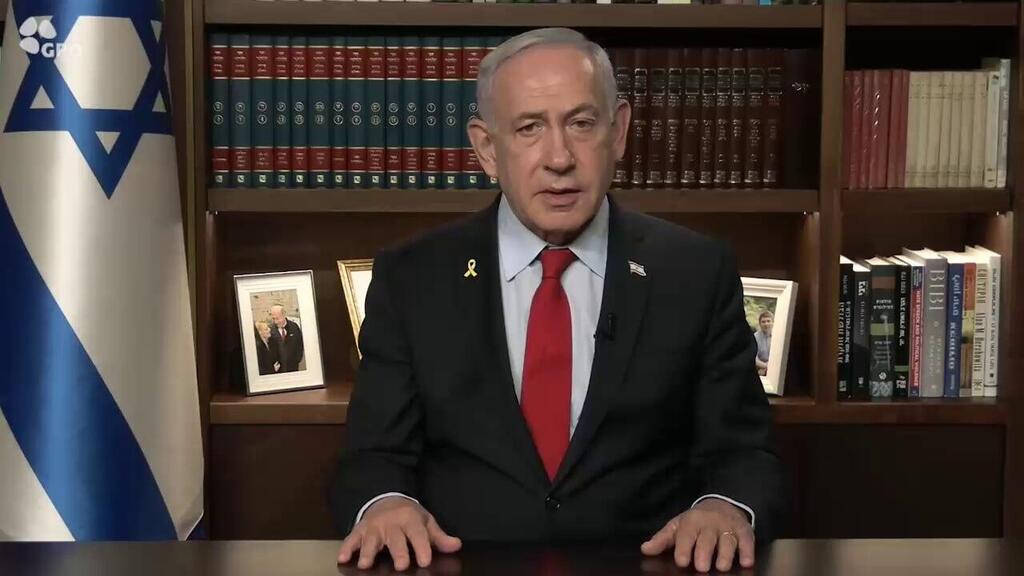
Prime Minister Benjamin Netanyahu
( Photo: Roy Avraham, GPO)
"While Israel’s government achieves historic, unprecedented accomplishments that changed the Middle East, the comptroller’s report deals with footnotes of no real significance. On October 7, 2023, Israel was dragged into a seven-front war. The report ignores that this was an existential war with no precedent and no advance warning. The government acted immediately, created a new emergency framework, struck hard at Hamas and Hezbollah, toppled Assad in Syria, and removed two existential threats from Iran—the nuclear and ballistic missile threats—while rehabilitating the home front,” the prime minister's office said in a statement.
Netanyahu dismissed the report as “irrelevant,” saying its timing “on the eve of the entry and takeover of Gaza City, a critical stage in defeating Hamas, is puzzling and raises questions about its intent.”
Smotrich’s response
Finance Minister Bezalel Smotrich said in response to the report that: "Israel’s bureaucracy posed massive barriers to acting quickly, even during war. I was given responsibility but no authority. For example, I ordered 5 million shekels transferred to ZAKA in the first week of the war for handling massacre victims’ bodies, but the transfer was delayed for months due to legal red tape. Still, our management provided broad aid to 200,000 evacuees, 300,000 reservists and hundreds of thousands of self-employed workers, alongside managing the economy and securing budgets in the hundreds of billions.”