


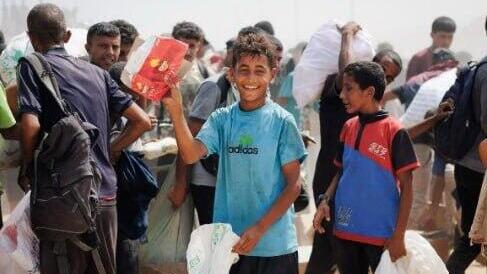
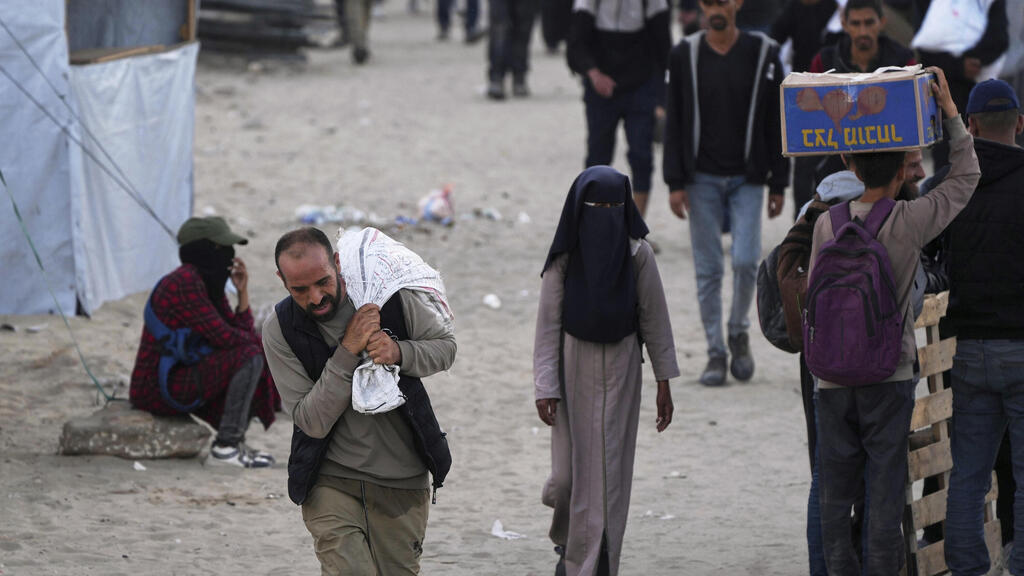
The IDF is undertaking an overhaul of food distribution centers for Gazans in the central and southern Gaza Strip. Four new centers, operated by the American aid organization Gaza Humanitarian Foundation (GHF), will open with upgrades to ease the chaos plaguing access routes. At the Palestinians’ request, food types will also change.
Yet, the army expects these centers will still require hundreds of soldiers and commanders daily to secure aid routes, which have become deadly flashpoints, fueling global accusations of Israeli war crimes. The initiative aims to reduce harm to Gazans, with alleged hundreds killed or injured by IDF fire since the centers opened two months ago.
(Photo: AP Photo/Abdel Kareem Hana)
The western distribution center in southern Gaza will split into two to streamline operations, with the IDF paving new paths and blocking others. The military is exploring a high-tech distribution station with carousels to spare tens of thousands of Gazans hours of waiting.
Security officials noted strong Palestinian demand for more flour, doubling the amount to four sacks per package. Gazans discarded canned goods like cooked beans, so recent packages include alternative foods based on a calorie table to sustain large families, along with chocolate and cookies.
“We’re learning Gazans’ needs, so we’ve started providing lots of potato sacks,” security sources familiar with the details said. Many products come from leading Israeli brands found in most Israeli homes but labels are swapped to show a Bedouin-Arab retailer from the Negev to obscure origins.
The IDF reports distributing millions of meals, with GHF fronting the effort, funded by tens of millions of shekels monthly. A major issue is Israel’s inability to screen food recipients. Hamas terrorists can attack IDF soldiers in Khan Younis, hide their weapons and collect free Israeli food hours later.
Get the Ynetnews app on your smartphone: Google Play: https://bit.ly/4eJ37pE | Apple App Store: https://bit.ly/3ZL7iNv
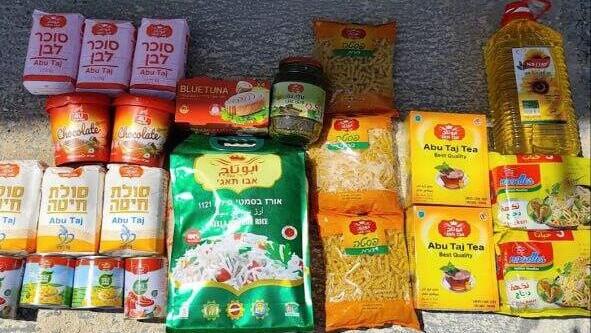
Food products distributed by the GHF
(Photo: IDF Spokesperson's Unit)
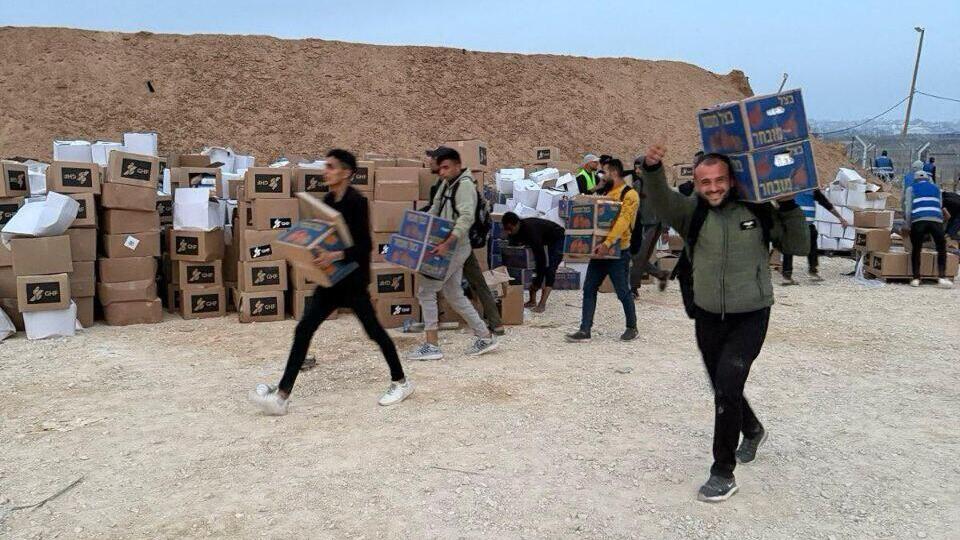
(Photo: GHF)
Two weeks ago, a special review involving all parties, including GHF representatives, addressed this. “The food will comply with international law but IDF forces play a central role, even if Palestinian workers distribute cartons under armed American private security,” the IDF said.
On Sunday, Ynet reported Israel’s proposed “humanitarian city” plan in Gaza would cost NIS 10-15 billion ($2.7-4 billion). Aid remains a sticking point in hostage deal talks, with Hamas demanding a return to the original northern Gaza system, where aid enters via distribution trucks.
Most of the dozens of trucks Israel allows daily into Gaza City and its surroundings are looted, despite efforts by armed local clans, armed by Israel, to secure them for international organizations.
If a ceasefire deal is reached, the army expects Hamas to target these clans, regaining full control over aid as a key recovery tool for the terrorist group. Like the January deal, Israel will likely agree to Hamas’s demand to significantly increase humanitarian aid during the two-month ceasefire and phased implementation, having already consented last week to boost fuel deliveries to Gaza.