

Israeli Arab lawmaker Ayman Odeh is expected to be questioned by investigators over suspicions that he received hundreds of thousands of shekels from the Palestinian Authority, Israeli television reported Wednesday, prompting accusations of political persecution amid a widening dispute over an investigation into alleged foreign interference in last month's Knesset election.
Odeh, who is expected to leave office when the newly elected Knesset is sworn in Tuesday, Nov. 10, is the lawmaker at the center of a Shin Bet investigation into suspected payments from the Palestinian Authority, according to i24NEWS. He is expected to be questioned under caution, a procedure used when investigators consider someone a criminal suspect.
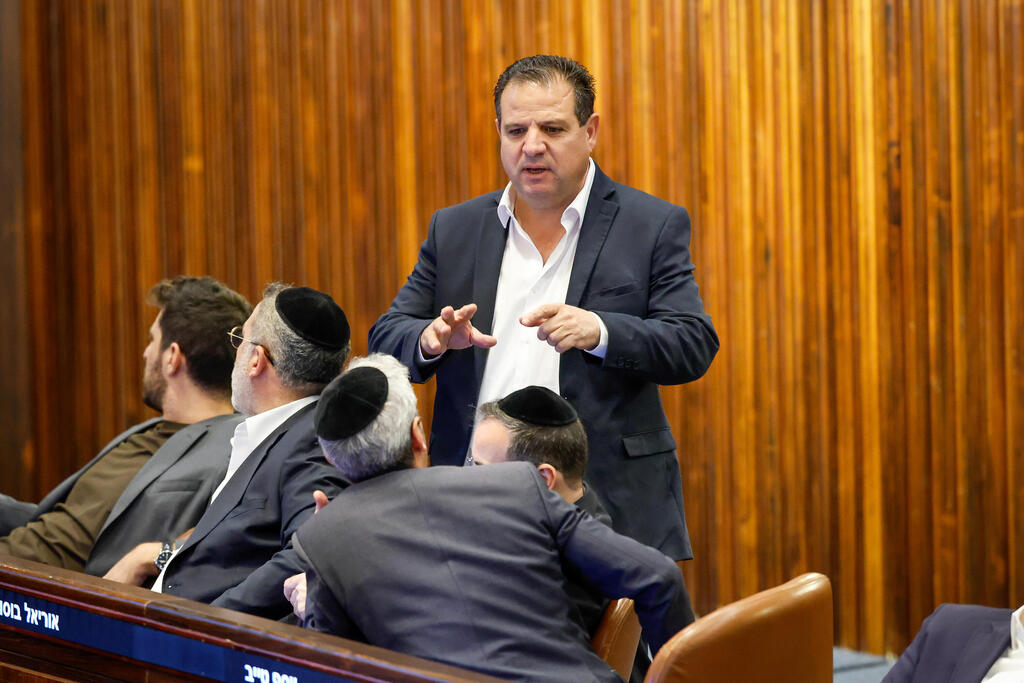
Odeh, who is currently abroad, rejected the allegations and accused Prime Minister Benjamin Netanyahu and his allies of attempting to undermine the results of the election, which saw historically high turnout among Arab voters.
"The historic voter turnout among Arab citizens has driven Netanyahu and the fascists out of their minds, and the fear of losing power is causing them to lash out in every direction," Odeh said in a statement. "Everyone understands that this is political persecution, which will soon turn into an inflated balloon that will pop right in their faces."
Odeh said he expected further accusations as the inauguration of the new parliament approached.
"As we get closer to the swearing-in of the Knesset and the end of Netanyahu's rule, you will see more and more spin and lies," he said. "The most important thing now is to continue acting responsibly, resolutely and consistently to fundamentally replace this government."
The Joint List, the alliance of Arab political parties, also condemned the investigation, describing it as an escalation in what it called a campaign of incitement against Israel's Arab population and its political leadership.
"We condemn the campaign of political persecution against Knesset member Ayman Odeh and view it as a serious escalation in the campaign of incitement against the Arab public and its leadership, and an attempt to undermine the legitimacy of its vote and political participation," the alliance said.
It accused Shin Bet chief David Zini, who was appointed by Netanyahu, of acting as a political instrument of the prime minister.
"Shin Bet chief David Zini, appointed by Netanyahu, is operating as a political arm in his service," the statement said. "The fear of losing power is causing them to lob accusations in every direction in an attempt to thwart change."
The allegations against Odeh come amid a broader confrontation between Zini and Attorney General Gali Baharav-Miara over the scope and legal basis of an investigation into suspected foreign involvement in the election.
Zini has sought to investigate several other senior Arab political figures, including Ta'al chairman Ahmad Tibi, Ra'am chairman Mansour Abbas and Balad chairman Sami Abu Shehadeh, who was disqualified from running in the election.
However, no evidence has been presented against the three, according to reports. In Odeh's case, officials involved in discussions reportedly reached a broad consensus that sufficient evidence existed to justify questioning him.
Zini demanded during a meeting with Central Elections Committee chairman Justice Noam Sohlberg and Baharav-Miara that the entire investigation be classified as involving security offenses.
Such a classification would allow the Shin Bet to use its expanded investigative powers from the outset, including restricting suspects' access to legal counsel, conducting wiretaps and collecting communications data.
Baharav-Miara rejected that approach, arguing that investigators cannot question citizens or elected officials without evidence establishing grounds for suspicion.
"In an exceptionally unusual step, and in light of inaccurate reports, the attorney general wishes to clarify that in a state governed by the rule of law, citizens or elected officials cannot be investigated without evidence justifying such an investigation," she said in a statement.
The attorney general also opposed automatically classifying the entire affair as a national security investigation, noting that allegations of election bribery could constitute ordinary criminal offenses without necessarily involving security violations.
She said the Shin Bet could use its specialized powers if evidence of security offenses emerged, but insisted that investigators must first establish the appropriate legal grounds.
"I will provide every tool the law permits," Baharav-Miara said.
Herzog: Tensions between security agencies and legal authorities are inherent in democracy
The dispute drew a response Wednesday from President Isaac Herzog, who addressed the controversy during a ceremony at which Sohlberg formally presented him with the official election results.
Herzog said he had spoken that morning with both Zini and Baharav-Miara and expressed confidence in their respective roles.
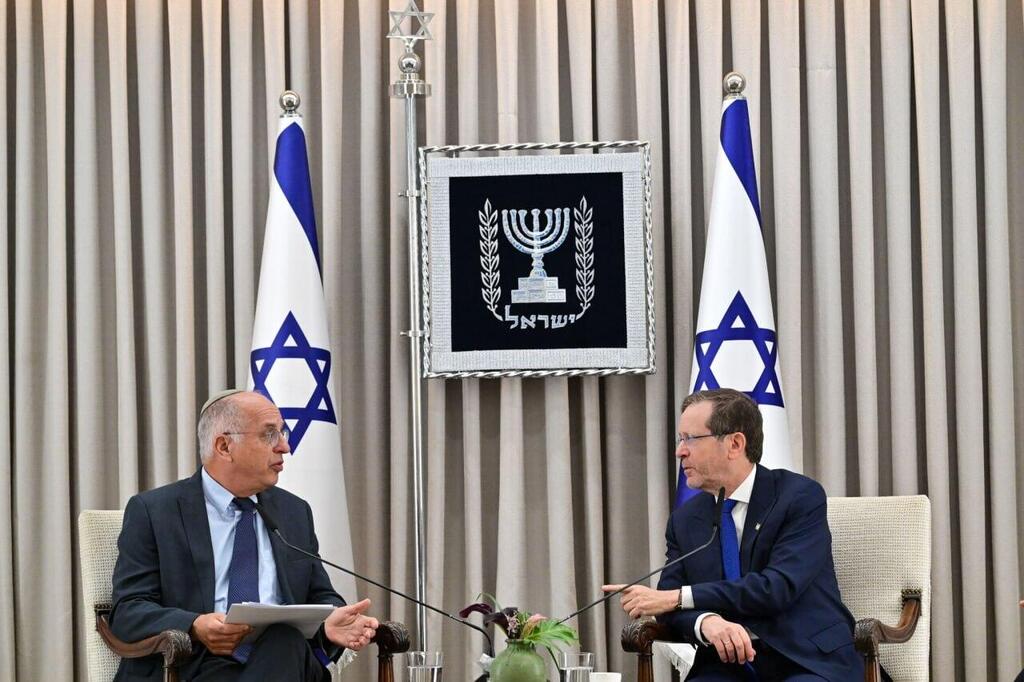
Central Elections Committee chairman Justice Noam Sohlberg formally presents President Isaac Herzog with the official election results
(Photo: GPO)
"I respect Shin Bet chief David Zini and his work. I respect Attorney General Gali Baharav-Miara and her work. I spoke with both of them this morning," Herzog said.
"Tensions between the Shin Bet and the attorney general's office have existed in Israel before and will exist again. This is an inherent tension in a democratic state."
Herzog also warned against using the investigation to cast suspicion on Israel's entire Arab population.
"I want to emphasize once again: An entire community must not be smeared. Beware of generalizations," he said.
"I greatly respect Arab society in Israel. I appreciate its contribution to the country in every sphere of life and its desire to integrate. This is a welcome development."
The president condemned what he described as racist rhetoric heard in recent days, urging Israelis to maintain mutual respect despite deep political disagreements.
"I condemn the vulgarity and racist expressions we have heard recently. There is no place for them against any community in Israel," Herzog said.
"There is room, my fellow Israeli citizens, to extend a hand, even amid the bitter disagreements that are tearing us apart in far too many areas. The election is over. Now is the time to face reality."
Sohlberg issued his own warning against efforts to challenge the legitimacy of the election results, saying such rhetoric posed a genuine danger to Israel's democratic system.
"In recent days, voices have been heard seeking to cast doubt on the election results and undermine their validity. This is a real danger," he said.
"One of the secrets of democracy is the ability to transfer power peacefully. This stems from the understanding that the voters' decision is binding on all of us."
Without respect for democratic rules, Sohlberg warned, the country could descend into a situation in which political disputes are settled by force rather than through institutions.
"We would find ourselves in a kind of state of nature in which might makes right," he said. "For us to maintain a shared system of government, everyone must respect the rules of the democratic game. That is how we have conducted ourselves in the State of Israel since its founding."