



Prime Minister Benjamin Netanyahu convened his Security Cabinet on Sunday amid an escalating dispute over a U.S.-drafted UN Security Council resolution that includes language about a “credible pathway to Palestinian self-determination and statehood”, wording Israel is pressing to have removed before the vote expected Monday.
Netanyahu and coalition leaders briefly left the weekly Cabinet meeting to hold the discussion after several ministers sharply criticized the American draft, saying it placed new emphasis on potential Palestinian statehood. Ron Dermer, who resigned as a minister last week, also attended.
Gallery
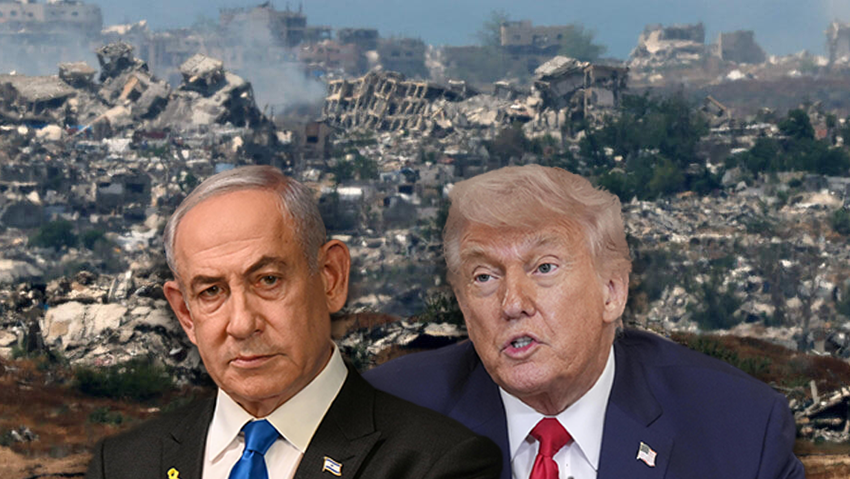
Prime Minister Benjamin Netanyahu, US President Donald Trump
(Photo: Jack GUEZ / AFP, REUTERS/Evelyn Hockstein, GPO)
Israeli officials said Jerusalem is working behind the scenes to secure further changes to the U.S. proposal. Washington has already rallied enough support to block a competing Russian draft that Israeli officials described as “bad,” noting it included language stating that “the situation in the Palestinian territories constitutes a threat to regional peace” and reaffirmed the need for a two‑state solution and territorial continuity between Gaza and the West Bank under the Palestinian Authority.
The U.S. draft draws on President Donald Trump’s 20‑point plan and his “Declaration for Lasting Peace and Prosperity,” signed at last month’s summit in Sharm el‑Sheikh. It calls for Washington to launch a dialogue between Israel and the Palestinians “to agree on a political horizon for prosperous coexistence.”
The proposal envisions a transitional “Peace Council” administering Gaza until the Palestinian Authority completes a reform program and can assume control “safely and effectively.” It states that once reforms are implemented and Gaza’s development advances, “conditions may finally be in place for a credible path to Palestinian self‑determination and statehood.”
The draft also lays out conditions for an Israeli withdrawal from areas of Gaza still under Israel Defense Forces control. The IDF would depart once an International Stabilization Force (ISF) “achieves control and stability,” according to standards and timelines tied to disarmament that would be agreed upon by the ISF, its Arab guarantors and the United States. Israeli forces would maintain a “perimeter security presence” until Gaza is deemed sufficiently protected from renewed terror threats.
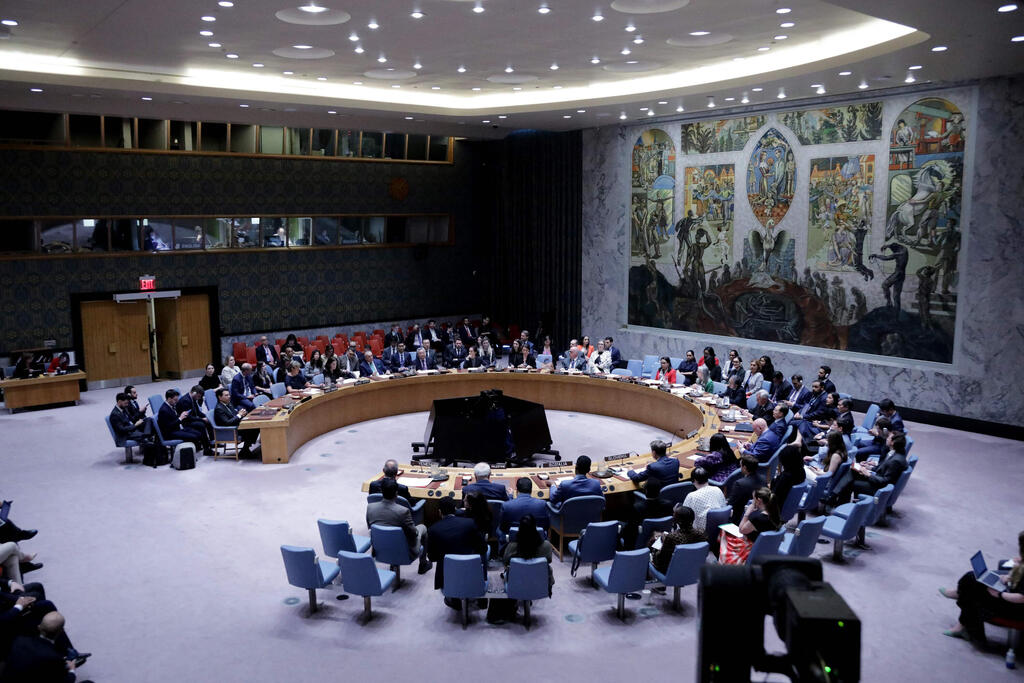
The UN Security Council
(Photo: Leonardo Munoz / AFP)
The ISF, under a unified command approved by the Peace Council and coordinated with Israel and Egypt, would be funded through donor contributions. The force would secure border areas, help stabilize Gaza, oversee disarmament — including destroying and preventing the rebuilding of terror infrastructure — and dismantle armed non‑state groups. It would also train and support Palestinian police and protect civilians, including during humanitarian operations.
Earlier Sunday, Netanyahu told the cabinet that Israel’s position had not shifted. “Our opposition to a Palestinian state anywhere west of the Jordan River remains unchanged,” he said. “I have pushed back against such attempts for decades, from external pressure and internal pressure alike.”
Israeli officials said the U.S. draft still contains elements “uncomfortable for Israel,” including the reference to a path toward Palestinian statehood and a clause preventing Israel from having veto power over which countries may contribute troops to the stabilization force. Even so, they said the proposal maintains the framework of the cease‑fire arrangement previously approved in Jerusalem, though it is considered less favorable.