

The Pentagon’s overnight announcement that it will pull 5,000 U.S. troops from Germany did not surprise many in Europe.
For months, officials across the continent had expected such a move, against the backdrop of President Donald Trump’s repeated attacks on NATO and his long-standing criticism that European countries rely too heavily on U.S. protection and do too little to defend themselves. That was before his anger over Europe’s refusal to join him in the war against Iran.
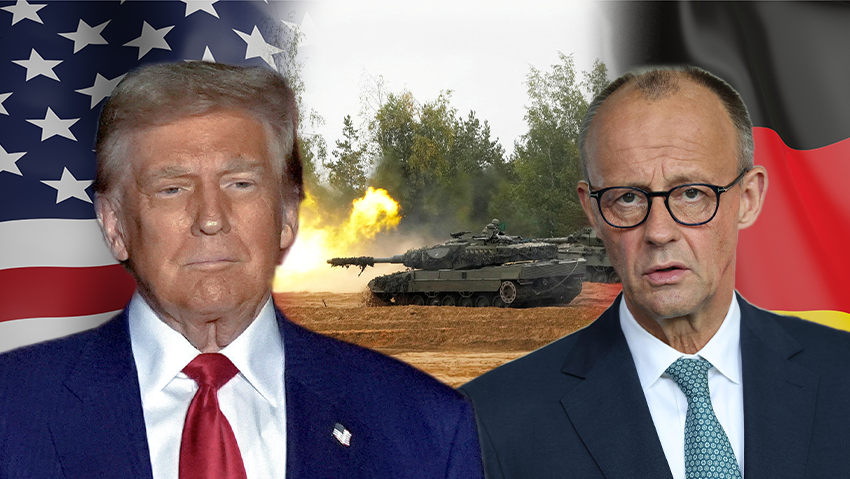
But the expected nature of the decision has not eased concern in Europe over its consequences, especially as officials fear it could be only the start of a broader process. Trump has already said he is considering a full U.S. withdrawal from NATO, a step that would dramatically shake Europe’s security architecture at a time when the continent fears future Russian aggression.
The announcement came after Trump’s anger over remarks Monday by German Chancellor Friedrich Merz, who said Iran was humiliating the United States in negotiations and that the American president had no strategy for managing the war. Merz, a conservative who came to power last year, has generally worked to maintain close ties with Trump despite his attacks on Europe and NATO, making the criticism unusually sharp.
Trump responded by saying the chancellor did not know what he was talking about. By Wednesday, he said he would examine removing U.S. forces from Germany.
The partial withdrawal, administration officials told The New York Times, was explicitly intended to be seen as punishment for Merz’s remarks and for Germany’s refusal to join the U.S. war effort. Unlike some European countries, however, Germany did not restrict the U.S. military’s use of bases on its territory for strikes on Iran.
Under the Pentagon plan, the 5,000 troops will leave Germany over a period of six months to a year. That represents about 14% of the roughly 36,000 U.S. troops stationed there at the end of 2025. The United States will also cancel a plan to station a new long-range rocket unit in Germany, a deployment seen as a key part of NATO efforts to strengthen deterrence against possible Russian aggression.
The Pentagon said the move would return the U.S. force presence in Germany to where it was before Russia’s 2022 invasion of Ukraine. It did not clarify whether the troops would return to the United States or be moved to other bases in Europe.
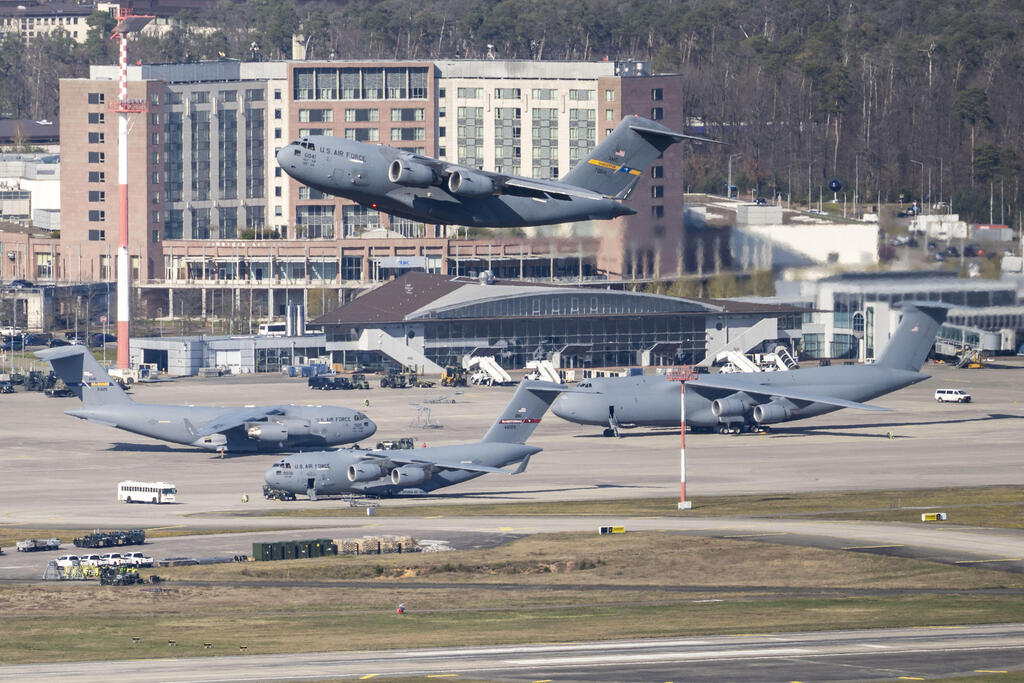
(Photo: Thomas Lohnes/Getty Images)
Even if the withdrawal is fully carried out, Germany will remain home to one of the largest U.S. military presences outside America, second only to Japan. U.S. troops are stationed at about 40 facilities in Germany, including Ramstein Air Base, the largest U.S. base in Europe, and Stuttgart, home to U.S. European Command and U.S. Africa Command. Germany also hosts some U.S. nuclear weapons.
This is a two-way deal
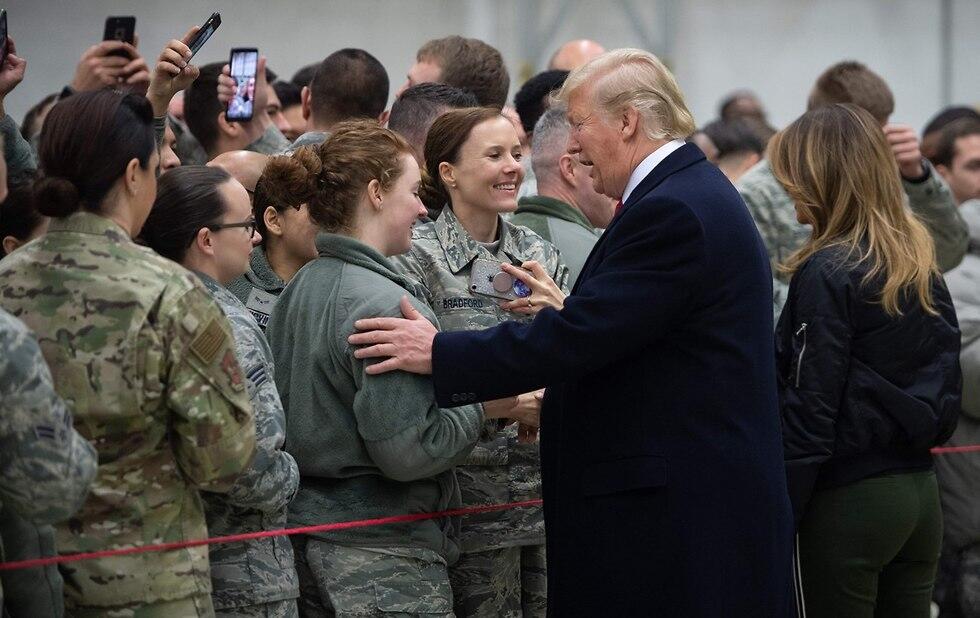
The U.S. military presence in Germany began during World War II. After Nazi Germany’s surrender in 1945, about 1.6 million American troops were stationed there. Within a year, that number fell to 300,000, and the force quickly became a counterweight to Soviet influence in Europe. With NATO’s founding in 1949, U.S. bases in Germany became permanent.
Troop numbers steadily declined after the fall of the Berlin Wall in 1989 and the collapse of the Soviet Union two years later. Still, the U.S. presence in Europe, and especially in Germany, remained important — not only as a deterrent against Russia, but also as a logistical hub for U.S. military operations in the Middle East. Wounded American troops from Iraq, Afghanistan and, more recently, Iran have been evacuated for treatment in Germany.
(Photo: AFP)
Trump has threatened to reduce U.S. forces in Europe before. During his first term, he accused Germany of spending too little on defense and announced plans to cut the American troop presence there by about one-third. That plan was later canceled by President Joe Biden.
German Defense Minister Boris Pistorius said the U.S. decision was expected. He emphasized that the American presence is important not only for Germany but also for the United States itself, while adding that Europeans must take more responsibility for their own defense.
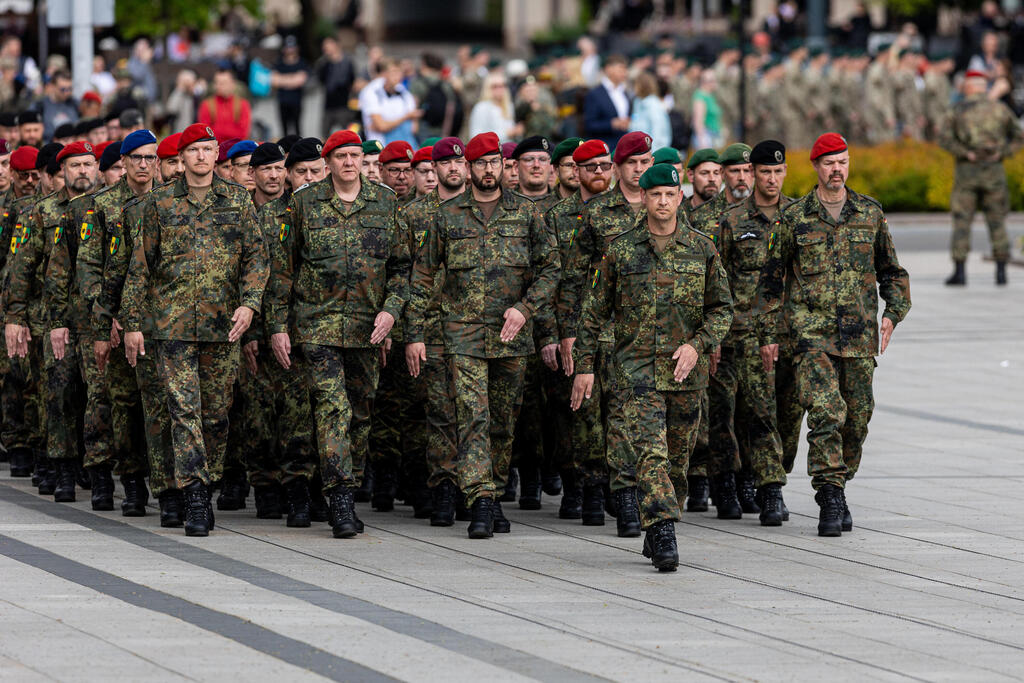
Pistorius pointed to Germany’s plans to expand its armed forces from about 185,000 troops to about 260,000 and to better equip them for the possibility of direct confrontation with Russia.
German official to Trump: we do not need your advice
Other German officials were more openly critical. Peter Beyer, a lawmaker from Merz’s Christian Democratic Union, said Trump’s latest steps — including a new tariff increase on European Union cars, a move that would hit Germany especially hard — should be seen against the pressure Trump is facing at home and abroad, including low poll numbers and difficulties resolving crises in Iran and Ukraine.
Beyer said the troop withdrawal and trade policy looked less like a coherent strategy and more like a frustrated political reaction.
Although the American move was not a surprise, it may still have caught Germany’s leadership off guard. Merz has not apologized for his comments, but only days ago he said relations with the United States remained close and solid.
Hours before the Pentagon announcement, Vice Chancellor Lars Klingbeil, head of the Social Democratic Party, also criticized Trump’s attacks on Merz, saying Germany did not need advice from Trump and that the U.S. president should look at the disorder he had created.
(Photo: Paulius Peleckis/Getty Images)
Despite Germany’s effort to play down the significance of the move, Europe is worried about a longer and broader American retreat that could weaken NATO and embolden Russian President Vladimir Putin. In recent years, Russia has repeatedly tested NATO through what European officials describe as hybrid warfare, including sabotage, airspace incursions and drone activity.
Countries on NATO’s eastern flank are especially concerned. Polish Prime Minister Donald Tusk warned that the greatest threat to the trans-Atlantic community does not come from external enemies, but from the continued erosion of the alliance.
NATO said it was working with the United States to understand the details of the decision and that the move underscored the need for Europe to continue investing more in defense.
Further U.S. withdrawals could also trigger a clash between the Trump administration and Congress. Last year, lawmakers approved a measure barring the U.S. military presence in Europe from falling below 76,000 troops, a rare bipartisan move prompted by concern over an earlier Trump decision to withdraw a U.S. battalion from Romania.
European governments are also worried about delays in U.S. weapons deals, perhaps even more than the immediate effect of the partial withdrawal from Germany. The war with Iran has depleted U.S. ammunition stocks, and the Trump administration has warned allies including Britain, Lithuania and Estonia to expect prolonged delays in deliveries as the Pentagon prioritizes replenishing its own supplies.
At the same time, Washington has announced major arms deals with U.S. allies in the Middle East, including Israel, Qatar, Kuwait and the United Arab Emirates — another sign, perhaps, of a gradual American shift away from Europe.