

Reports of Iranian military exercises and rising rhetoric around Iran’s internal unrest have fueled speculation in recent days about a possible escalation involving Israel or the United States. Yet despite the turbulence, Iran’s leadership is focused first and foremost on restoring stability at home, not provoking an external confrontation, according to a senior Israeli analyst.
Over the weekend, Iranian state television reported that the Islamic Revolutionary Guard Corps had conducted military drills that included missile launches and air defense tests. The reports came alongside news in Israel of a Cabinet meeting that addressed the Iranian issue, all against the backdrop of widespread protests across Iran that have continued for more than a week.
Flames engulf the police station in Azna
(Video: Iran International)


The heightened attention has been amplified by U.S. President Donald Trump’s warning that Washington would intervene if Iran kills protesters, a New York Times report suggesting Tehran is in “survival mode” and fears Israel could exploit the unrest to strike, and repeated claims that the Iranian regime is nearing collapse.
That growing focus on Iran, however, risks creating misunderstandings among actors that do not communicate directly with one another, potentially leading to unintended consequences.
Danny Citrinowicz, a research fellow in the Iran Program at the Institute for National Security Studies (INSS) and a former head of the Iran desk in the IDF Intelligence Directorate, said in an interview that the Iranian regime is far from collapse and has not yet deployed its full coercive capabilities.
Gallery
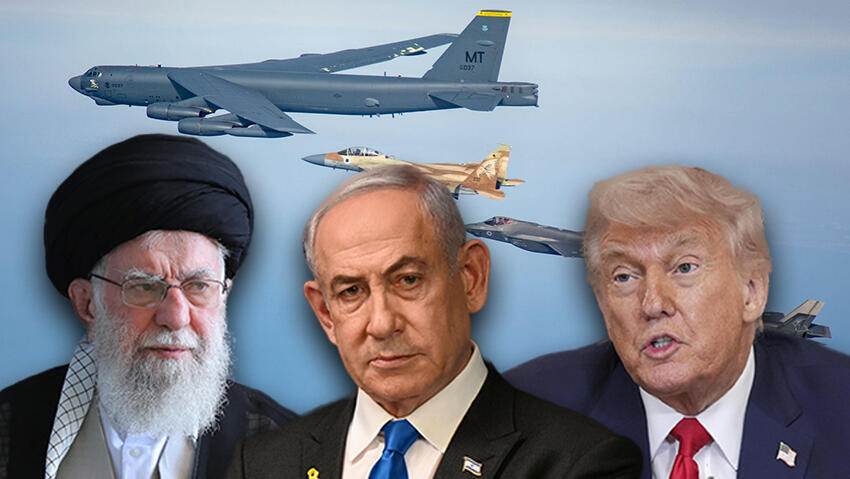
Ali Khamenei, Benjamin Netanyahu, Donald Trump
(Photo: Chaim Zach/ GPO, Evelyn Hockstein/ Reuters, Iranian Leader's Press Office - Handout/Getty Images, IDF)
According to Citrinowicz, the regime is deliberately avoiding an excessive use of force for strategic reasons.
“The Iranian regime has a paramount interest right now in restoring stability,” he said. “Stability serves it well, because even when there is no immediate existential threat, instability makes the regime feel challenged. The first objective is to restore order, and to do that, it does not want to find itself in an external confrontation, neither with the United States nor with Israel.”
He said Tehran is instead combining limited repression with economic incentives aimed at calming the public, including measures promoted by Iranian President Masoud Pezeshkian.
Citrinowicz stressed that the regime’s restraint is not primarily driven by Trump’s threats but by lessons learned from past protests.
“In Iran, they understand from experience that more deaths do not necessarily bring calm,” he said. “They are using many tools, such as slowing internet access without shutting it down completely. They arrest some protesters, but they are not ‘mowing the lawn’ with extraordinary repression like during the hijab protests, and certainly not like in 2009.”
This approach, he said, is designed to gradually restore stability. While it does not solve Iran’s deeper structural problems, it reflects the leadership’s calculation that “the last thing Iran needs right now is to attack Israel or the United States.”
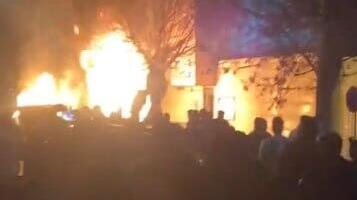
Iran protests
Citrinowicz added that Tehran is trying to deter Washington and signal that “it is not Venezuela,” but has no intention of initiating a move that would entangle it in a far more severe crisis than the current unrest.
“The protests are challenging, but the regime has dealt with much more complex situations,” he said. “They are not yet in survival mode. They are concerned and looking for the least bad solution.”
He warned that public threats or overt attempts to exploit the protests could backfire.
“If the Iranians come to believe that a country is trying to use the situation to attack them, they could act in ways they do not actually want,” he said. “That is why we must think very carefully, especially about what we say. Our influence here is limited, but the potential side effects could be severe.”
Citrinowicz cautioned that none of the key players has an interest in a war with no clear end, but miscalculation remains a real risk.
“Neither Israel, nor the United States, nor Iran wants to start an open-ended campaign,” he said. “But we could get there through miscalculation, because there is no direct communication between the relevant actors.”
He also addressed Trump’s warning that the United States would intervene if Iranian authorities harm protesters, calling it a potential “game changer” but one still clouded by uncertainty.
“It is a dramatic shift in American policy,” he said. “The statement underscores the difference between Trump and previous administrations that were reluctant to intervene. But we still don’t know where his red line is, because protesters have been killed even after that statement.”
Citrinowicz said Iranian officials are clearly troubled by Trump’s remarks, citing comments by Ali Larijani, secretary of Iran’s Supreme National Security Council, who warned that “the American people should know Trump has begun the adventure” and should worry about their soldiers.
“The threat hangs like a sword over the Iranians’ heads,” Citrinowicz said. “But it is unlikely to dramatically change their behavior unless it is backed by kinetic action. That possibility cannot be ruled out, but right now, we simply don’t know what will happen.”
First published: 22:23, 01.05.26