

For decades, Dubai has promoted itself as a rare oasis of stability in the Middle East — a city of glittering skyscrapers, tax-free salaries and a thriving business climate insulated from the region’s conflicts.
That image was shaken Saturday when Iranian attacks targeting Gulf states struck sites in Dubai, hitting business districts, the international airport and hotels in the city.
Iranian strikes in Dubai


Beyond the physical damage, the strikes rattled the sense of security that has helped Dubai brand itself as one of the world’s most reliable hubs for international business.
The United Arab Emirates’ National Emergency Crisis and Disaster Management Authority said the situation is under control. But analysts warn the attacks could threaten the economic model that helped transform Dubai into a global financial and tourism center.
“It’s hard to overstate the danger to Dubai’s economic model,” Jim Krane, an energy policy and geopolitics expert at Rice University in Houston, told Reuters.
“The physical damage may be light, and most of the pain so far is psychological,” Krane said. “But Dubai’s status as a safe haven for expatriates and their businesses is now in question. The longer the war goes on, the more people will look for alternatives. Dubai needs this war to end.”
Reflecting the tension in the country, the UAE’s stock market remained closed for the past two days.
Dubai’s transformation from a modest Gulf port into a global business hub took decades. The launch of Emirates airline in 1985, the opening of the Burj Al Arab hotel in 1999 and early 2000s legislation allowing foreigners to own property in the emirate helped build the brand that attracted investors, tourists and wealthy expatriates.
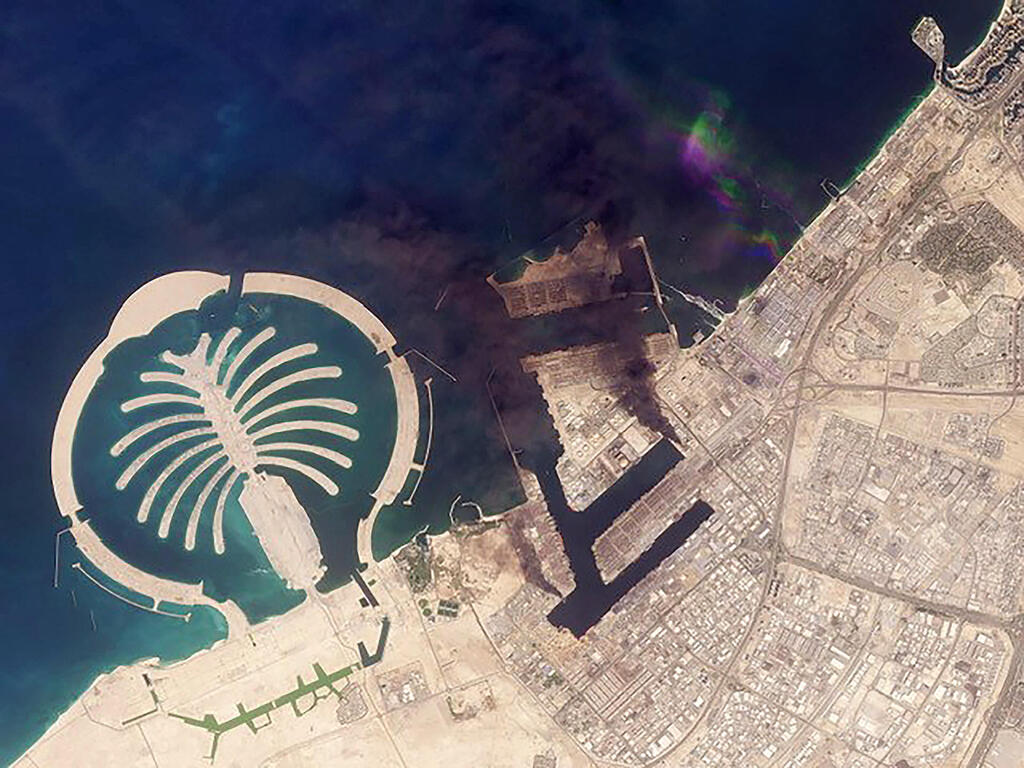
(Photo: AFP PHOTO /© 2026 PLANET LABS PBC)
Today, Dubai’s economy is driven almost entirely by sectors outside the oil industry. Oil accounts for less than 2% of the emirate’s gross domestic product, with growth fueled instead by trade, tourism, luxury real estate and financial services.
That contrasts with neighboring Abu Dhabi, which holds more than 90% of the UAE’s oil reserves and remains more dependent on oil revenues.
Dubai’s rise was also shaped by instability elsewhere in the region. Beirut once served as the Middle East’s main financial and commercial center before Lebanon’s civil war devastated the country. Bahrain later attempted to fill that role but struggled to do so.
Dubai, by contrast, managed to market itself as a stable alternative in a region often defined by wars and political upheaval.
Over the past decade, its appeal has grown even further as conflicts and economic turmoil drove wealthy individuals to relocate. The Syrian civil war weakened Damascus, the Arab Spring shook economies across the region and Russia’s invasion of Ukraine pushed wealthy Russians and businesses to seek new bases abroad.
Last year alone, Dubai attracted a record 9,800 millionaires relocating to the emirate — more than any other destination worldwide.
But the reality of the region’s instability reached the city over the weekend as the broader conflict involving Iran expanded.
Iranian strike on Dubai's airport
According to the UAE Defense Ministry, Iranian strikes damaged Dubai International Airport, set part of a dock at the city’s port on fire and caused shrapnel damage to the Burj Al Arab hotel after interceptor missiles were launched.
Three people were killed and 58 others were wounded in the attacks, the ministry said.
“People are scared of what’s happening. It’s the first time here that we’ve had to hide in underground shelters,” Nabil Milali, a financial strategist in the city, told Reuters.
Another financial source described growing concern among businesses, saying the company he works for has begun planning layoffs and halted fundraising efforts.
A banker working in Dubai said international private banks that recently expanded advisory operations in the city may now reconsider the scale of their presence.
Historically, markets such as the UAE have shown resilience during crises, including during the COVID-19 pandemic, said Madhur Kakar, chief executive of a financial firm in the city.
For now, he said, Dubai’s position remains relatively stable — “unless tensions escalate significantly or continue for a prolonged period.”
So far, there are no clear signs of capital flight from the emirate, analysts say, though the psychological impact of the attacks could prove significant if the conflict continues.