

Austrian prosecutors on Wednesday filed criminal charges against former Syrian general Khaled al‑Halabi for war crimes committed while serving under the regime of Bashar al‑Assad during the 2011 Arab Spring protests, which later escalated into a bloody civil war ending with the regime’s fall last year.
Al‑Halabi, a Druze officer in Assad’s intelligence services accused of leading brutal torture of protest detainees, fled Syria in 2013 and was only arrested in Austria in December last year after a decade‑long manhunt.
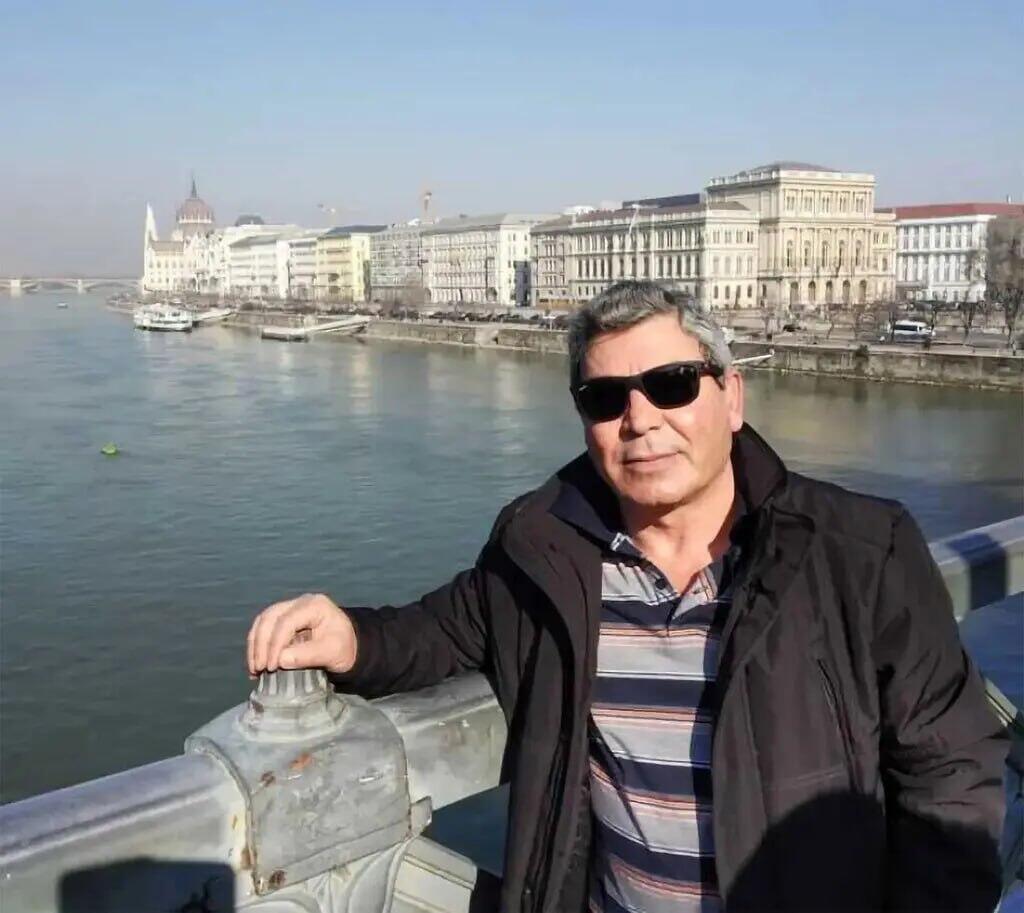
According to the Austrian indictment, al‑Halabi, 62, acted as a dual agent for Israel while a Syrian intelligence officer. After fleeing Syria, he is alleged to have lived in Vienna with the assistance of Mossad following a cooperative agreement reached during a visit by senior Austrian intelligence officials to Israel.
The prosecution alleges that al‑Halabi escaped Syria in March 2013 through Turkey and Jordan to Paris, and in 2015 vanished from France. Statements claim Mossad agents drove him across the border from France into Austria and helped him obtain a residence permit and an apartment in Vienna, which was funded by Mossad.
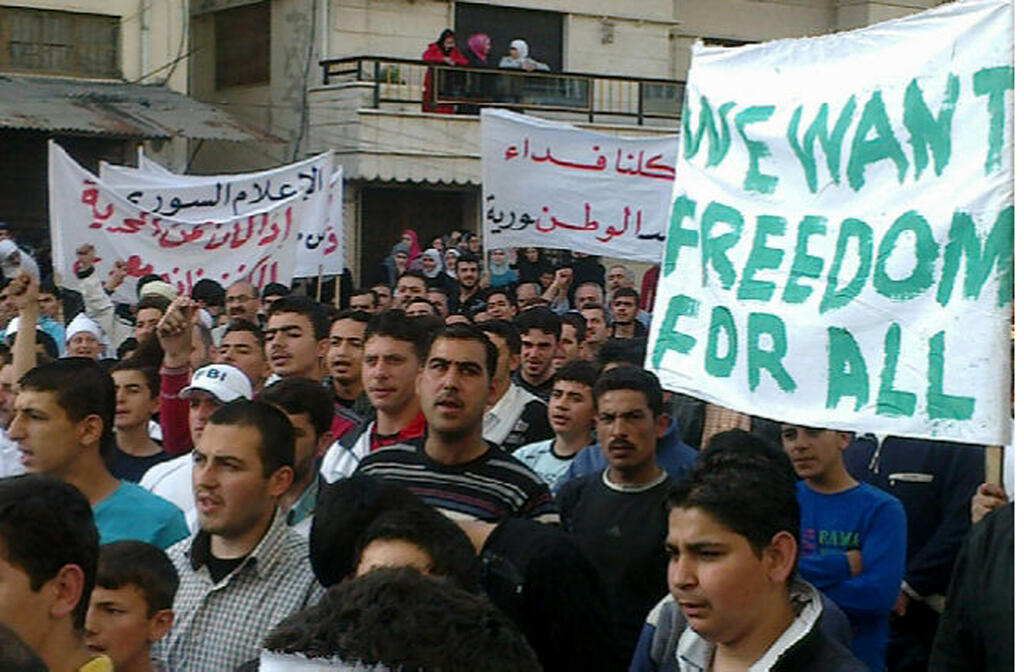
The demonstrations that broke out in 2011 as part of the Arab Spring wave of protests, and turned into a 14-year civil war
(Photo: AP)
Civil society researchers from organizations such as Open Society and the Commission for International Justice and Accountability tracked his movements, the former locating him via a social‑media photo on a Budapest bridge. These groups passed evidence to Austrian authorities, which launched a formal investigation into both al‑Halabi and possible Austrian intelligence involvement.
In April 2023, five Austrians — four former agents of Austria’s intelligence service BVT and one immigration official — were charged but later acquitted when the prosecution failed to prove that their actions harmed Austria. Al‑Halabi’s trial marks the first war‑crimes case stemming from Syria to be tried in Austria.
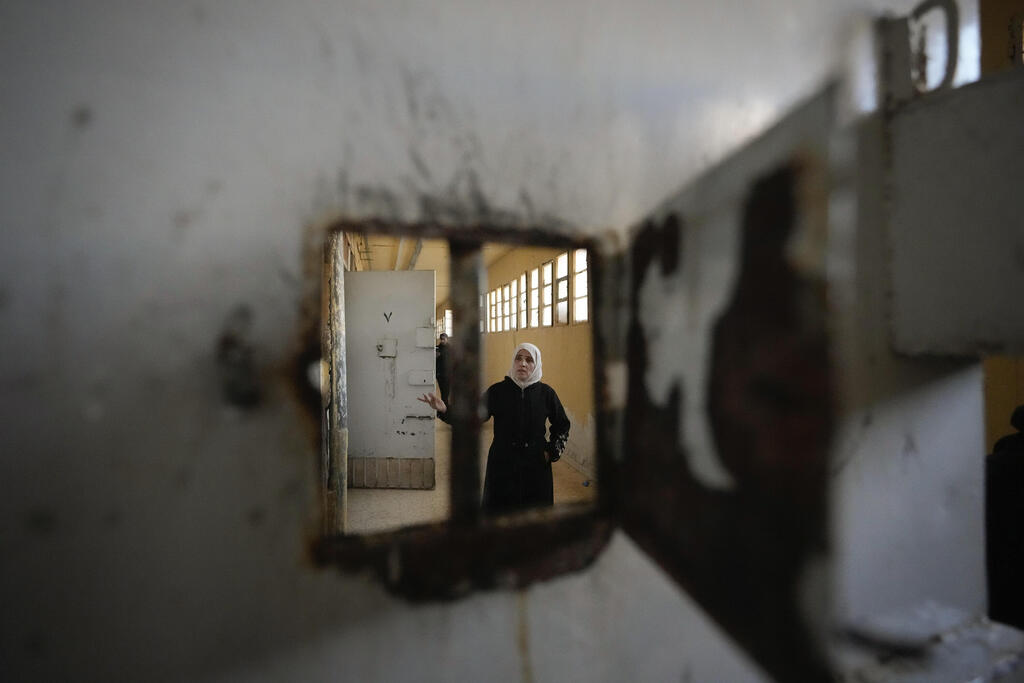
A prison cell in the infamous Sednaya prison, where many regime dissidents were tortured and murdered
(Photo: AP Photo/Hussein Malla)
Originally from al‑Masuwayda in southern Syria and of Druze heritage, al‑Halabi joined Assad’s intelligence services in 2001 and by 2008 was head of branch 335 in Raqqa. He led the crackdown once protests erupted in 2011. Austrian prosecutors say they identified at least 21 victims of his torture network, some of whom described repeated beatings and electric shocks. “When we heard the name al‑Halabi, we were terrified,” testified one former protester.
One victim, Dr. Ouda al‑Hamda, a 39‑year‑old physician from Raqqa involved in treating protestors, recounted a night of torture in al‑Halabi’s office in February 2012. Although he never met al‑Halabi in person, he saw his nameplate on the desk and was interrogated across 28 days, blindfolded and beaten with a pipe while pressed to the ground and asked to identify fellow activists. “He says he had nothing to do with this,” al‑Hamda said. “So why were we interrogated in his room?”