

Last July, the world followed reports of the massacre targeting Syria’s Druze community in the Sweida province, until a ceasefire was announced. From the start, reports inside Syria were divided. Pro-government outlets claimed that the army was trying to defend the Druze villages.
Opposition media, on the other hand, accused forces linked to the new Syrian government, led by President Ahmad al-Sharaa, of being behind the attacks. Since the ceasefire, violence has decreased but not disappeared. The government has tried to show progress through campaigns like “Sweida — Part of Us,” which raised more than $14 million for rebuilding efforts. Still, local leaders remain split — some support the government, while others are calling for self-determination and accountability. For many in Sweida, the conflict may have calmed down, but it is far from over.
(Video: Lior Sharon)


At the time of the massacre, Israel carried out airstrikes in Syria, saying it aimed to defend the Druze population. The international outcry and Israeli intervention led to a temporary halt in fighting, but reports from the province suggest that violence and distrust remain.
Media coverage of the conflict has reflected deep divisions. Outlets affiliated with Syria’s new regime have portrayed its forces as trying to protect the Druze by deploying troops and targeting criminal gangs. Opposition-aligned media, however, reported that pro-government forces were behind attacks on Druze villages.
Inside Sweida, opinions toward the regime remain split. Some residents have voiced support for integrating into what they call the “new Syria,” while others, particularly followers of Druze religious leader Sheikh Hikmat al-Hijri, continue to demand self-determination for the province.
Although reports of large-scale clashes have declined since the ceasefire, sporadic fighting has continued. Both pro- and anti-regime outlets reported new confrontations with casualties in recent days.
On Oct. 12, officials and local representatives gathered in the village of al-Surah, in rural Sweida, to launch a campaign under the slogan “Sweida — From Us and Within Us.” According to official Syrian reports, the initiative raised more than $14 million. The state-run news agency SANA said it was organized by young people from across Syria to support reconstruction in Sweida and promote “national unity,” describing the province as “a precious and inseparable part of the fabric of Syria.”
President al-Sharaa did not attend the launch but expressed support for the initiative in a recorded phone call with the governor and the provincial security chief. Information Minister Hamza al-Mustafa acknowledged that the situation in Sweida “remains difficult and far from ideal.” He blamed “old rifts caused by the previous regime’s use of sectarian division as a survival strategy” and said social media was worsening tensions by fueling sectarian discourse. He urged a shift toward “civic dialogue” and said he hoped the campaign would mark “the beginning of healing and the building of a better future.”
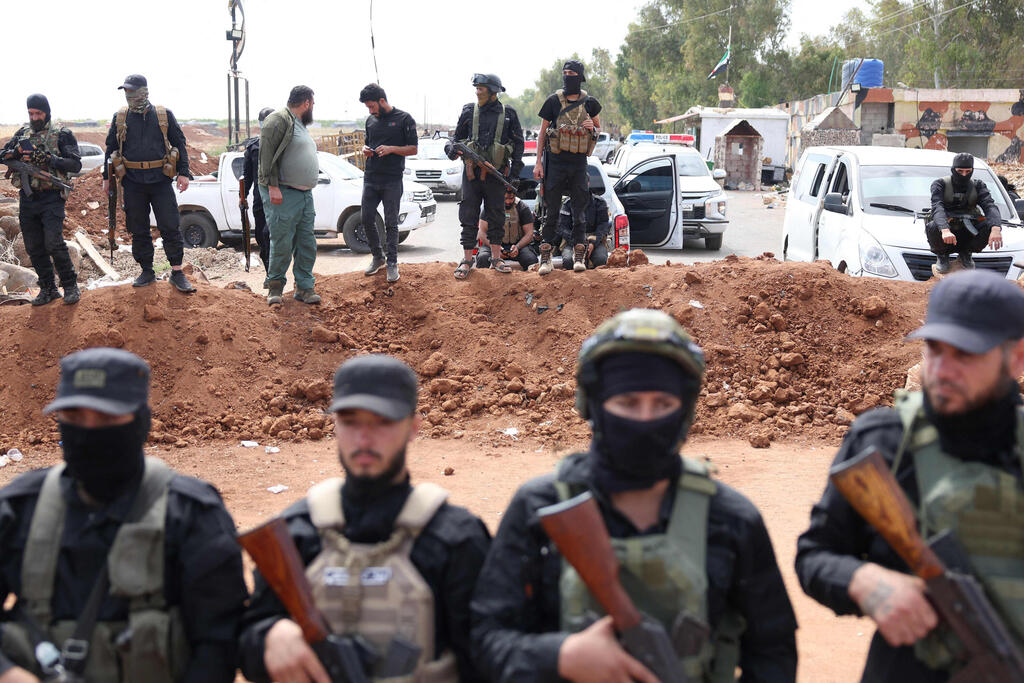
Syrian government forces in Sweida
(Photo: OMAR HAJ KADOUR / AFP)
Despite the government’s public outreach, opposition voices in Sweida accuse the regime of using propaganda to hide its role in the province’s suffering. Hani al-Samman, a local resident, said in a video message sent to the Israeli news outlet Ynet that the government was “using corrupt media to distort the truth.” He accused the regime of destroying Druze villages and killing civilians, while trying “to show the world that it is repairing the damage and blaming the Bedouin tribes.”
In an Oct. 27 interview with Sky News Arabia, Sheikh al-Hijri said self-determination for Sweida’s residents was “a right that cannot be denied.” He called on the international community to recognize what he described as genocide against the province’s people and demanded transparency about the events that occurred.
“Our vision is based on full independence for Sweida,” al-Hijri said. “The government in Damascus insists on distorting the facts. The number of hostages exceeds 600, including women, and the government is preventing negotiations.”
Social media posts and reports from Syrian activists suggest that the situation in Sweida remains volatile and could flare up again. Analysts say the future of the province — and whether Israel might again intervene — will depend on broader regional and domestic calculations.