

Protests continued across Iran on Tuesday, with authorities reporting that a police officer was killed during unrest in Ilam province in the country’s west, as opposition groups said demonstrations also took place in the capital, Tehran.
The unrest, which the New York Times has described as pushing Iran’s leadership into a survival mode, has coincided with a sharper tone from Tehran toward Israel and the United States, including a first public suggestion that Iran could consider a preemptive strike.
Security forces and protesters clash at Tehran's Great Bazaar


In a statement issued Tuesday, Iran’s Defense Council — a body established after the recent 12-day conflict with Israel — warned that Iran’s “security, independence and territorial integrity are red lines that must not be crossed.” The statement added that Tehran does not rule out acting before an attack occurs.
“Any aggression or continued hostile behavior will be met with a proportional, decisive and firm response,” the council said. “As part of legitimate self-defense, Iran does not see itself as limited to responding only after the fact. Indications of a threat are part of the equation.”
Prime Minister Benjamin Netanyahu addressed Iran during a speech to the Knesset on Monday, warning that Jerusalem and Washington remain aligned in preventing Tehran from rebuilding its military capabilities.
“President Trump and I have expressed a clear position — we will not allow Iran to rehabilitate its ballistic missile industry, and we certainly will not allow it to renew the nuclear program that was struck hard during Operation Rising Lion,” Netanyahu said.
He added that Israel’s position remains unchanged: zero enrichment capability, removal of all enriched uranium from Iran and strict, continuous oversight of nuclear facilities.
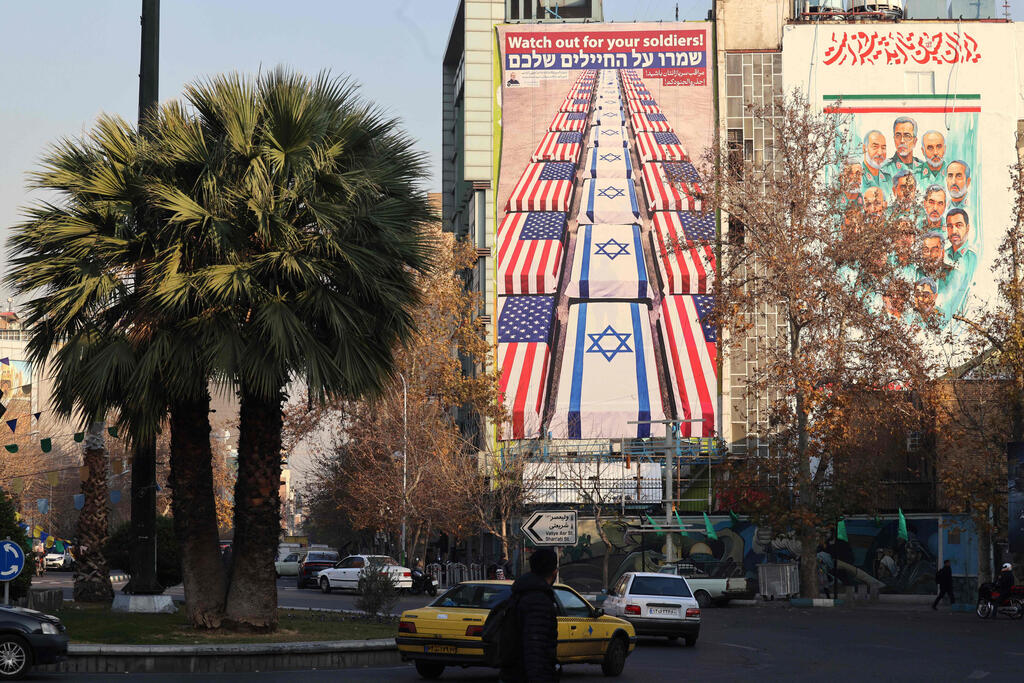
(Photo: ATTA KENARE / AFP)
Referring to the protests inside Iran, Netanyahu said Israel supports the Iranian people’s struggle against the clerical regime.
“We identify with the struggle of the Iranian people and their aspiration for freedom and justice,” he said. “It is very possible that we are at a decisive moment — one in which the Iranian people will take their fate into their own hands.”
Netanyahu also warned Tehran against military action, citing recent Iranian military exercises. He said that if Israel is attacked, the consequences for Iran would be severe.
Amid rising tensions, Qatar said it is working to prevent further escalation. Foreign Ministry spokesperson Majed al-Ansari said Doha is in contact with both Washington and Tehran.
“Any escalation involving Iran will not only threaten the stability of the region, but will also endanger the stability of the international community,” al-Ansari said.