

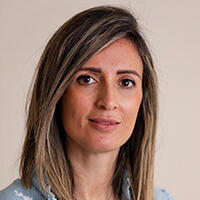
In the early morning, in a quiet home high in the Druze town of Majdal Shams, two girls were curled up on the couch when there was a knock at the door. It was a single knock, different, a little too forceful. Yasmin Khatar understood immediately. Even before she saw the soldiers, even before a word was spoken, she already knew.
“I put my hands on my head and said, ‘No, no, no,’” she recalled. “I understood on my own. I didn’t need them to tell me.”
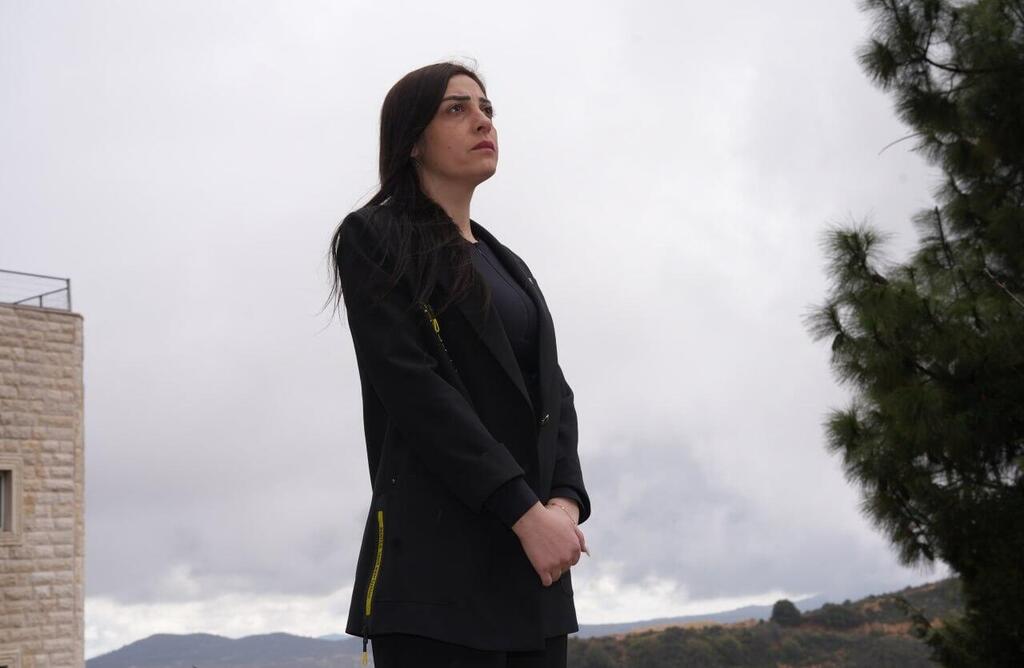
On March 8, Sgt. 1st. Class Maher Khatar, a heavy engineering equipment operator in the 91st Division of the Combat Engineering Corps, was killed in battle in southern Lebanon. He was 38. Thousands attended his funeral, which was held at the community center in his hometown of Majdal Shams, a Druze town in the Golan Heights. Residents from the Golan, the Galilee and the Carmel came to pay their last respects, alongside religious leaders, local officials and public figures.
Those eulogizing him spoke of his generosity, his deep love for his family and community, and the fact that he was among the first of his generation in the village to choose to enlist in the IDF. Khatar was considered the first soldier killed after the ground incursion into Lebanon, and his decision to enlist later in life turned him into a symbol of the change taking place in Druze society.
'Maher loved my story'
Yasmin, still adjusting to life as a young widow with two daughters, did not grow up in a Druze village. “I was born in Jaffa, but I barely remember it,” she said. “All my childhood was in Rishon Lezion. That’s where I felt as Israeli as could be.”
Her grandparents, who came from Syria and Lebanon before the founding of the state and settled in Jaffa, were at the time the city’s only Druze family. “They had 10 children, all of them were born there. That’s not something ordinary in Druze society.”
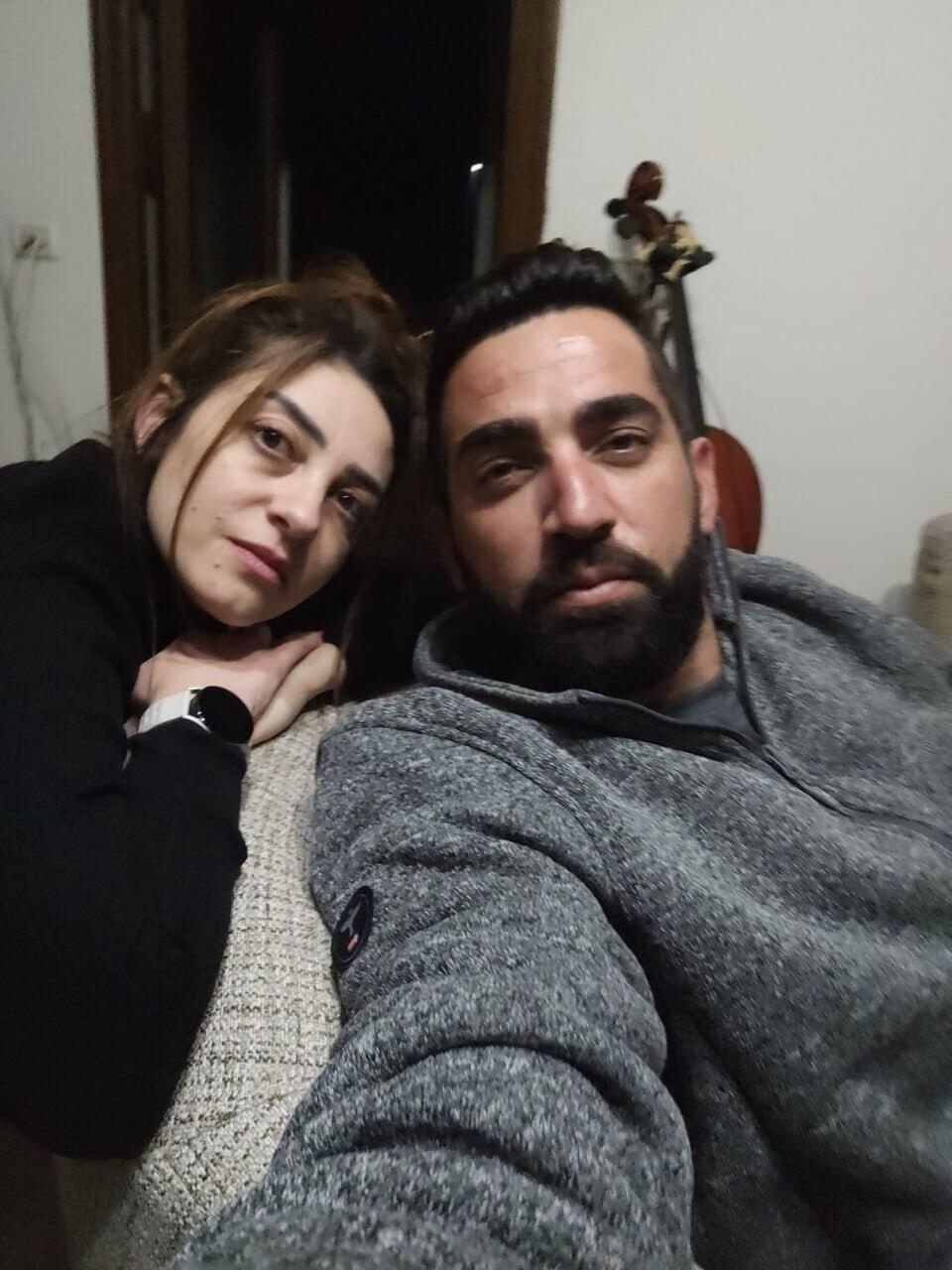
Yasmin and Maher Khatar
(Photo: Courtesy of the family)
At 17, she moved with her family to the Druze town of Isfiya, where her mother was from. “I felt like a stranger,” she said. “I didn’t feel that people really accepted me.”
She met Maher through family. “They told me, ‘Come, meet him.’ I said, ‘What do I have to lose?’ I saw him and fell in love.”
About a year later, they were married. “He loved my story. He loved that I grew up among Jews, that I was different. He was proud of that.”
After the wedding, Yasmin began closing the gaps. “I didn’t know a word of Arabic. My mother-in-law taught me every day, sat with me, spoke with me. Friends helped too, and within a year I already knew how to speak.”
Maher did not see the different cultures they had grown up in as an obstacle. “He saw it as richness. He loved my family, the way I grew up.”
Maher’s decision to enlist was not self-evident. He had worked civilian jobs, operated heavy equipment and lived a stable life. But when he learned of the possibility through a project encouraging enlistment, “he just jumped at it,” Yasmin said. “He wanted it very much. He always wanted to move forward, to learn, to be part of something.”
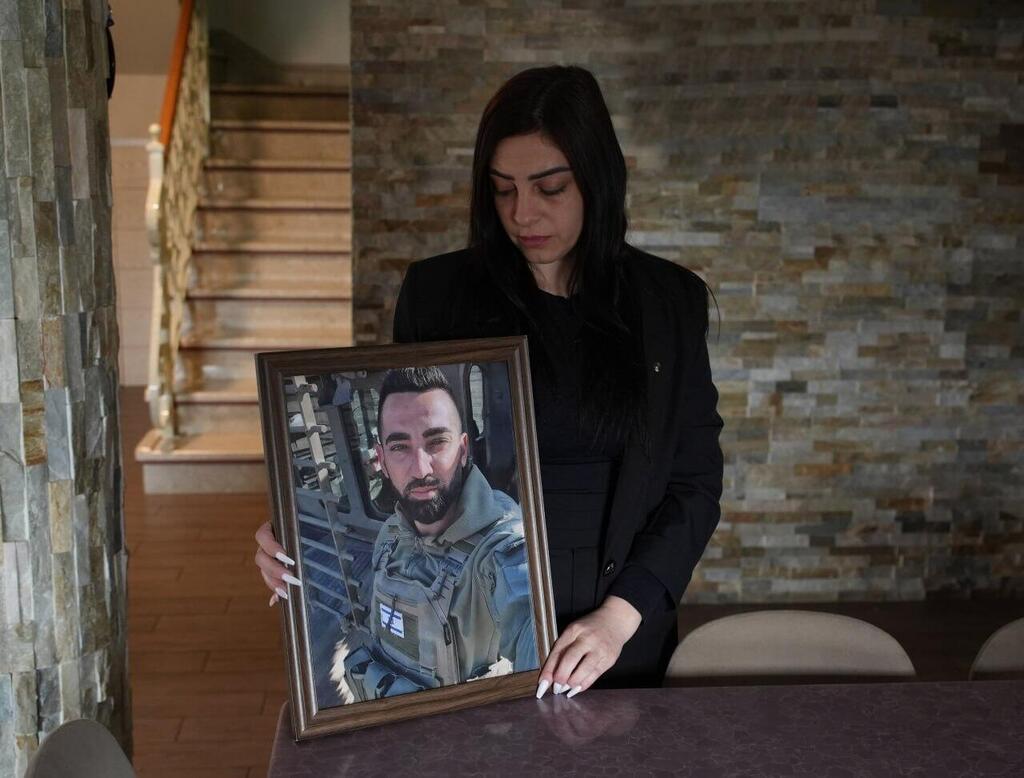
Yasmin Khatar holds a portrait of her late husband Maher
(Photo: Efi Sharir)
Even the social complexity in Majdal Shams did not deter him. “There wasn’t ostracism, but there is political sensitivity.”
“When he would come home in uniform, I would get excited over him. I was so proud of him. We talked about everything at home, including the possibility that something might happen. It was as if he was preparing us. We would talk about the dangers with the girls. In the week before Maher was killed, there was something bad in the air. I felt physically unwell, as if something was about to happen. Our last conversation was a video call, an ordinary conversation of a few minutes. We asked if everything was all right and he said yes.”
'The younger one doesn’t talk about him at all'
On Sunday, at 8:30 in the morning, came the knock that changed her life. “Someone from the local council told me there were people who wanted to speak with me. At that moment, I already knew. I hugged the girls, who understood from my reaction.”
By the time the soldiers arrived, she was already prepared. “They told me it was a matter of minutes. That he was killed on the spot. It was important for me to know that he did not suffer.”
Maher and Yasmin were raising two daughters: 9-year-old Talia and 11-year-old Silia. “The younger one still doesn’t talk about him at all. She doesn’t want to hear about him. The older one cried and said very difficult things. At the funeral she shouted a sentence that broke everyone’s heart: ‘I wish it had been me and not him.’”
Maher’s story is also part of a broader process taking place in Majdal Shams and among the Druze in the Golan Heights. He is the third fallen soldier from the town in Israel’s wars; the two who preceded him were killed in 1988 and 1952. For many years, people from the area generally did not enlist, in part because Israel’s draft law did not apply to them and their civil status was complex. But in recent years a new trend has emerged, and about 150 young people from Majdal Shams have already enlisted in the IDF.
“There are many more who want to,” Yasmin said. “It’s just that not everyone says it out loud. I will continue Maher’s path, to carry the message of enlisting, of being part of it.”
When Maher was killed, there was no military burial section in Majdal Shams. Yasmin insisted and worked to establish one so that her husband could be buried as befitted a soldier killed in battle. “It was important to me, in the hope that he will be the last fallen soldier,” she said. “I want his section to be alive. Full of joy for life, like he was.”
But she says she wants not only a proper burial, but also deeper change. “I want to work to change the Nation-State Law. Yes, this is a Jewish state, but we are also part of it. We belong to it, we give of ourselves. The law should reflect that too. In the end, we are all one. We all belong to this country.”