


Yasmina Khatar, the widow of Sgt. First Class Maher Khatar, who was killed overnight Sunday at a post in southern Lebanon alongside Staff Sgt. Or Demry, spoke to ynet about her late husband’s decision to enlist, his entry into Lebanon and the challenge of continuing life without him.
“We always knew the dangers. I knew it could one day end with a knock on the door,” she said in pain. “It was not the first time he went in there. We took everything into account. We understood what could happen. He simply went in and fought.”

Khatar, a heavy engineering equipment operator with the 91st Division in the Combat Engineering Corps, was killed together with Demry at the Magen Tzivoni outpost near Margaliot along the Ramim Ridge, which straddles the Israel-Lebanon border. The outpost is one of several new positions the IDF established after its most recent ground maneuver in Lebanon.
A combat engineering force that included two D9 bulldozers set out to rescue a tank from the 601st Battalion that had become stuck. During the rescue operation, one of the 91st Division’s D9 bulldozers was hit, possibly by a mortar shell that struck a fuel tank or by a missile, killing the two soldiers. The forces called for air support to provide covering fire as they evacuated casualties.

Khatar's funeral in his hometown of Majdal Shams
Khatar’s decision to enlist in the IDF was not simple. The 38-year-old resident of Majdal Shams faced strong local opposition. “There was absolute resistance here to anything related to enlistment. It was not accepted and not customary,” Yasmina said. “But Maher firmly decided to follow that path. That was truly what he wanted. He did it with courage and from the heart. He wanted to defend the state and be part of it. He always told me, ‘This is a mission. To be part of the state as an Israeli citizen.’ Despite all the dangers, he said, ‘I want this and I will do it.’”
Majdal Shams, a Druze town in the Golan Heights, has historically had limited participation in the IDF. Israel captured the Golan Heights from Syria during the 1967 Six-Day War and later annexed the territory. Many Druze residents of the Golan continued to identify as Syrian and declined Israeli citizenship. Because they are not subject to Israel’s mandatory military draft — which applies to Druze citizens elsewhere in the country — enlistment from Majdal Shams remained rare for decades.
In recent years, however, a gradual shift has emerged among younger residents, with roughly 150 people from the village choosing to volunteer for service in the military.
Khatar is the third soldier from Majdal Shams to be killed in Israel’s wars. Two others from the village died in 1952 and 1988.
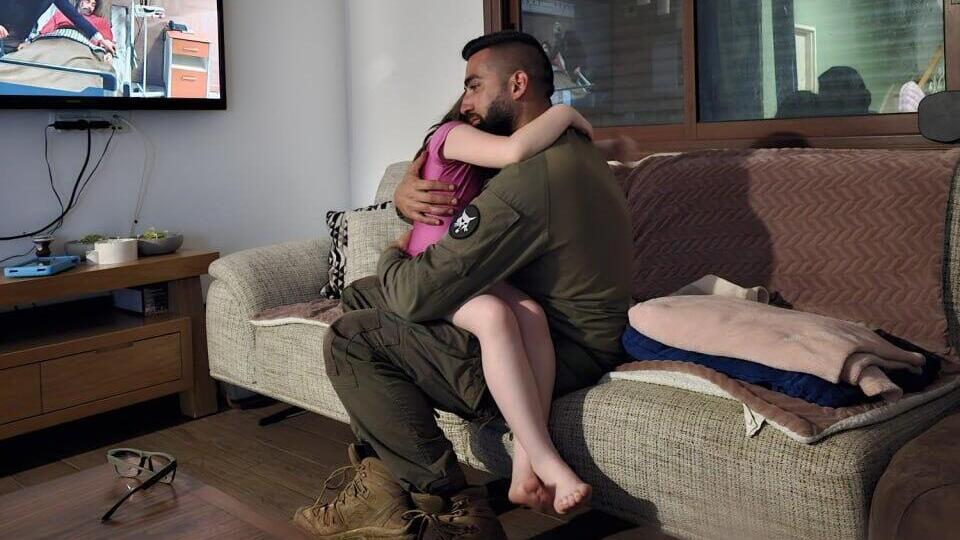
The late Maher Khatar and one of his daughters: “Despite the dangers, he said, ‘I want this.’”
(Photo: Courtesy of the family)
Yasmina stressed that her husband had decided to enlist well before the violence in southern Syria last year, when forces loyal to President Ahmad al-Sharaa carried out a massacre in the Druze-majority province of Sweida, which later prompted a small but noticeable increase in enlistment among Druze youth in the Golan.
“He enlisted before everything happened there,” she said. “But the massacre in Sweida raised awareness among many people. Many young people took the initiative and decided to enlist. It was a breakthrough moment for them to understand that if we do not stand here in our country, it would be a mistake not to be part of the defense and protection of the state.”
Khatar leaves behind two daughters who are struggling to cope with the loss. “At first, they tried to suppress what happened. They did not want to believe it,” she said. “Then yesterday evening it finally sank in. They understood that their father had been killed and would not return. It is very difficult. The coping will be terrible.”
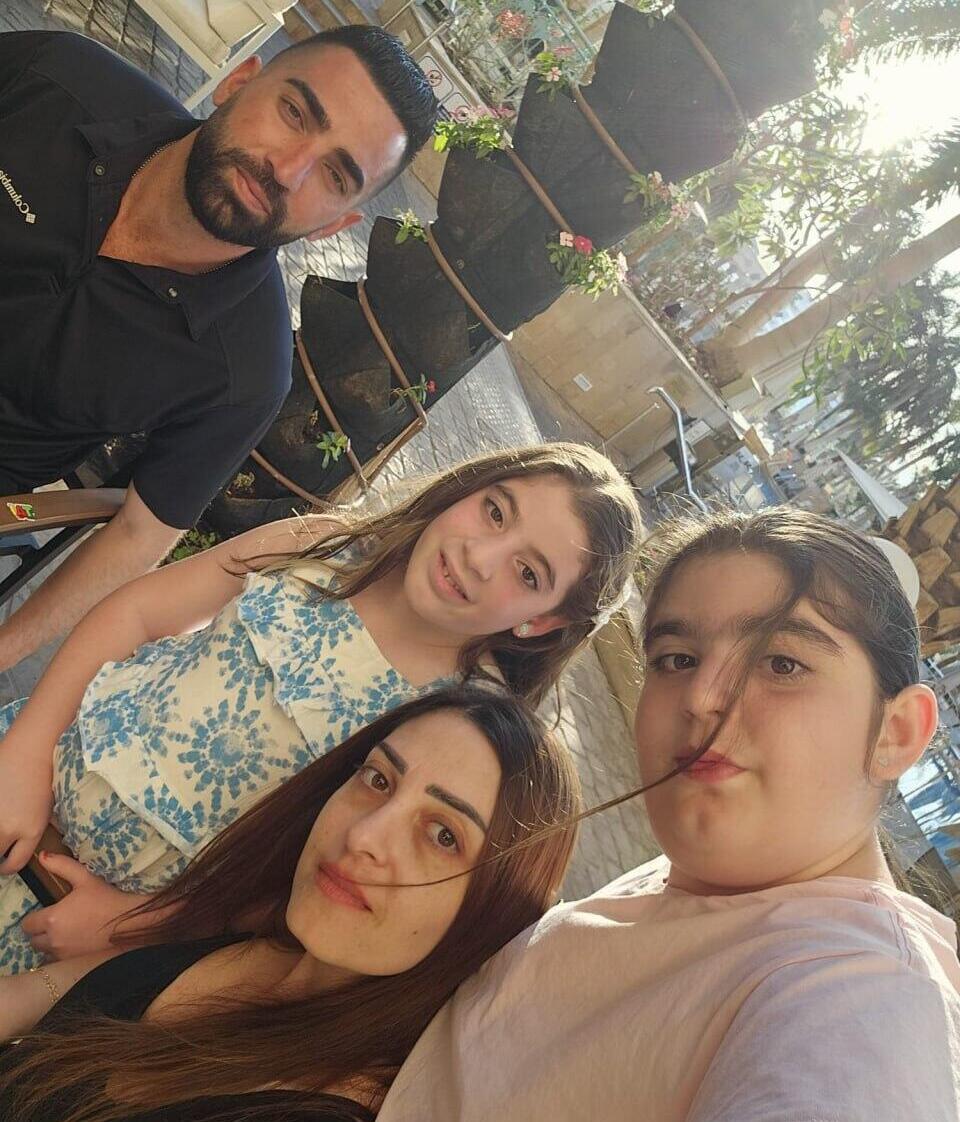
'At first they didn’t want to believe he was killed.' Maher Khatar and his family
(Photo: Courtesy of the family)
“I have an amazing family that supports me, my parents, his parents, all of us united,” she added. “I am a strong person, even if sometimes I break down, cry and carry the pain in my heart. This is a very hard loss, but I must be strong. I have two daughters that I must raise and take care of.”
Her last conversation with her husband remains etched in her memory. “On Saturday, we had a video call. He saw us and we spoke,” she recalled. “I asked him how he was feeling, what he was eating and drinking. The girls also asked him questions. He told me, ‘Take care of the girls.’ That was our last conversation. On Sunday, the terrible news arrived.”