

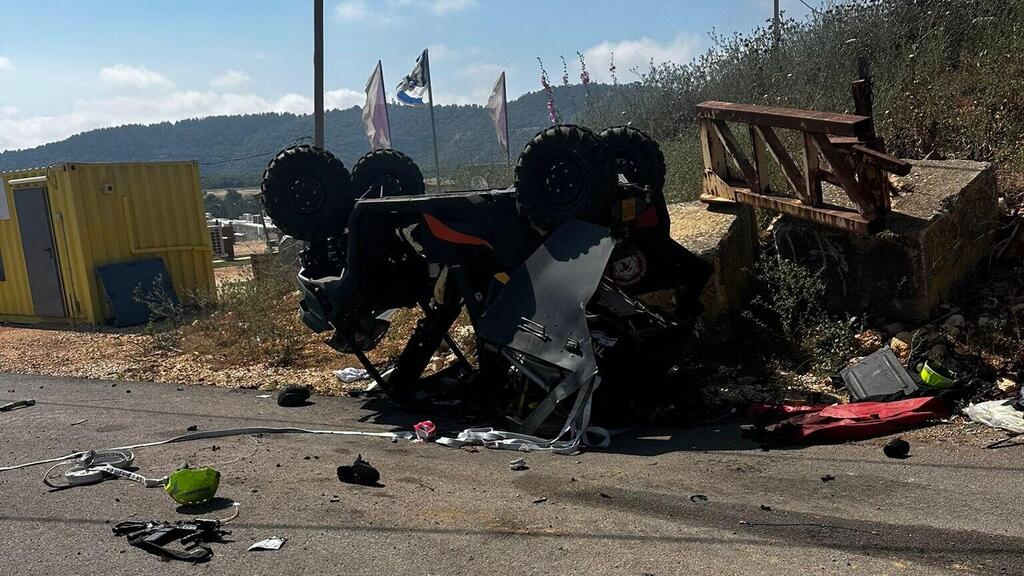
“We are at war, we are not in a ceasefire.” That is what security establishment sources told ynet on Thursday, amid anger in northern Israel following a series of drone attacks that also led to the death of Sergent Rotem Yanai. “We have been in this campaign for three months already and we are in a relatively significant and intense phase. We are on the defensive and within that framework we are carrying out major offensive actions.”
On Thursday evening, sirens continued to sound in the Galilee Panhandle and in Kiryat Shmona among other locations, with a brief power outage reported.
IDF claims that since the start of the war, between 7,000 and 8,000 Hezbollah operatives have been killed, including nearly 2,500 militants since the launch of Operation "Roaring Lion." Since the “ceasefire,” officials say about 800 additional Hezbollah militants have been killed and more than 10,000 wounded.
The IDF also said it carries out more than 100 strikes daily, including north of the Litani River and in the areas of Tyre and Sidon. According to officials, “around 20 to 30 militants are neutralized almost every day,” including sector commanders and site commanders.
Laser, nets, microwaves and paint on lenses: how to stop Hezbollah’s deadly drone threat
The army confirmed on Thursday that seven “key” operatives were killed over the past two weeks, including the commander of the Al-Khiyam area, the deputy assistant commander of the Badr unit, the intelligence officer of the Shaqif area, the engineering officer of the Yohmor municipality, the deputy engineering officer of Yohmor, and the commander of the Jibsheet village sector and engineering officer in the Jwaya sector.
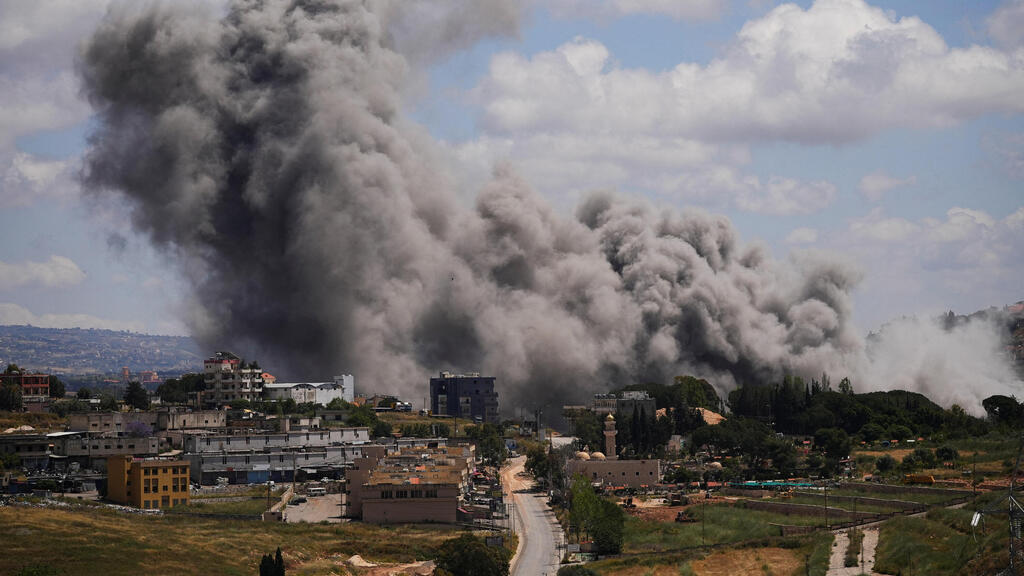
Lebanon strikes
(Photo: REUTERS/Stringer)
IDF spokesperson Brigadier General Effie Defrin said after the death of Sergeant Rotem Yanai from a FPV drone strike: “We are constantly dealing with the drone threat. The best minds in and outside the IDF are working on it. We are focusing on three main efforts: detection to provide early warning, interception, and protection of forces on the ground. As the Chief of Staff said yesterday, there are no limitations on force deployment or resources when it comes to the safety of our troops and citizens.”
Security officials now assess that Hezbollah has changed its operating pattern and fear a “merging” of the Iranian arena with the war in Lebanon. “We see Hezbollah conducting stand-off combat and almost not engaging directly with IDF forces,” officials said. “Its ability to function as an organized system has been significantly damaged and the organization has been weakened.”
Officials say Hezbollah is seeking to be included in a broader arrangement with Iran and is pushing toward a ceasefire, while Israel continues to apply pressure.
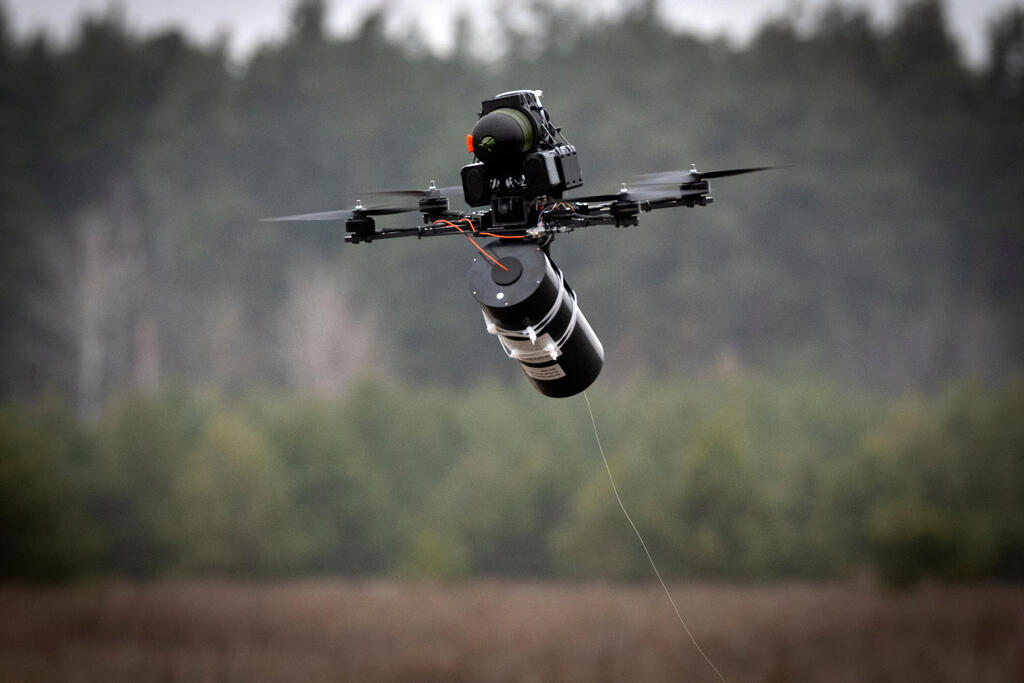
FPV drone
(Photo: Efrem Lukatsky/AP)
According to the sources, the goal of the fighting is to establish an improved defensive line along the entire border to better protect Israeli communities from indirect fire, direct fire and infiltration attempts. “The aim is to create a buffer zone that serves as a security area for residents,” they said, alongside heavy damage to Hezbollah and the elimination of as many operatives as possible. However, they acknowledged: “The objective, which is still far off, is to disarm Hezbollah.”
The security establishment also addressed ongoing diplomatic talks, saying “it is not certain we will succeed, because not everything depends on us,” referring to efforts to separate Hezbollah from Iran in negotiations between Tehran and Washington. At the same time, they said there are “direct talks between Israel and Lebanon, which are very significant and mediated by the United States.”
Officials added that while it is unclear whether these talks will lead to concrete results on disarming Hezbollah, they are still important because they serve the goal of separating Hezbollah from Iran, something they say is concerning the group.
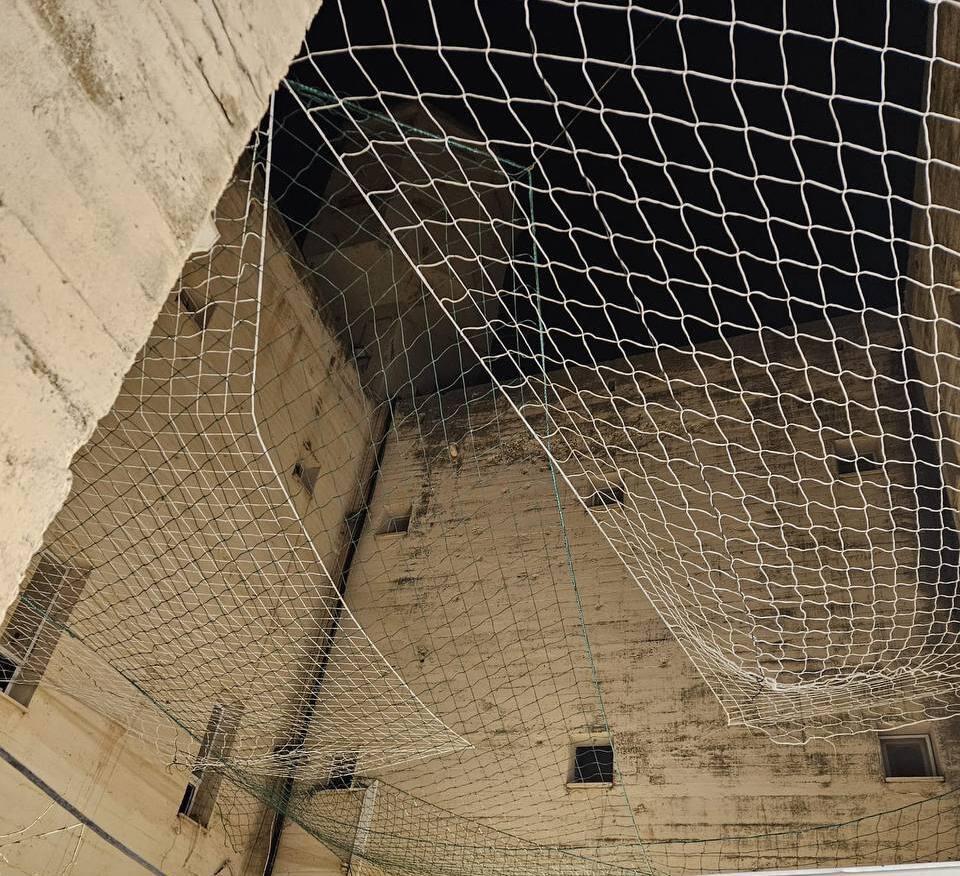
Improvised anti-drone nets
The IDF described a wide deployment of forces along the border and deep inside Lebanese territory, including areas between villages in southern Lebanon. “Within this space we are conducting defensive and offensive operations,” officials said. “The goal is to destroy enemy infrastructure to create a security zone free of enemy presence and civilians.”
In the north, the IDF is carrying out ongoing efforts to “sanitize the area.” Officials said there is still significant weapons stockpiling and “an enemy that is trapped.” Almost daily raids are conducted beyond the “yellow line” to push the enemy back and strengthen defenses.
Since the announcement of the ceasefire, six soldiers and one engineering vehicle operator have been killed by drone strikes and dozens have been wounded. “There is a real learning race between us and Hezbollah,” officials admitted. “We are developing solutions and Hezbollah is learning. There is progress, but more is needed.”
The IDF is focusing on detection, warning, protection and interception, using radar and observation capabilities and now improved forward detection systems.
On protection, officials said the main solution is nets. “It is simple but effective. Dozens of drones have been caught in nets.” However, they acknowledged drawbacks: “It exposes positions because the enemy sees where we are and where we deploy nets, but we are fortifying them like strongholds.”
The IDF said troops in the Northern Command have been equipped with shotgun-style weapons, fragmentation rounds and close-range rifles, and that there have been dozens of successful drone takedowns.
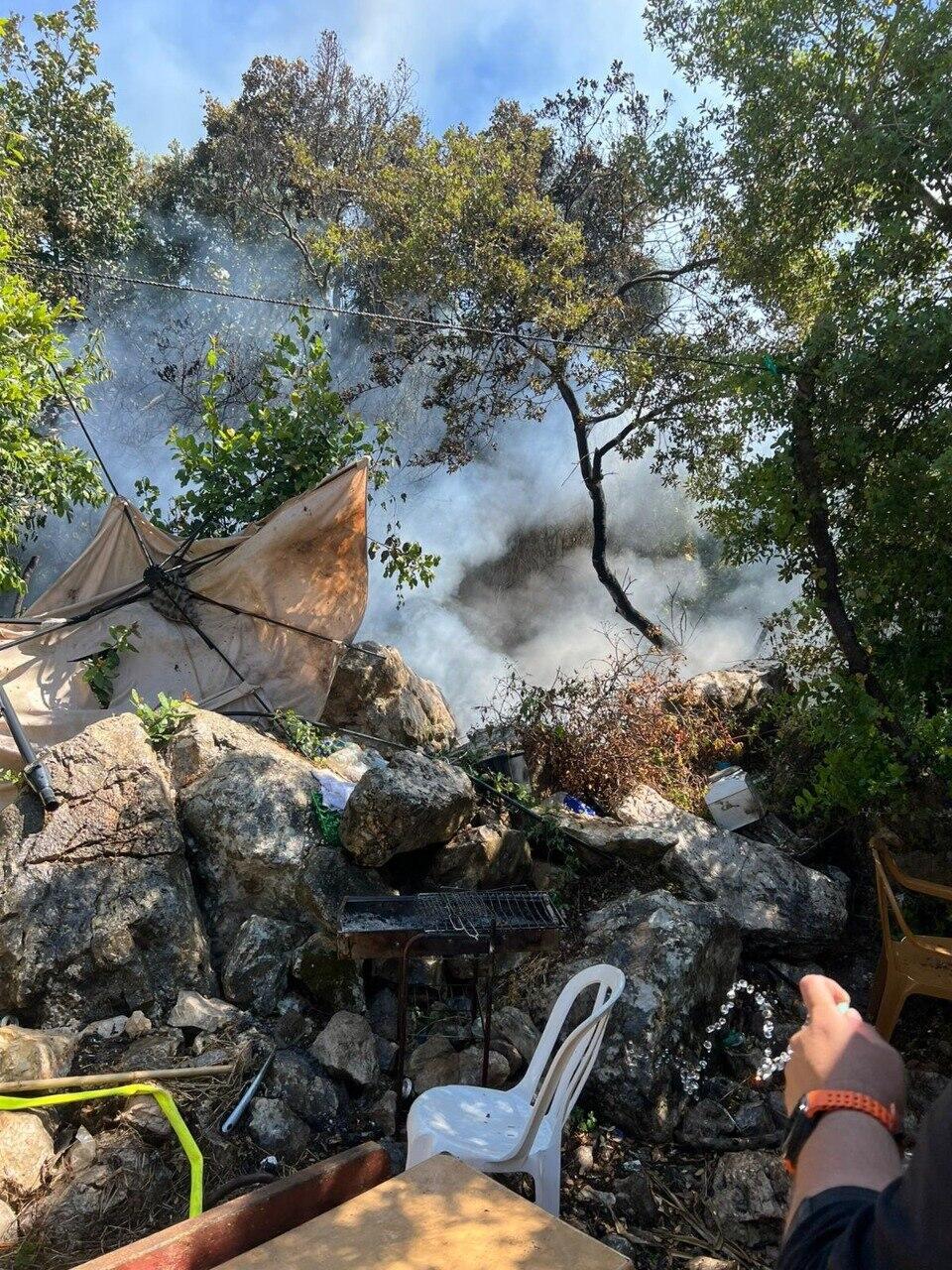
Drone strike in the Shomera area
“There are additional efforts, inventions and solutions related to drones and we have hope in them,” one security official said. Hezbollah is reportedly launching drones from 10 to 15 kilometers away, but the IDF is also preparing for longer-range threats and night launches.
Officials also said they are in contact with northern Israeli municipalities regarding civilian preparedness.
“Right now they are mainly attacking bases and less often communities,” officials said. “We tightened guidelines after seeing that friction is reaching civilians.” They added that decisions are currently balanced between maintaining emergency readiness and avoiding full shutdowns. “These developments can create the right pressure. Everyone understands this cannot continue for months.”
Regarding the Lebanese army, officials said there are areas of cooperation but emphasized: “There is still a very long way for them to disarm Hezbollah.” One official added: “I think the only one who can disarm Hezbollah is the IDF.” At the same time, they noted: “Things are happening in Lebanon against Hezbollah that have never happened before.”