

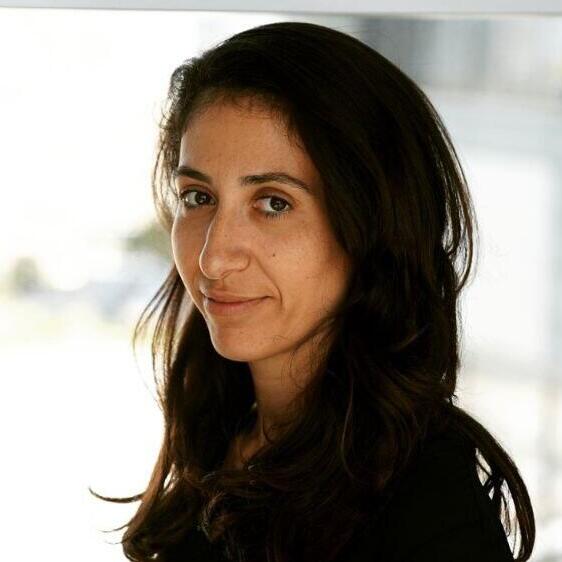
Adm. Brad Cooper, commander of the U.S. military’s Central Command responsible for the Middle East, issued an unusual statement Monday evening praising the Lebanese army for uncovering what he described as a massive Hezbollah tunnel.
Cooper said the Lebanese Armed Forces had recently located a large underground tunnel used by Hezbollah for the second time in less than two months. He said dismantling tunnels used by nonstate actors to store ammunition, rockets and attack drones contributes to peace and stability in Lebanon and across the region, and commended both the Lebanese army and the U.S.-led mechanism assisting in enforcing commitments made by Israel and Lebanon.
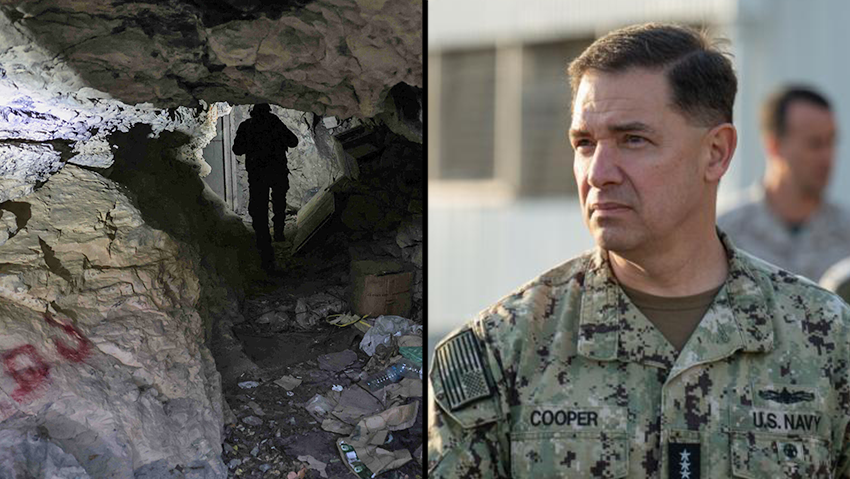
Earlier Monday, Saudi-owned Al-Hadath TV quoted a senior U.S. official as saying the Lebanese army, acting on U.S. intelligence, inspected a site in the Al-Halloussiyah area and discovered a large weapons depot. According to the report, 348 packages were found, each containing 1,000 rounds of ammunition. The official said the United States is urging the Lebanese army to move more quickly to disarm Hezbollah, adding that the army is capable of carrying out the mission both south and north of the Litani River at the same time.
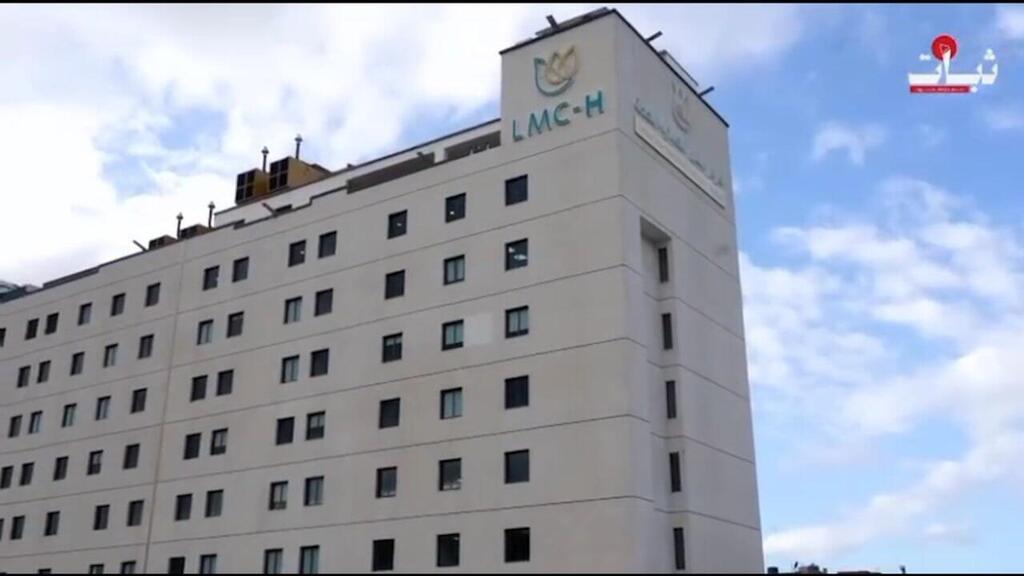
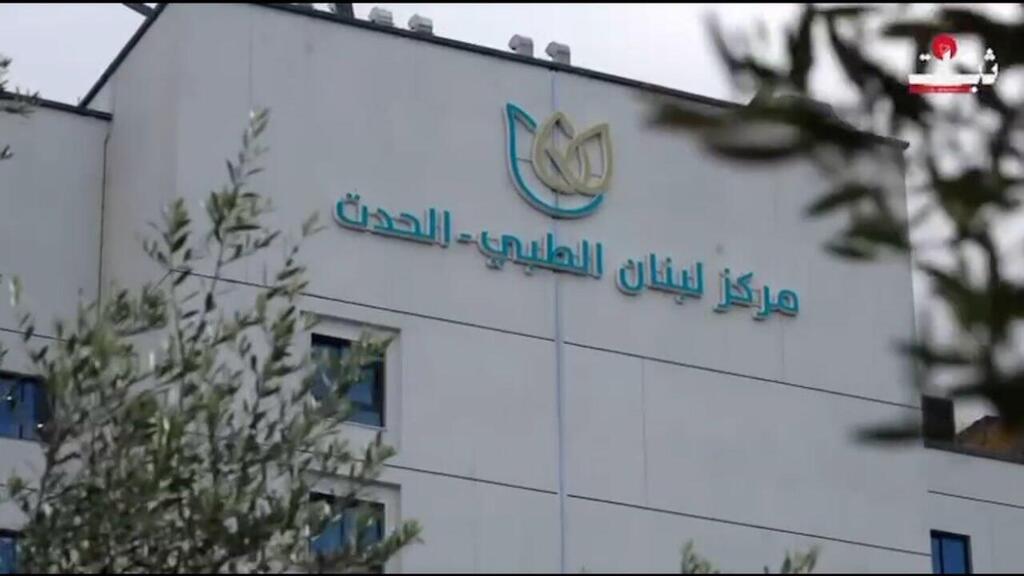
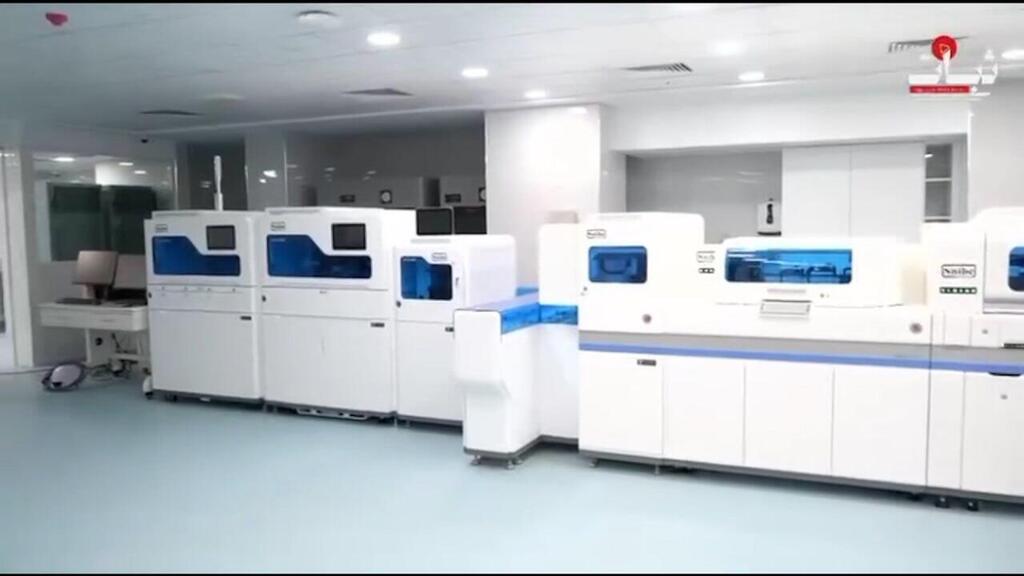
Meanwhile, a new hospital named the Lebanon Medical Center was inaugurated Monday in Beirut’s Dahieh neighborhood, a Hezbollah stronghold. According to reports, the hospital is intended to serve all Lebanese, but it is located in the al-Hadath area of Dahieh, a neighborhood that has been repeatedly hit during the war over the past two years and is identified with operatives of the terrorist organization. The project was overseen by Lebanon’s health minister, Dr. Rakan Nassereddine, a Hezbollah-affiliated politician, effectively embedding the organization’s so-called civilian wing deep within the hospital.
Footage from the new hospital in Beirut’s Dahieh


Among those speaking at the opening ceremony was Hezbollah Secretary-General Naim Qassem, who also addressed recent developments in southern Lebanon and the situation with Israel.
Qassem referred to Israeli military activity overnight in the village of al-Habbariyah and said Lebanon’s main problem is what he described as Israeli and American aggression. He argued that such aggression can be deterred only through the military strength of the “resistance,” popular backing and political power, and said Lebanon should focus on halting what he called aggression in all its forms while also addressing the country’s financial and economic crisis.
As noted, the opening of the medical center at this location was accompanied by the Lebanese health minister, an infectious disease specialist by profession. He is one of two Hezbollah-affiliated ministers in the Lebanese government, the other being Labor Minister Mohammad Bahjat Haidar.
Lebanon’s National News Agency reported over the weekend that Nassereddine toured the new hospital, visited its wards and inspected the medical equipment. After the visit, he described the facility as a model, highly advanced hospital equipped with the latest technologies. He said its importance stems in part from its location, adding that placing it in Beirut’s Dahiyeh sends a message of resilience despite repeated attacks. Speaking in his ministerial capacity, he said the Health Ministry estimates the medical center will be among the most efficient in the country and will serve all Lebanese.
Nassereddine also attended and spoke at Monday’s opening ceremony. The hospital began admitting patients in January, but the official inauguration was held only now.
Hezbollah is known for exploiting civilian infrastructure for terrorist purposes, including medical facilities and personnel. While its political wing is part of the Lebanese government, it is not separate from its military wing. During the war, Lebanese media outlets affiliated with the organization repeatedly claimed Israel had targeted medical personnel and facilities, when those involved were in fact militants. It is also well documented that Hezbollah operatives hold civilian jobs alongside their membership in the organization, including positions within Lebanon’s health services.
Hezbollah also operates the Islamic Health Authority, which functions as the organization’s medical corps, including for its military wing, under the guise of a civilian body. During the war, operatives from the authority were killed, though Hezbollah presented them as medical workers. As a result, the new hospital, located in Dahieh and established with the backing of senior Hezbollah figures, could become another site of activity under civilian cover.
The hospital’s official opening came a day after eight Lebanese hospitals were added to a terrorism list in another Arab country. On Sunday, Kuwait’s committee for implementing U.N. Security Council resolutions announced the inclusion of eight Lebanese hospitals on the country’s terrorism list.
The hospitals named were Sheikh Ragheb Harb Hospital in Nabatieh in southern Lebanon, Salah Ghandour Hospital in Bint Jbeil, al-Amal Hospital in Baalbek, St. George Hospital in al-Hadath in Beirut’s Dahieh, Dar al-Hikma Hospital in Baalbek, al-Batoul Hospital in the Hermel area in eastern Lebanon and two additional hospitals, al-Rasoul al-Aazam and Shifa.
The measures announced against the institutions were economic, banning all financial activity involving them. Beyond their designation and the restrictions imposed, no further details were provided on the reasons for the move.