

Iran and its proxy in Yemen, the Houthis, are now the only elements of the Shiite axis still launching missiles and drones at Israel in recent days. Hezbollah has largely halted its fire due to internal pressure and the heavy toll the war has taken on Lebanon.
However, despite Israel's ongoing Operation Rising Lion, aimed at dismantling Iran’s missile and nuclear infrastructure, the Houthis have so far not intensified their pace of fire toward Israel.
One factor is the extended U.S. aerial campaign in Yemen, which only recently concluded and left the Houthis severely weakened, even though they continued their attacks throughout. Israel, however, has yet to inflict a decisive cost on the Houthis that would deter further attacks. Saudi Arabia and the UAE have similarly failed to do so for years.
Intelligence assessments suggest the Houthis still possess a vast weapons stockpile capable of launching wide-scale attacks—not just isolated missile launches. So where does it go from here?
The expectation that faded
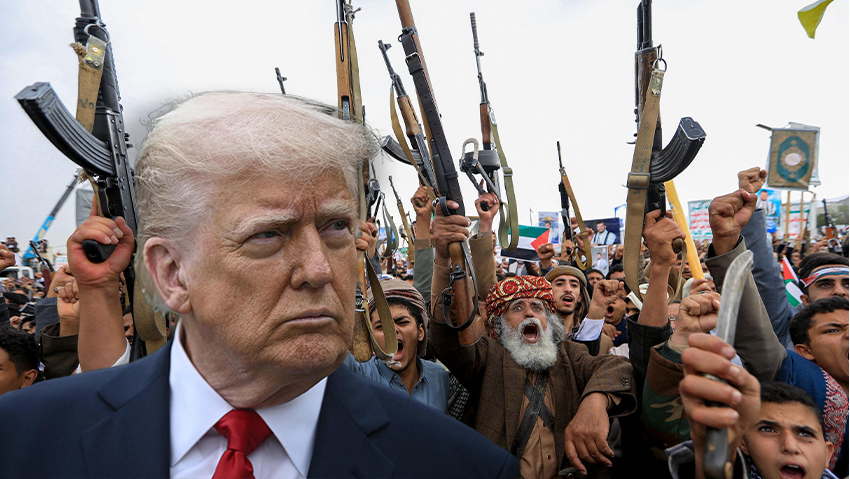
On May 8, U.S. President Donald Trump dropped a political bombshell: he announced a ceasefire with the Houthis after more than a month of airstrikes in Yemen, effectively leaving Israel—and other Houthi adversaries—to face them alone. Many anti-Houthi factions expressed disappointment with the decision, particularly amid growing speculation about a potential ground operation by Yemen’s internationally recognized government with U.S. support.
Trump, whose envoy Steven Witkoff brokered the ceasefire in Oman, did not include Houthi attacks on Israel in the agreement. The move reportedly stemmed from the high cost of the operation and its limited strategic gains. Since then, the Houthis have continued firing on Israel, demanding an end to the “blockade on Gaza” and cessation of the war as conditions to stop their attacks.
US President Donald Trump announces the conclusion of the bombing campaign against the Houthis


In recent days, they have added new justifications for their strikes on Israel, including retaliation for IDF attacks in the Hezbollah stronghold of Dahieh and visits by Jews to the Temple Mount, which they frame as a “raid on Al-Aqsa.” Strikes continued even after a rare Israeli Navy attack on Tuesday, when missile boats, not Air Force jets, targeted the port of Hodeidah.
The Houthis, despite heavy losses, have portrayed themselves as victorious against the U.S. In Yemeni discourse, the ceasefire was framed as a strategic win. Senior Houthi officials made such claims in interviews with Arab media, and the group's leader repeatedly cited it in recent speeches. In early May, celebrations were even held in Yemen to mark what they called "America’s defeat in the confrontation."
Expectations among Yemenis in the southern, non-Houthi-controlled part of the country quickly faded following Trump's ceasefire announcement. At the time, reports indicated that Yemen’s internationally recognized government, based in the city of Aden, was engaged in intense discussions with the U.S. and other actors—including the United Kingdom—about launching a ground offensive.
Preparations of Israeli Navy attacks on Yemen's Hodeidah Port
(Video: IDF)
Sources close to the Houthis told the Qatari newspaper The New Arab that in response to the reports, the Houthis were reinforcing their front-line positions and laying landmines in anticipation of a possible ground campaign.
Yemen has remained fractured since the outbreak of its civil war. In 2015, the Houthis expelled the Yemeni government from the capital Sanaa and have since maintained an iron grip over western and northwestern Yemen. The internationally recognized government continues to operate in the south, alongside the Southern Transitional Council (STC), a powerful faction supported and trained by the United Arab Emirates.
‘Trump wanted a personal victory and let us down’
A Yemeni political and security analyst, who supports the country’s internationally recognized government and opposes the Iranian-backed Houthi movement, told Ynet that Trump’s ceasefire agreement with the Houthis derailed a potential local offensive.
“All Yemenis were deeply disappointed by the deal, which Trump pursued for personal political gain,” said the expert, who requested anonymity due to the sensitivity of speaking with an Israeli outlet.
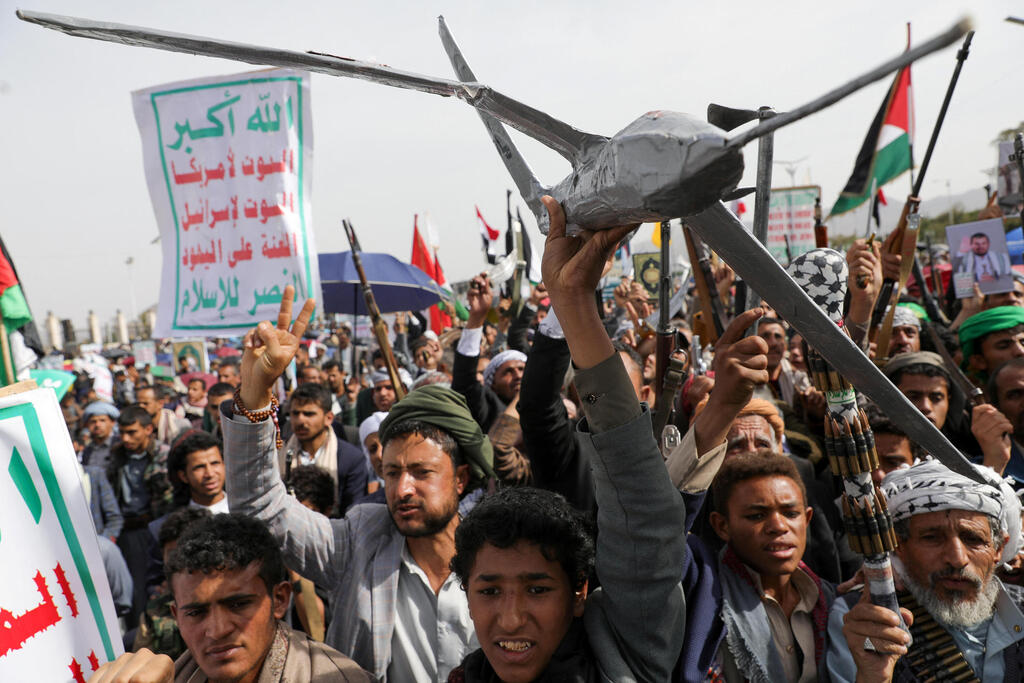
Houthi rally in support of the Palestinians in Sanaa, Yemen
(Photo: REUTERS/Khaled Abdullah)
“Yemenis understand that the Houthis never end a war unless it’s to prepare for the next one. I believe there were real preparations for a ground assault. Many forces, even from Houthi-controlled areas, were ready to act, but international developments disrupted those efforts and gave the Houthis valuable time to regroup under the guise of political negotiations.”
The analyst argued that continued U.S. airstrikes—especially drone operations—could have dismantled Houthi leadership infrastructure in Hodeidah, disrupted Iran’s smuggling routes through the Red Sea, attacked Saada province and crippled the Houthis’ missile capabilities. “These goals are not impossible,” he said. “But achieving them now would come at a far higher cost.”
He criticized what he described as a lack of sovereign decision-making by the Yemeni government, noting that strategic choices remain largely in the hands of Saudi Arabia and allied states. “Saudi Arabia has shifted its focus to Vision 2030 and its national economy, especially after the 2019 attack on its oil facilities. Since then, it has leaned toward a roadmap for peace,” he said.
“The Houthis are fundamentally driven by Iranian ideology and cannot be restrained easily. A united front against them could have made a difference, particularly at a time when they were experiencing military, political and security confusion. Many Yemeni factions, domestic and abroad, were prepared to cooperate—but the lack of decisive leadership and waning support squandered the opportunity.”
'Though the Israeli strikes are forceful, they don’t weaken the Houthis politically. They harm Yemenis and the interests of a poor and suffering population'
According to the expert, the potential for an offensive against the Houthis still exists, but several planned operations in the past were halted at late stages. “Every delay gives them time to regroup,” he noted, emphasizing that without air and intelligence support, the recognized Yemeni government cannot effectively counter the Houthis, who are armed with Iranian drones, long-range missiles and receive financial and technical support from both Iran and Lebanon.
“They also use civilians as human shields, making direct confrontation even more complex,” he said. “Overthrowing the Houthis would require a strong regional coalition, local opposition in Houthi-held areas, military authorization from the government’s allies and robust intelligence and technological backing. Time hasn’t run out completely—but it’s running short. The Houthis today are not the Houthis of five years ago. Global inaction has allowed them to evolve from a rebel militia into a semi-military force.”
As for Israeli strikes? “Though they are forceful, they don’t weaken the Houthis politically,” the expert said. “They harm Yemenis and the interests of a poor and suffering population.”
‘The Saudis don’t trust the US’
A second Yemeni political analyst who spoke with Ynet, also on condition of anonymity, said internal divisions among anti-Houthi factions and waning Gulf support are undermining efforts to confront the Iranian-backed group. “Opponents of the Houthis are not a unified bloc, and there is a real lack of willingness on the part of Saudi Arabia and the United Arab Emirates,” he said.
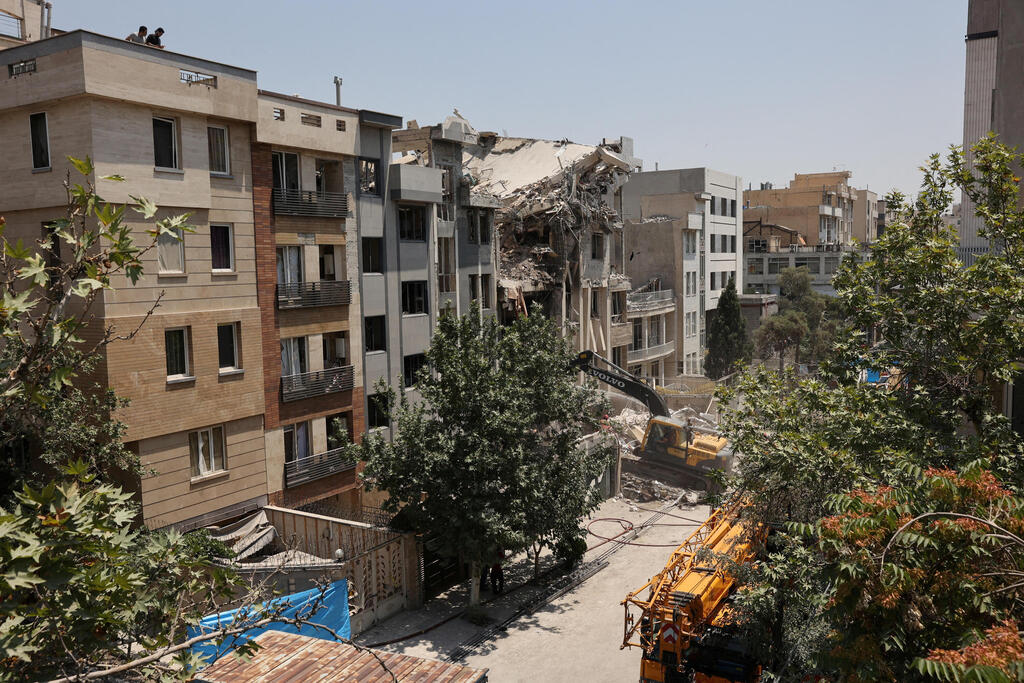
Aftermath of Israeli strike in Tehran
(Photo: Majid Asgaripour/WANA West Asia News Agency via REUTERS)
“Saudi Arabia has suffered because of how the Americans handled the war in Yemen over the years,” he continued. “The U.S. disappointed the Saudis at every stage—Obama disappointed them, Trump disappointed them during his first term and now, Biden has betrayed them by limiting their access to weapons (the analyst was referring to Biden’s restrictions on offensive arms sales to Riyadh). That explains the lack of enthusiasm from Saudi Arabia and its allies. It seems they no longer trust the Americans to protect their interests.”
He added that Trump’s agreement with the Houthis caused widespread frustration, not only within Yemen’s internationally recognized government but also among many anti-Houthi elements who felt, momentarily, that the balance had shifted and that the time had come to eliminate the terrorist group.
“Many parties were willing to participate in military action against the Houthis, especially with the benefit of air cover,” he said. A senior security official reportedly told him a phrase that stuck with him: “The Americans deceived us.” According to the analyst, that line reflects the deep disappointment with Washington’s conduct.
“The legitimate government in Yemen needs the support of Saudi Arabia and the UAE to make a decisive call—mobilizing all fronts and providing long-range weaponry to confront the Houthis,” he said. “Right now, the Houthis have the upper hand.”
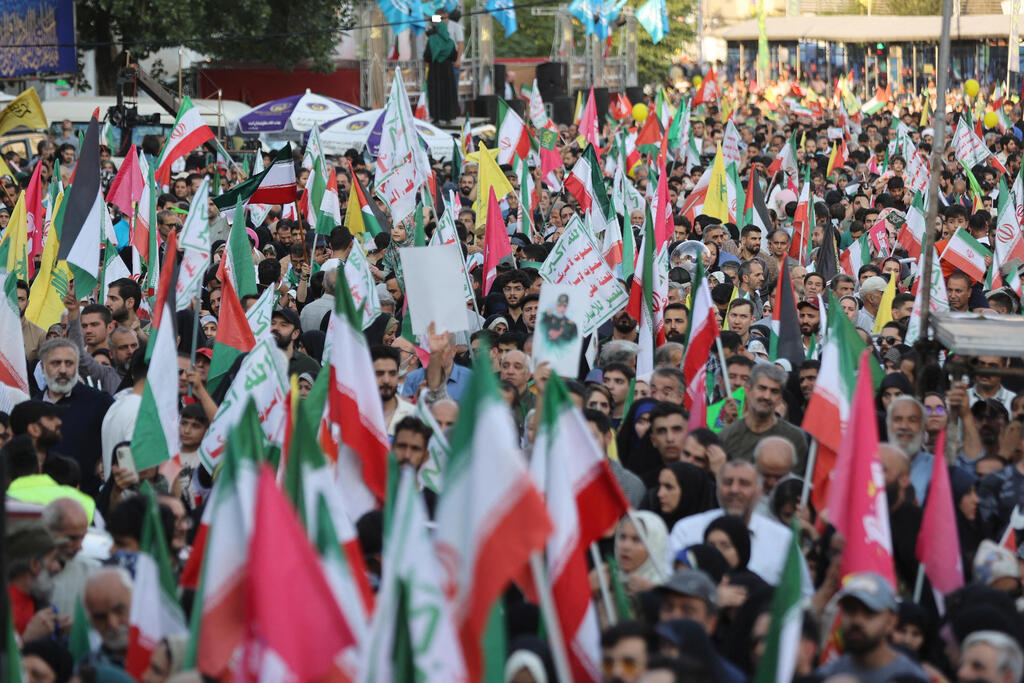
Eid al-Ghadir celebrations in Tehran, Iran
(Photo: Majid Asgaripour/WANA West Asia News Agency via REUTERS)
But in his view, the central issue is resolving internal disputes within the internationally recognized government. “Those internal divisions are the foundation that must be addressed before any unified offensive against the Houthis can succeed,” he concluded.
Operation Rising Lion
Despite their longstanding ties to Iran, the Houthis have so far refrained from significantly aiding their patron, even as Tehran comes under direct attack—perhaps as part of a deliberate strategy. Nevertheless, senior Houthi figures have in recent days issued strong public statements in support of Iran.
On Friday night, a missile launch from Yemen toward Israel was detected. Senior Houthi official Nasruddin Amer wrote on X: “Amid the chaos of events, Yemeni missiles are being fired to say Gaza is not alone, and we will not allow Zionist arrogance and violations to continue.”
Another prominent figure, Houthi leader Hezam al-Asad, who is very active on social media, also expressed support for Iran and its current campaign, which it has dubbed Operation True Promise 3—a follow-up to previous strikes on Israel in April and October of last year, labeled as Operation True Promise 1 and 2.
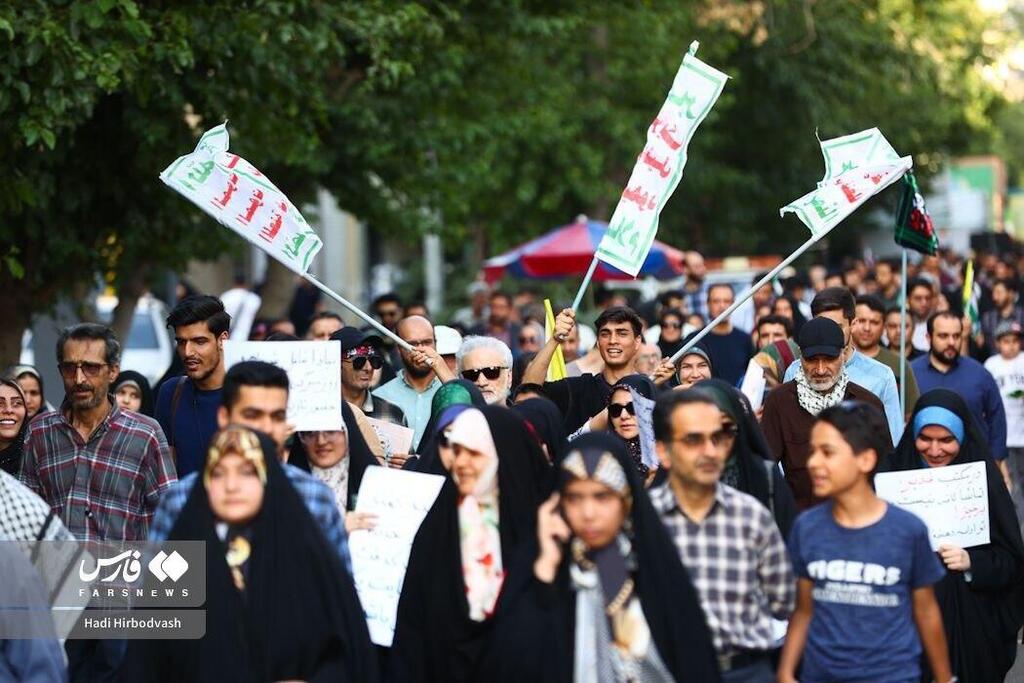
The Houthi slogan displayed at Eid al-Ghadir celebrations in Tehran, Iran
Both Yemen and Iran are marking the Shiite festival of Eid al-Ghadir, which commemorates the Prophet Muhammad’s designation of Ali ibn Abi Talib as his successor. According to Iran’s Mehr News Agency, a large event planned in Tehran was transformed from a festive celebration into a mass gathering. Images from the event showed the Houthis’ official slogan prominently displayed.
In Yemen, Houthi leader Abdul-Malik Badreddin al-Houthi delivered a holiday speech praising Iran and condemning Israel. “Zionist aggression will not cause Iran’s collapse or weaken it,” he said. “This is an opportunity to inflict heavy defeats on the enemy and humiliate it.” Meanwhile, Israel remains on high alert.