

Syria’s Defense Ministry announced a ceasefire Friday after three days of clashes between government forces and Kurdish fighters in the northern city of Aleppo that displaced tens of thousands of people.
The ministry said the ceasefire took effect at 3 a.m. in the neighborhoods of Sheikh Maqsoud, Achrafieh and Bani Zaid, giving armed groups six hours to withdraw from the area.
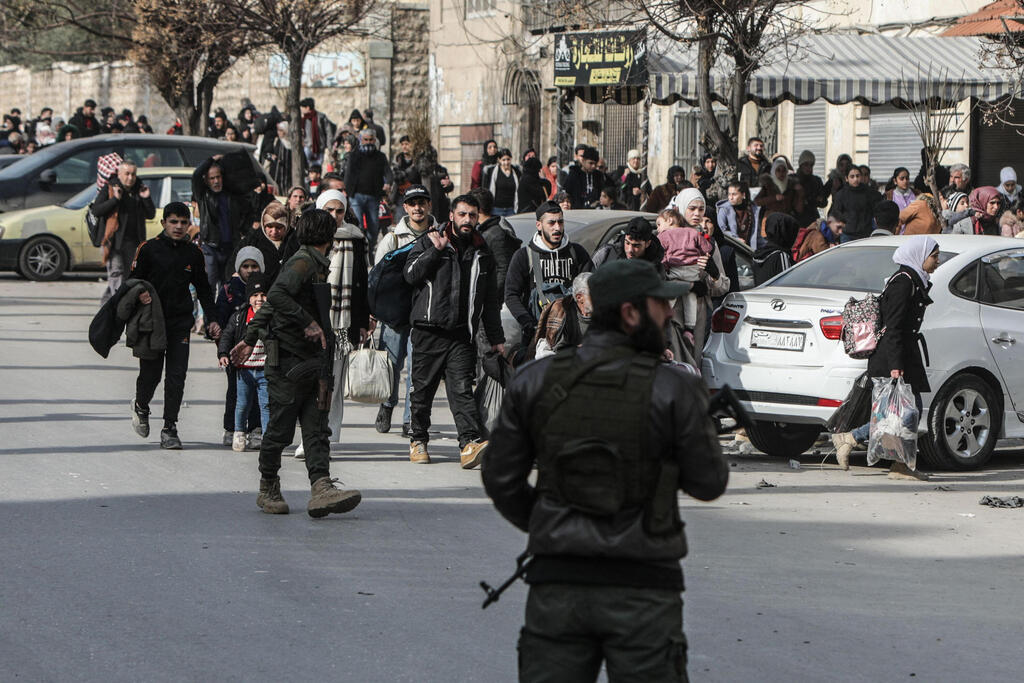
(Photo: Bakr Alkasem / AFP)
Departing militants would be allowed to carry their personal light weapons and would be escorted to northeastern Syria, which is controlled by the Kurdish-led Syrian Democratic Forces, the statement said.
Aleppo Gov. Azzam al-Gharib toured the contested neighborhoods overnight, accompanied by security forces.
There was no immediate public response from the SDF, and it was not clear whether Kurdish forces in Aleppo had agreed to the deal.
U.S. envoy to Syria Tom Barrack welcomed the announcement in a statement on X, expressing “profound gratitude to all parties — the Syrian government, the Syrian Democratic Forces, local authorities and community leaders — for the restraint and goodwill that made this vital pause possible.”
Barrack said the United States was working with the parties to extend the ceasefire beyond the six-hour deadline.
About 142,000 people have been displaced by the fighting, which erupted Tuesday with exchanges of shelling and drone strikes.
Each side has accused the other of starting the violence and of deliberately targeting civilian neighborhoods and infrastructure, including ambulance crews and hospitals.
Kurdish forces said at least 12 civilians were killed in Kurdish-majority neighborhoods, while government officials reported at least nine civilians were killed in surrounding government-controlled areas. Dozens more on both sides were wounded. It was not clear how many fighters were killed.
The clashes come amid an impasse in political negotiations between the central government and the SDF.
Leaders in Damascus under interim President Ahmad al-Sharaa signed a deal in March last year with the SDF, which controls much of northeastern Syria, to merge its forces into the Syrian army by the end of 2025. The two sides have disagreed over how the process would be carried out.
Some factions that make up the new Syrian army, formed after the fall of former President Bashar Assad in a rebel offensive in December 2024, were previously backed by Turkey and have a long history of clashes with Kurdish forces.
The SDF has for years been the main U.S. partner in Syria in the fight against the Islamic State group. Turkey, however, considers the SDF a terrorist organization because of its links to the Kurdistan Workers’ Party, or PKK, which has waged a decades-long insurgency inside Turkey. A peace process between Turkey and the PKK is now underway.
Despite its long-standing support for the SDF, the Trump administration has also developed close ties with al-Sharaa’s government and has pressed Kurdish leaders to implement the March agreement.