



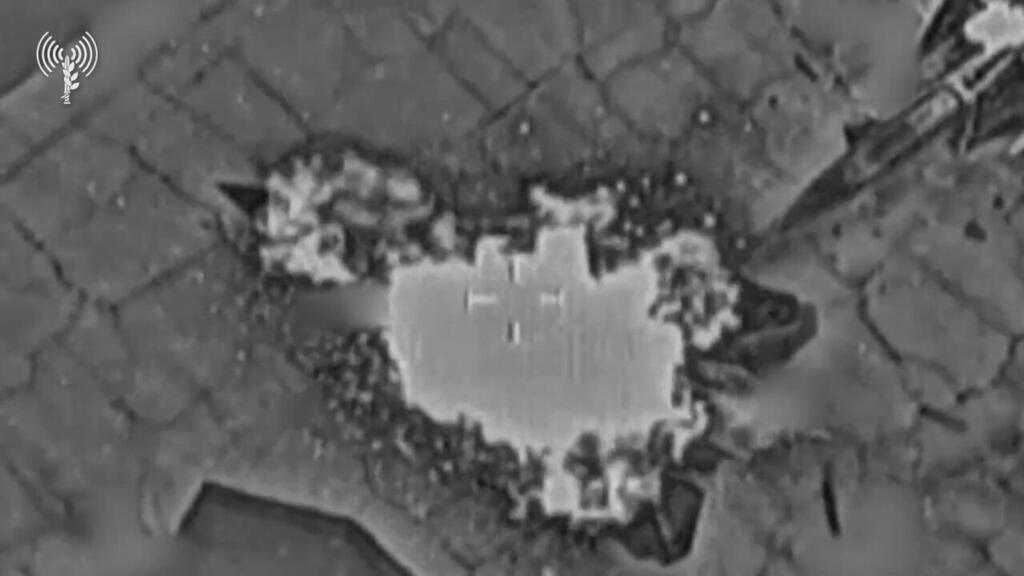
The Israeli Air Force destroyed an advanced Iranian 3rd Khordad air defense battery overnight Monday in central Tehran, marking a significant blow to the country's air defense array.
According to the IDF, the system had been under long-term surveillance and was uncovered shortly before becoming operational, hidden in a warehouse in the Iranian capital.
IDF strikes on Iranian warplanes
(Video: IDF Spokesperson's Unit)


The battery, considered one of Iran’s more advanced systems, was meant to protect a high-value asset in the capital. The strike is part of an ongoing Israeli effort to maintain air superiority over Iran, following the launch of Operation Rising Lion earlier this month.
The operation began with Israeli airstrikes and continued with coordinated U.S. attacks on Iran’s nuclear facilities in Natanz, Isfahan and Fordow. Military officials in Israel say the destruction of Iranian radar and air defense systems is intended to prevent future interference with ongoing or potential missions in Iranian airspace.
On Monday morning, IDF Spokesperson Brig. Gen. Effie Defrin said the Israeli Air Force carried out airstrikes on six Iranian airfields, using remotely piloted aircraft to destroy 15 regime-operated fighter jets and helicopters.
Get the Ynetnews app on your smartphone: Google Play: https://bit.ly/4eJ37pE | Apple App Store: https://bit.ly/3ZL7iNv
The strikes, which took place in western, eastern and central Iran, targeted runways, underground hangars, a refueling aircraft and warplanes, including F-14s, F-5s and AH-1 helicopters. According to the IDF, the destroyed aircraft were prepared for potential strikes on Israeli jets operating over Iran.
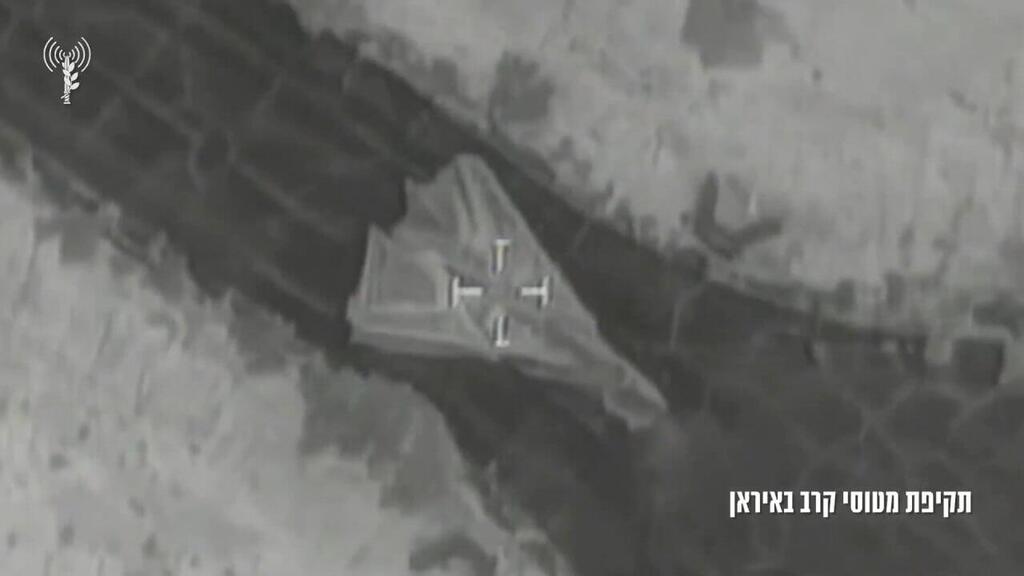
IDF strikes on Iranian fighter jet
(Photo: IDF Spokesperson's Unit)
While both Israel and the United States continue to assess the full impact of the American strikes, the Israeli Air Force has kept up its aerial campaign. On Monday morning, fighter jets bombed military sites in Kermanshah in western Iran.
Overnight, roughly 20 Israeli aircraft launched a new wave of strikes against military targets in both western Iran and Tehran using over 30 precision-guided munitions. These included storage and launch sites for missiles and satellites, as well as radar installations.