


After a prolonged series of disputes, obstacles and three postponements, members of the Likud Central Committee voted Monday on proposals submitted by Prime Minister and party chairman Benjamin Netanyahu and Central Committee chairman Haim Katz governing the party’s primaries and the composition of its next Knesset slate.
Netanyahu’s proposal granting him eight reserved positions on the slate was approved by a large majority. A separate proposal by Katz, which Netanyahu supported and which changes the method for selecting district representatives, passed by only six votes, immediately prompting allegations of irregularities.
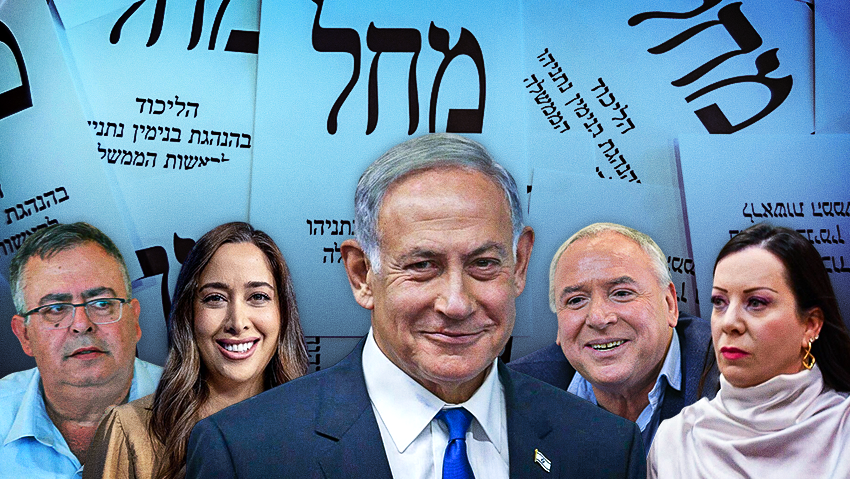
When the Likud polling stations closed, turnout stood at 72.7%, with 3,387 Central Committee members casting ballots at 16 polling sites.
While Netanyahu’s reserved-slot proposal passed comfortably, Katz’s plan received only the narrowest of majorities. The proposal allows serving lawmakers and ministers to compete for district positions while effectively preventing new candidates from entering through those slots.
At the Jerusalem branch, the last location where votes were counted, loud arguments broke out and claims of fraud were raised. Party members there said envelopes that had not been counted because they were deemed fraudulent could change the result. Central Committee members and activists alleged that the outcome had been manipulated and demanded a new vote.
Likud said after the vote that more than 3,400 Central Committee members had approved the Netanyahu-Katz proposals in all three sections.
“The high turnout reflects the strength of the Likud grassroots ahead of the coming elections,” the party said. “The representatives elected in the primaries, together with the prime minister’s reserved candidates, will form a strong team that, with God’s help, will win the elections and lead the establishment of a broad national government.”
The proposals are expected to shape the party’s next Knesset slate.

Minister Haim Katz
(Photo: Alex Kolomoisky)
The first approved measure grants Netanyahu eight reserved positions through No. 29 on the list. The designated positions are Nos. 3, 5, 9, 11, 15, 18, 26 and 29.
Netanyahu considers the composition of the slate critical to the party’s electoral prospects. For the first time since becoming Likud chairman, he had examined and sought to advance more far-reaching proposals that would have replaced the primaries with an appointments committee.
As first reported by ynet, Netanyahu promised one of the reserved positions to Katz. Some party members believe the position could instead be given to lawmaker Eti Atiya, a close Katz ally, while others say she could receive an additional reserved slot alongside him.
The appointments have generated significant unrest within Likud, although most lawmakers and ministers have not publicly opposed them. One exception is lawmaker David Bitan, who accused Katz of “building a faction within a faction.”
Another reserved position is intended for Minister Gideon Sa’ar as part of Likud’s alliance with his New Hope party. Lawmaker Michel Buskila, who was recently appointed deputy foreign minister, could also receive a position allocated through Sa’ar.

David Bitan
(Photo: Alex Kolomoisky)
Under Katz’s proposal, which passed by six votes, several electoral districts will be merged on the grounds that the extensive regional representation used in the past is no longer necessary.
Position No. 27 will be allocated to a combined district covering the Shfela region, Jerusalem and the West Bank. Position No. 28 will represent a combined Tel Aviv and Dan district, position No. 30 will be assigned to the Galilee and Valleys district, and position No. 31 will represent the Negev.
Central Committee members also formally approved the regulations governing the primaries.
Senior Likud figures had recently suspected that Netanyahu was still seeking to avoid holding primaries and was deliberately delaying the process. On several occasions, he raised the possibility that the security situation might make a vote impossible.
The Likud tribunal ruled Sunday, however, that the primaries must be held under any circumstances. It said that if a security escalation prevents the vote from taking place as scheduled, it must either be postponed or conducted digitally.