


Likud has still not decided how it will choose its candidates for Israel’s 2026 election, despite repeated delays, legal disputes and growing internal opposition to Prime Minister Benjamin Netanyahu’s effort to reshape the party slate.
The party’s primaries were initially scheduled for August 4 and later postponed to August 17. With the national election expected roughly two months later, the remaining timetable is becoming increasingly tight. If Likud does not resolve the dispute over Netanyahu’s demand for reserved slots on the slate, the primaries could be canceled altogether.
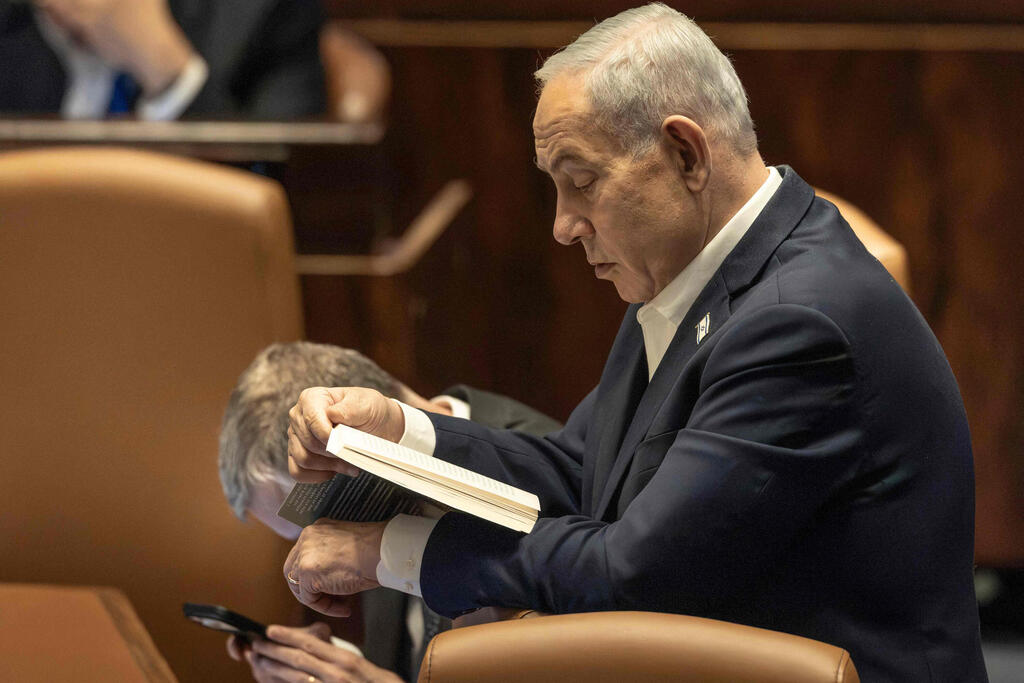
Netanyahu has suggested that if the security situation makes a partywide vote impractical, a special selection committee could determine Likud’s list of candidates for the 26th Knesset. That proposal has intensified a wider argument over who controls the party, how democratic its internal process remains and whether the current system still serves Likud electorally.
How did Likud adopt primaries?
Netanyahu himself introduced the idea of party primaries to Likud after he was first elected party chairman in 1993. At the time, he argued that the party needed to become more democratic and allow all registered members to choose its Knesset slate.
Likud held its first primaries for the 1996 election.
The system gave rank-and-file members direct influence over the party list, but over time it also became vulnerable to organized voting blocs, political deals and mass membership drives conducted by labor organizations, local power brokers and campaign activists.
Some people joined Likud not because they intended to vote for the party in a national election, but because party membership gave them influence over ministers and lawmakers competing in the primaries.
Large membership drives, including those linked to organized workplaces, became a recurring source of controversy. Party activists also built networks of hundreds or thousands of members and used those voting blocs to negotiate political deals with candidates.
Why has Likud not settled the process?
Netanyahu wants to combine primaries with a large number of personally reserved places on the Knesset slate. He has demanded between eight and 10 appointments, including at least three candidates in the top 10 and another three in the second group of 10.
He has also warned that if the party does not approve his demands, he could seek to cancel the primaries entirely.
Opponents argue that this would change the rules after candidates and party members had spent an entire parliamentary term preparing for an internal election. Several legal challenges have been filed both in Likud’s internal court and in Lod District Court, with opponents arguing that Netanyahu’s plan violates the party constitution.
Those proceedings have left Likud without a final decision on whether the primaries will be held, how many candidates Netanyahu may appoint and whether the party convention must approve the arrangement.
Why does Netanyahu want reserved slots?
Netanyahu has long argued that his personal political brand is stronger than Likud’s parliamentary slate and that many lawmakers owe their seats to his popularity rather than their own electoral appeal.
He believes the current list is failing to attract new voters and may even be driving some supporters away. In internal discussions, Netanyahu has called for the slate to be “refreshed,” a term understood inside the party as a demand to replace or reposition some current lawmakers.
He has also argued that primaries cost the party millions of shekels and consume political resources shortly before a national campaign.
Netanyahu may view the coming election as one of the most consequential of his career and possibly his final campaign as Likud leader. That increases his interest in presenting a list more closely aligned with his political strategy and less dependent on the choices of party activists.
Who opposes the plan?
Likud lawmaker David Bitan has become one of the most vocal opponents of Netanyahu’s demand for reserved slots.
Bitan argues that giving Netanyahu broad appointment powers would amount to creating a selection committee in practice, even if formal primaries still took place. He has described the proposal as undemocratic and has repeatedly warned that the internal conflict is hurting Likud in public opinion polls.

Likud lawmaker David Bitan
(Photo: Dani Shem Tov, Knesset Spokesperson’s Office)
Other opponents say party members registered and paid dues specifically for the right to vote. Canceling or weakening the primaries, they argue, would deprive them of that influence after candidates had spent years building support among the membership.
What is a selection committee?
A selection committee would replace the partywide primary and choose the Knesset slate directly.
The idea initially emerged as a pressure tactic in Netanyahu’s dispute over reserved places. His message was that if the party rejected his appointments, he could seek to eliminate the internal election altogether.
The proposal later gained support from senior Likud mayors, including Modiin Mayor Haim Bibas, Bat Yam Mayor Zvika Brot and Dimona Mayor Benny Biton. They argued that a committee could produce a stronger and more electorally attractive slate.
Netanyahu said that if such a body were created, the mayors’ forum would play a central role in choosing the candidates.
For Netanyahu, the committee would provide far greater control over the list than the current primary system. It would also allow him to remove candidates viewed as electoral liabilities and promote new figures without relying on party activists.
Why do the delays matter?
The party convention must approve the constitutional committee’s decision on reserved slots, but legal disputes have repeatedly delayed that vote.
Ironically, some of the challenges were brought by Netanyahu’s internal opponents, yet the resulting delay may ultimately help him. As the election approaches and the available time for organizing primaries shrinks, the argument that a full party vote is no longer practical becomes stronger.
The compressed timetable could therefore become the justification for canceling the primaries and establishing a selection committee, the outcome Netanyahu appears increasingly willing to accept.
Can the security situation cancel the primaries?
Yes.
At the latest meeting of Likud’s constitutional committee, Netanyahu said that if security conditions prevented the party from holding primaries, the Knesset slate would be chosen by a selection committee.
That leaves Likud’s internal process dependent not only on legal and political negotiations, but also on developments in the country’s security situation.
What happens next?
The primaries are currently scheduled for August 17, but that date is not guaranteed.
Likud must still resolve the legal challenges, secure approval for any reserved slots and decide whether the membership will vote at all. If no agreement is reached soon, the party may conclude that there is not enough time to hold a full primary before the national election.
The central question is no longer only which candidates will appear on Likud’s slate. It is whether the party will preserve the primary system Netanyahu introduced more than three decades ago, or replace it with a process that gives him and a small group of senior party figures direct control over the list.