


The reality that has emerged in southern Lebanon over the past two weeks should be setting off alarms. It plays into Hezbollah’s hands and leaves the IDF operating in a complicated, vulnerable arena.
The IDF struck the Bekaa Valley deep inside Lebanon on Monday, marking a clear escalation, but it is still being held back by the political echelon. It cannot act with full freedom and is paying the price of its strategic “partnership” with a superpower — a price few are willing to acknowledge publicly.
An explosive Hezbollah FPV drone detonates near an IDF helicopter during a medical evacuation in southern Lebanon


1. “The partner” — and the price
IDF officials call the Americans “the partner.” The security relationship with Washington is indeed unprecedented and critical when it comes to Iran. But in Lebanon, that partnership is starting to look like a liability. When U.S. priorities clash with Israel’s immediate security needs, the cost is measured in Israeli lives. The result: The IDF is fighting with one hand tied behind its back, as diplomacy constrains its room to maneuver.
2. The Iranian interest
The uncomfortable truth is that the Lebanon front is being treated as part of a much larger game: the talks with Iran. The White House is pursuing a strategy of “economic attrition” that may pressure Tehran, but in the meantime, northern Israel is paying the price.
3. A ceasefire in name only
The ceasefire is unraveling day by day. In just 11 days, Israel has lost three soldiers — two killed by pre-planted explosives and one by an FPV drone. Hezbollah is laying IEDs, firing rockets at northern communities and IDF forces, and launching attack drones. The IDF is responding by destroying launchers and killing terrorists, but the fire has not stopped.
This is not a ceasefire. It is a slow-drip war of attrition.
On Monday, the IDF struck weapons depots and rocket stockpiles in the Bekaa Valley, its first strike in weeks beyond southern Lebanon. The question now is whether this marks a further escalation — and whether Hezbollah will respond by widening its fire to Haifa and the Bay area.
4. A strategic trap
The IDF is still clearing territory up to the “yellow line” ceasefire demarcation, destroying Hezbollah infrastructure, including underground sites, and seizing weapons. But that effort comes at a cost: Hezbollah is dictating the tempo in southern Lebanon, focusing its attacks where it chooses and building a grinding war of attrition.
5. Hezbollah tries to bury the talks
Hezbollah, casting itself as “Lebanon’s defender,” is doing everything it can to derail negotiations. The latest message from the group’s secretary-general, Naim Qassem, leaves little room for ambiguity: no disarmament, no surrender and a return of residents to the evacuated villages of southern Lebanon.
6. The IDF presence gives Hezbollah ideological oxygen
Israel’s presence on the ground is giving Hezbollah ideological oxygen. The group is selling the Lebanese public a narrative in which it is “defending Lebanon from the Israeli invasion.” Each day this reality continues, Hezbollah rebuilds its standing in Lebanese public opinion. That is compounded by embarrassing misconduct by some IDF soldiers inside residents’ homes.
7. Hezbollah chief remains off-limits
The current rules of engagement have effectively given the Hezbollah leader political cover. Despite repeated threats from Defense Minister Israel Katz, Qassem remains untouched. The IDF is largely avoiding strikes deep inside Lebanon and has so far not gone after Hezbollah’s senior command. From his hiding place, Qassem is able to manage the campaign with the understanding that the American “partner” is preventing Israel from settling the score.
The IDF would have sought to eliminate Qassem long ago but is currently refraining from doing so because of U.S. involvement, though that could still change.
Katz said Monday that “Naim Qassem is playing with fire and [Lebanese President Joseph] Aoun is gambling with Lebanon’s future. There will be no reality in which a ceasefire exists in Lebanon while there is fire on our forces and on communities in the Galilee. If the Lebanese government continues to shelter under Hezbollah’s shadow, fire will break out and burn the cedars of Lebanon. The Lebanese government must ensure that Hezbollah is disarmed, first south of the Litani up to the yellow line and then throughout Lebanon.”
When Katz speaks of disarming Hezbollah first in southern Lebanon and then across the country, he may be hinting at a phased dismantling of the group.
8. IDF soldiers are becoming targets
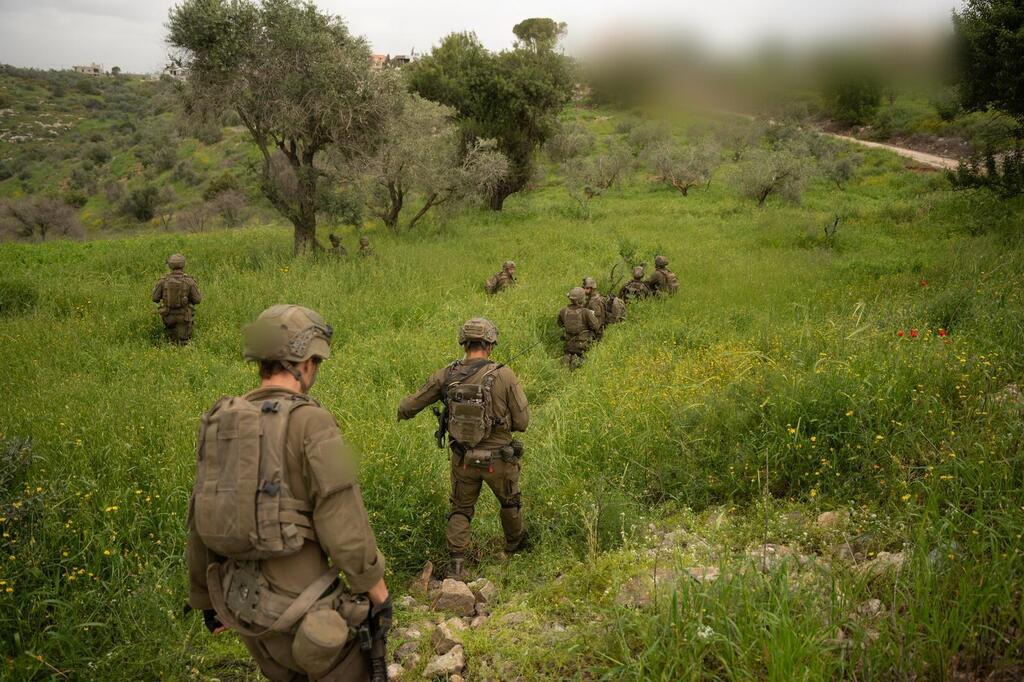
By keeping the fight concentrated in southern Lebanon, Israel is also making its troops easier to target. Forces are moving through difficult terrain, relying on armored vehicles for cover and at times taking shelter in captured Hezbollah positions. But the battlefield is increasingly complex. Alongside rocket fire, Hezbollah is threatening to bring suicide bombers back into use across southern Lebanon.
With the air force constrained, Israel is not going after senior Hezbollah commanders deep inside Lebanon or striking at the group’s leadership and command-and-control network. That leaves Hezbollah fighting on terrain and at a tempo that suit it. The group is moving operatives from central Lebanon into the south and turning the area into a contained battlefield of its own design.
9. Hezbollah’s drone threat
Hezbollah’s drone force has become one of the most effective threats facing IDF troops in southern Lebanon with the adoption of first-person-view drones, or FPV drones. The systems are relatively cheap, making them more attractive to Hezbollah than using long-range missiles for some attacks. They are modified in workshops in southern Lebanese villages, where operatives add landing skids, cameras and explosives, including material taken from RPG warheads.

An explosive Hezbollah FPV drone detonates near an IDF helicopter during a medical evacuation in southern Lebanon
The hardest part to counter is the fiber-optic guidance. The drones can be launched from 10 kilometers away or farther and flown without the radio signals that electronic warfare systems are built to detect and jam. As seen on Sunday, troops can be left with little choice but to fire at them with their personal weapons. Meanwhile, Hezbollah’s FPV drone operators remain largely out of reach.
10. What remains of the achievement
Commanders in the field say many more days of clearing operations are needed to give the political leadership leverage. But in closed conversations, senior officers have acknowledged the hard truth: “If northern residents return to this reality, we have achieved nothing.” Without a meaningful dismantling of Hezbollah’s capabilities, any agreement will amount to little more than a façade.
11. The confrontation line is being left exposed
Hezbollah has managed to do what Israel long feared: link the fronts into one connected campaign. While Israel is locked into a localized war of attrition, the personal security of residents along the northern border continues to deteriorate. The axis between Tehran and Beirut is leaving northern Israel’s border communities exposed.