

Russia secretly helped Iran develop hypersonic cruise missiles in “one of the most dramatic transfers of strategic military technology from Moscow to Tehran,” the Financial Times reported overnight from Tuesday to Wednesday in an extensive investigation based on leaked correspondence, travel records and analysis of military patents. The report pointed to a program that began in 2023 and continued even as the United States and Israel waged campaigns against the Islamic Republic.
According to the report, the secret program, dubbed C430L, recruited leading experts in the field to help Iran develop a new weapon capable of threatening U.S. aircraft carriers — which have been deployed intermittently in the region — and other warships in the Middle East.
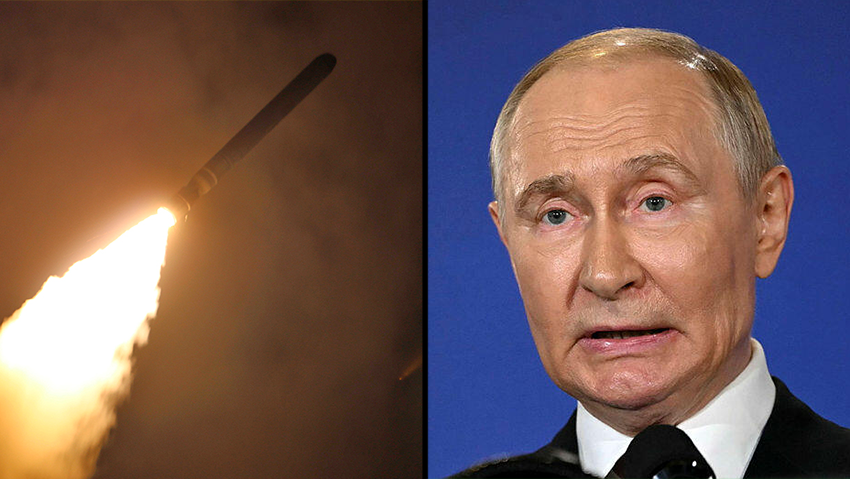
“This is the transfer of highly sensitive strategic military technology — the kind the Iranians have been trying to obtain for decades,” said Fabian Hinz, an expert on Iranian missiles and a senior analyst at Conflict Armament Research. “A program like this requires political approval from the highest levels in Russia.”
The main development effort centers on a ramjet propulsion system, an engine that allows cruise missiles to fly at several times the speed of sound. Hypersonic cruise missiles combine speed with low-altitude flight, reducing the amount of time defense systems have to detect and intercept them.
Hypersonic missiles are extremely fast — at least five times the speed of sound — precise, maneuverable and capable of carrying a nuclear warhead. About seven years ago, Russian President Vladimir Putin revealed that Moscow had developed such a missile, the Kinzhal, or “Dagger,” in a speech in which he said Russia could strike almost anywhere in the world and penetrate U.S. air defenses. Russia has used the Kinzhal several times in the war in Ukraine.
The Financial Times noted that Iran has built this unique propulsion system, but there is no evidence that hypersonic cruise missiles have already been operationally deployed. Jim Larson, a former CIA Iran analyst, said: “This technology would give Iran a strategic weapons system that could threaten U.S. Navy vessels.”
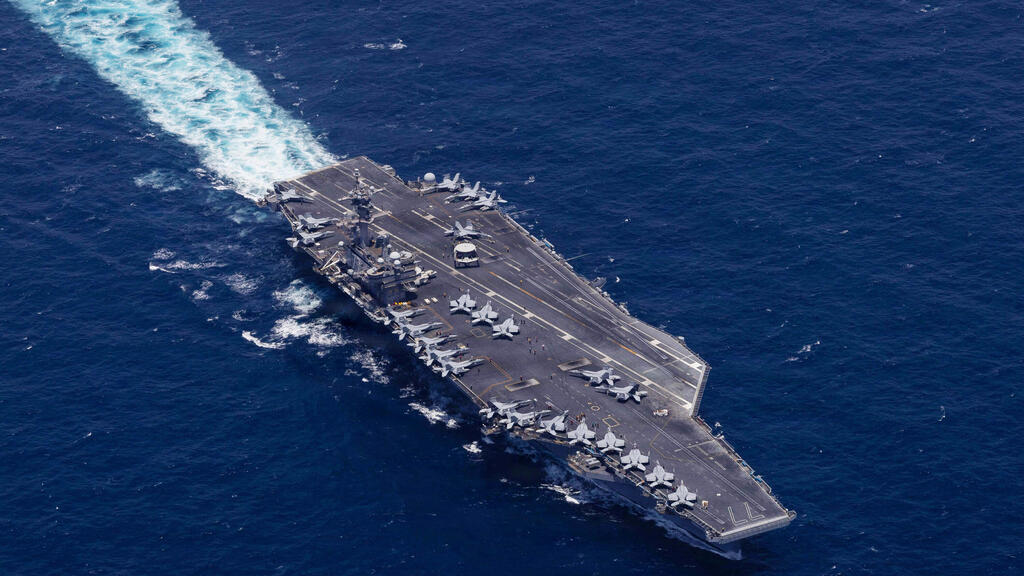
Potential threat: The aircraft carrier 'George Bush'
(Photo: AFP / US Navy / Navcent Public Affairs)
Correspondence obtained by the newspaper indicates that the talks continued through this summer. Cooperation between Russia and Iran has been reported on repeatedly, but the C430L program was described as one that “reflects a deeper interaction” with Tehran because it provides Iran with the practical know-how to develop the weapons system itself. The assistance effort was organized by Rosoboronexport, Russia’s state arms exporter, and NPO Mash. The United States imposed sanctions on the latter as early as 2014.
Senior officials and engineers representing them, according to the report, traveled to Iran even before the contract was formally signed in November 2023. The correspondence points to exchanges in which Russian officials analyzed the performance of the system Iran had already built and helped improve it. In April 2025, it was even proposed that a delegation of 24 Russian experts travel to Iran for technical consultations as part of the project.
According to Hinz, “Russia has focused on this technology for a long time. People tend to think cooperation like this means sending blueprints, complete missiles or parts of them — but bringing in a 60-year-old engineer who can fly over and solve problems on the ground is an enormous asset.”
The newspaper said the correspondence indicates that cooperation on Project C430L continued into 2026. Iran and Russia did not respond to the report.
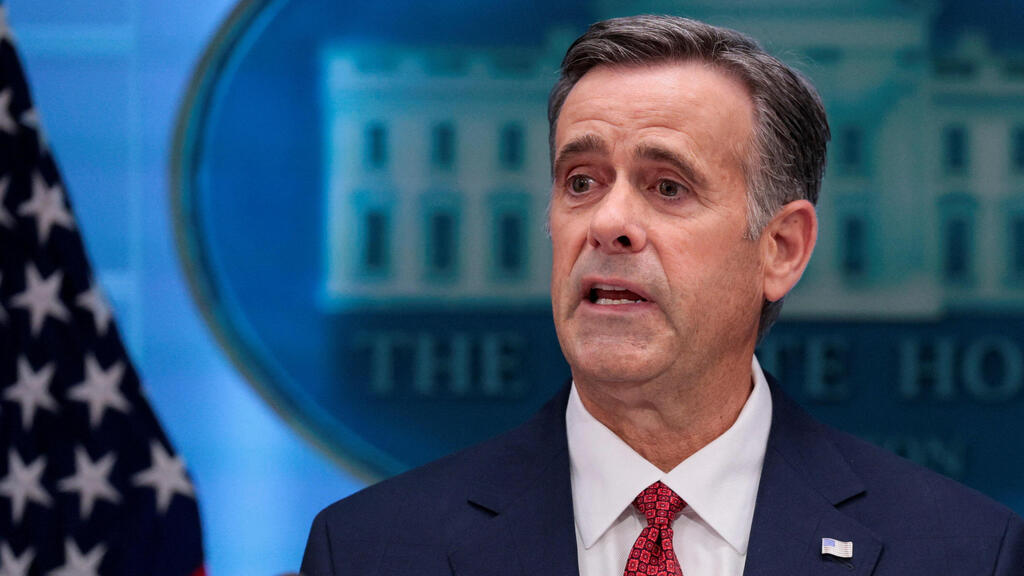
CIA Director John Ratcliffe made an unusual visit to Russia
(Photo: Evan Vucci/Reuters)
Earlier Tuesday, Putin met with Iranian President Masoud Pezeshkian. Pezeshkian thanked Putin and told him: “We appreciate your supportive position. The powers do not have the right to attack other countries and violate international frameworks and laws.” Putin, for his part, said he would maintain trade relations with Tehran despite the “military-political situation.”
Last week, CIA Director John Ratcliffe made an unusual visit to Russia. U.S. media outlets, including The Wall Street Journal and Politico, reported that Ratcliffe traveled to Moscow to warn Russia against attacking NATO and assisting Iran. Officials who spoke with Politico said the visit was intended to pressure Russia to reduce its economic and military support for Iran.
Russia’s 'comprehensive' effort
A British official who spoke with the outlet said Ratcliffe raised the issue following U.S. Treasury Secretary Scott Bessent’s threat to tighten sanctions on countries that do not sever their economic ties with Iran. According to the official, the CIA director made clear that Russia must stop sharing weapons and defense technology with Iran and advised Moscow not to “overreact” if it is affected by U.S. sanctions.
U.S. media reports did not say whether the CIA director met personally with Putin. U.S. President Donald Trump addressed the reports and described Ratcliffe’s visit as “semi-routine.” The last known visit by a CIA director to Russia took place in November 2021 before Russia launched its full-scale war in Ukraine.
Last month, NBC reported that Russia continues to transfer shipments of ammunition to Iran through the protected and isolated shipping route in the Caspian Sea, including explosives such as TNT and drone components. The transfers themselves had been reported previously, but the U.S. network said the scale of the shipments was greater than previously known. The Caspian route has for years served as a strategic transportation artery between Russia and Iran, particularly because the sea — the world’s largest lake — has no U.S. presence.
The report joins other accounts reflecting the deepening cooperation between Moscow and Tehran in recent years. Russia also shared satellite imagery and drone technology with Iran at the start of the war with Israel, as well as information on the locations of military targets, with the aim of helping Tehran strike U.S. forces, including warships and aircraft. One official who spoke with The Washington Post at the time described it as “a fairly comprehensive effort.”