

The tit-for-tat between Trump and Iran is not over: After Tehran struck in response to the latest U.S. attack, itself carried out after an earlier Iranian attack and following a chain of retaliatory exchanges, the ball once again appears to be in the court of U.S. President Donald Trump. Trump has already threatened another response, at an even higher level than the extensive U.S. strikes carried out Tuesday. For now, however, he is signaling that he would rather bring the latest round of fighting to an end, and another American strike has yet to come.
Instead, Trump turned Wednesday to taunting Iran, asking followers on Truth Social whether the Strait of Hormuz should be renamed after him. “Now that we have it under U.S.A. control, should we change the name Hormuz Strait to TRUMP STRAIT?” he wrote, adding separately that it would be “hotter” than ever before.
Trump calls for renewed protests in Iran


The post can easily be dismissed as another provocative Trump remark, one of many during a war now stretching into its seventh month. But behind the trolling lies the central dispute driving the renewed escalation: control of the Strait of Hormuz, the oil artery of the global economy.
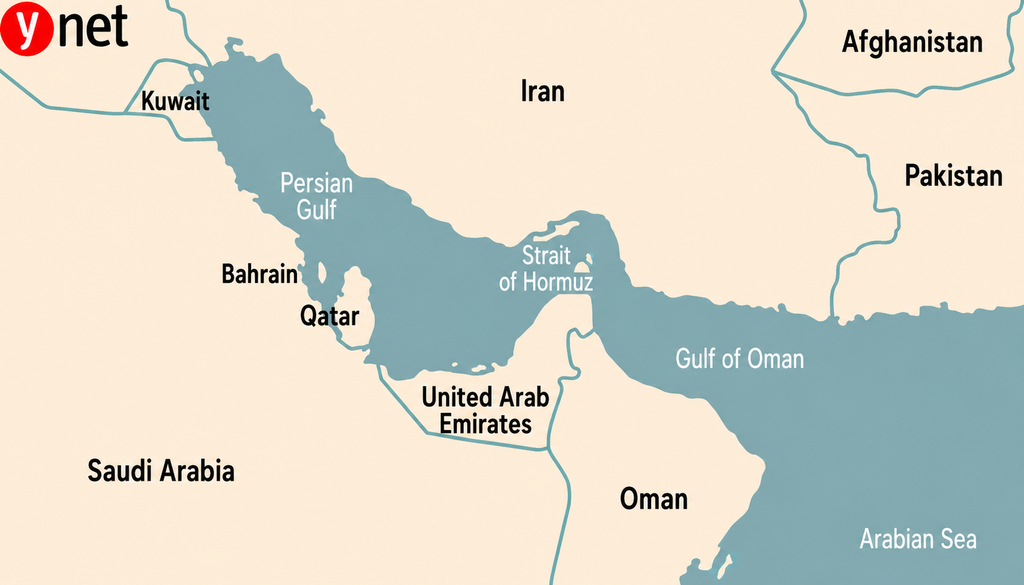
That dispute helped bring down the June memorandum of understanding between Washington and Tehran. Iran refuses to surrender what has become one of its most important strategic levers, one it increasingly treats as being nearly as important as its nuclear program. It has attacked tankers that, with U.S. encouragement, violate restrictions Tehran has imposed on passage through the strait, many of them crossing covertly and mainly after dark.
Trump has insisted for weeks that the strait is open and under effective American control, while simultaneously pursuing a strategy aimed at economically strangling Iran. That includes a blockade of Iranian ports intended to prevent Tehran from exporting oil, alongside a threat, so far not implemented, to sanction countries that continue trading with it.
The objective is clear. Trump would prefer, at least until November’s midterm elections, to avoid returning to intensive warfare with Iran, which would almost certainly send oil prices higher and could hurt Republicans’ chances of retaining control of Congress.
At the same time, while maintaining pressure on Iran, Washington wants oil from the Persian Gulf to continue reaching the global economy, helping bring down prices that remain elevated even after falling from their wartime peak.
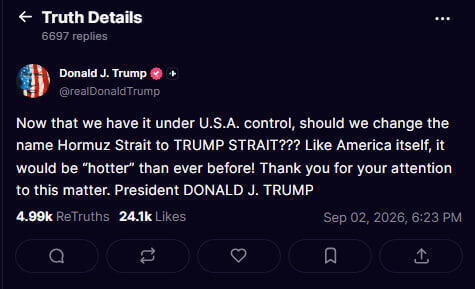
Trump himself has repeatedly described the U.S. position in Hormuz in sweeping terms. On Tuesday night, he wrote that he preferred the current situation, with what he called “almost total control of the Hormuz Strait” and Iran’s economy “totally collapsing.”
Iran’s strategy in response is equally clear. Tehran had threatened escalation if the blockade continued, as its domestic economic crisis deepened, and is now acting on that threat.
Several Iranian attacks on oil tankers crossing the strait without Tehran’s approval preceded the U.S. strike Sunday evening that ignited the latest round. The U.S. military said that strike was intended to thwart an Iranian attempt to deploy sea mines from Larak Island in the strait. Days earlier, Trump had said mines already laid in the waterway had been removed or deliberately detonated.
During the escalation, two tankers carrying a combined 4 million barrels of Saudi crude were attacked overnight between Monday and Tuesday. Two Filipino sailors were killed aboard one of the vessels.
Transponders go dark, and satellites cannot see everything
Despite Iranian attacks on vessels passing through the strait, Trump continues to insist that Hormuz is open. There is little dispute that tankers are getting through. The far greater disagreement is over how many.
Before the war, more than 130 ships crossed the strait on an average day. Data from maritime-traffic companies indicate that even at the height of the U.S.-supported escort operation, crossings remained far below prewar levels. Kpler, for example, reported that only 10 ships crossed on Wednesday, August 26, with an average of about 15 a day over the preceding 10 days.
But international media, including CNN, have highlighted an important complication: tankers making the crossing are increasingly shutting off their Automatic Identification System, or AIS, transponders to make themselves harder for Iran to locate and attack.
That means conventional ship-tracking services can miss some vessels. The companies also use satellite imagery, but that monitoring is not complete.
Trump argued Monday that the true numbers are much higher. Speaking to reporters at the White House, he said roughly 30 ships were passing through each night with U.S. Navy assistance.
He linked that traffic directly to oil prices, saying the volume moving through the waterway was one reason prices had not risen as sharply as might otherwise have been expected. Contemporaneous reporting confirms Trump described the figure as roughly 30 ships a night. Oil prices have since risen again as the confrontation escalated. Brent crude reached about $95 a barrel Wednesday, up sharply from a month earlier.
Even if Trump’s figure is accurate and 30 ships are crossing every night, the number remains far below prewar traffic levels. Maritime experts have also questioned exactly what is being counted.
Independent commercial tracking remains significantly below the administration’s estimates. The Wall Street Journal reported that while U.S. officials say more than 8 million barrels a day are moving through Hormuz, commercial trackers have generally identified only about 2 million to 6 million barrels. The discrepancy is partly explained by vessels going dark, but analysts say it has not been fully resolved.
U.S. Energy Secretary Chris Wright has argued that the American operation has nevertheless restored much of the region’s oil flow. Wright said in August that the seven-day average for oil leaving through Hormuz had climbed to nearly 9 million barrels a day. Combined with another 5 million to 7 million barrels moving through pipelines and other export facilities that bypass the strait, he put total regional flows at around 15 million barrels a day.
That is approaching the roughly 20 million barrels a day that left the Gulf region before the war, although U.S. government figures for traffic specifically through Hormuz remain substantially higher than many commercial estimates.
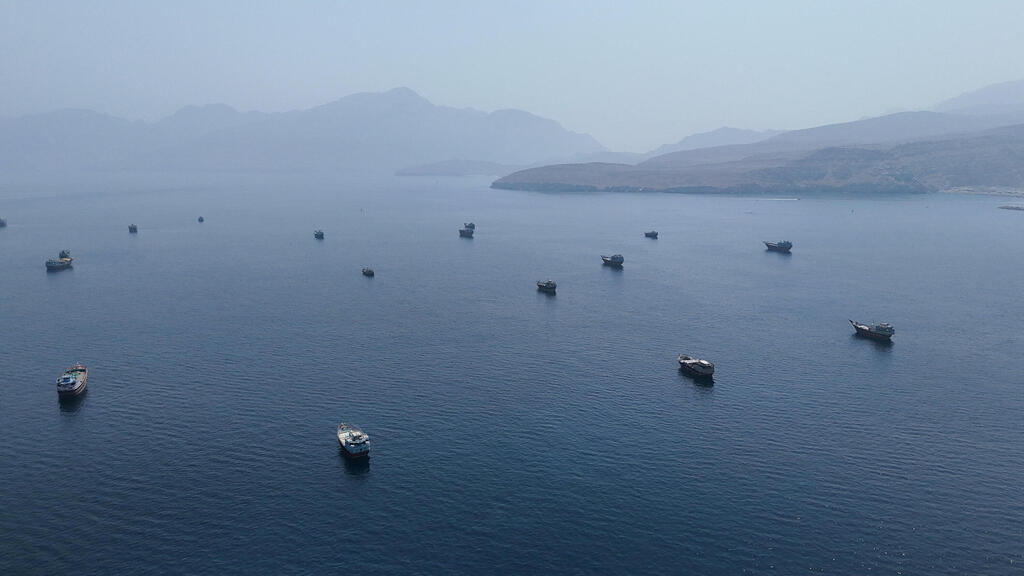
Ships in the Strait of Hormuz
(Photo: REUTERS/Stringer/File Photo)
Despite skepticism surrounding some of the Trump administration’s numbers, recent analysis from Goldman Sachs lends support to the broader claim that Persian Gulf oil exports have recovered significantly.
Goldman analysts estimated in late August that exports of crude and petroleum products had risen to about 15 million to 16 million barrels a day, roughly two-thirds of prewar levels and well above the 5 million to 6 million-barrel trough reached in March.
The analysts also estimated that flows through Hormuz itself could be close to U.S. government estimates of 8 million to 10 million barrels a day. A key reason is the growing use of covert tanker crossings and ship-to-ship oil transfers.
CNN documented how Gulf producers and shipping companies have adapted to the conflict by moving tankers through the strait after dark with their AIS transponders switched off, often under U.S. military protection. The tactic allows vessels to become much harder to track publicly while they cross the most dangerous section of the route.
The operation behind the dark crossings
CNN described the system in detail in an investigation into how the United States and its Middle Eastern allies have effectively rewritten the rules of Gulf oil exports during the war. State-controlled oil companies from Qatar, Saudi Arabia, the United Arab Emirates and Kuwait are assuming both the physical risk of crossing Hormuz and the increased insurance costs involved.
With U.S. Navy assistance, tankers travel through the southern part of the strait, closer to Oman and as far as possible from the Iranian coast, with their transponders disabled. Once in the Gulf of Oman, they transfer their cargo at sea to tankers operated by customers waiting outside the Persian Gulf and farther from Iran’s reach.
Those customer vessels then sail toward destinations including China, Taiwan, South Korea, the Philippines, Vietnam and Thailand, while the shuttle tankers switch off their transponders again and make the return trip into the Gulf.
CNN said it observed more than a dozen ship-to-ship transfers in the Gulf of Oman over two days. The network described the covert crossings as having “changed the game” for the region’s oil industry.
Saudi Arabia has also diverted large volumes through its East-West pipeline to the Red Sea coast, allowing crude to bypass Hormuz entirely.
The result is far from a return to normal. The route is dangerous, expensive and dependent on U.S. military protection. But it has allowed substantially more oil to escape the Gulf than publicly visible vessel data alone would suggest.
An unlikely source of praise for Trump: CNN
The CNN investigation was followed by an analysis from Brett McGurk, a former senior Middle East official under several U.S. administrations, including former President Joe Biden, and now a CNN global affairs analyst. McGurk challenged what he described as an emerging conventional wisdom among analysts that Iran had won the conflict.
He divided the war into four phases: the intense military campaign that ended with the April ceasefire; negotiations that culminated in the June memorandum of understanding; the collapse of that arrangement after Iranian attacks on shipping in Hormuz; and the current phase, in which Trump is relying heavily on economic pressure while trying to keep the strait functioning.
In this fourth phase, McGurk argued, Iran is losing one of its principal sources of leverage. Iranian leaders, he wrote, insist that economic pressure will not force Tehran to surrender its nuclear program, its position in Hormuz or its support for terrorist proxy organizations across the region.
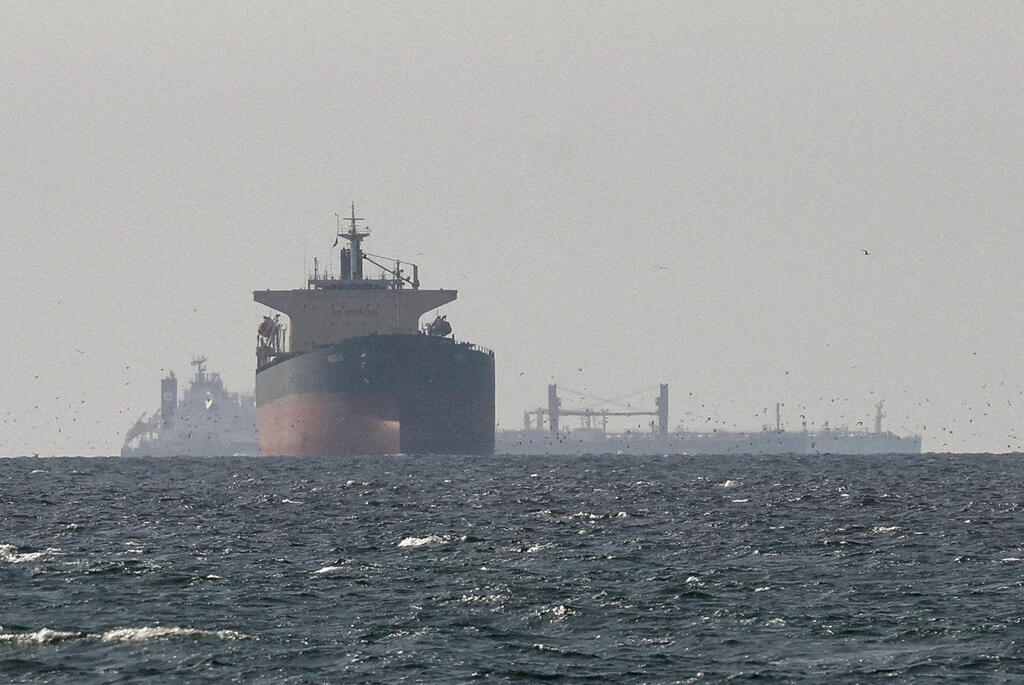
Oil tanker in the Strait of Hormuz
(Photo: REUTERS/Stringer)
Foreign Minister Abbas Araghchi has similarly argued that the blockade and sanctions pressure are bound to fail.
McGurk said he had heard similar claims during the campaign against ISIS and during negotiations with Hamas over hostages in Gaza.
His conclusion was pointed: “Everyone has a breaking point. Iran thought it had found Trump’s. Trump may yet find theirs.” He immediately cautioned that it remains too early to know whether that assessment will prove correct.
So far, however, Trump’s economic pressure has not broken Iran. Nor has the country’s worsening economic crisis produced a renewed mass uprising against the regime.
Missile launches from Iran toward Jordan during the attack overnight Sunday into Monday
Trump appeared frustrated by that reality Tuesday night when he asked on Truth Social: “When are the Iranian people going to rise up and fight?” Asked about the remark Wednesday at the White House, Trump said he understood why Iranians were reluctant to protest, pointing to the regime’s violent repression.
He said he had posed the question while largely knowing the answer because demonstrators risk being shot, and argued that “the regime is getting weaker and weaker by the day.” He predicted that eventually it would become harder for the government to suppress demonstrations as brutally as it has in the past.
Trump was also asked whether he intended to strike Iran again. His answer left both possibilities open. Asked how long the renewed military campaign might last, he said: “I don’t think too long.”