

As Israel prepares to withdraw forces under the second phase of the U.S.-brokered ceasefire agreement with Hamas, military officials warn that the terror group is using every moment of the pause in fighting to rearm and entrench itself further.
Meanwhile, the Israeli side of the so-called “yellow line,” which marks the designated withdrawal zone, remains far from cleared of Hamas infrastructure.
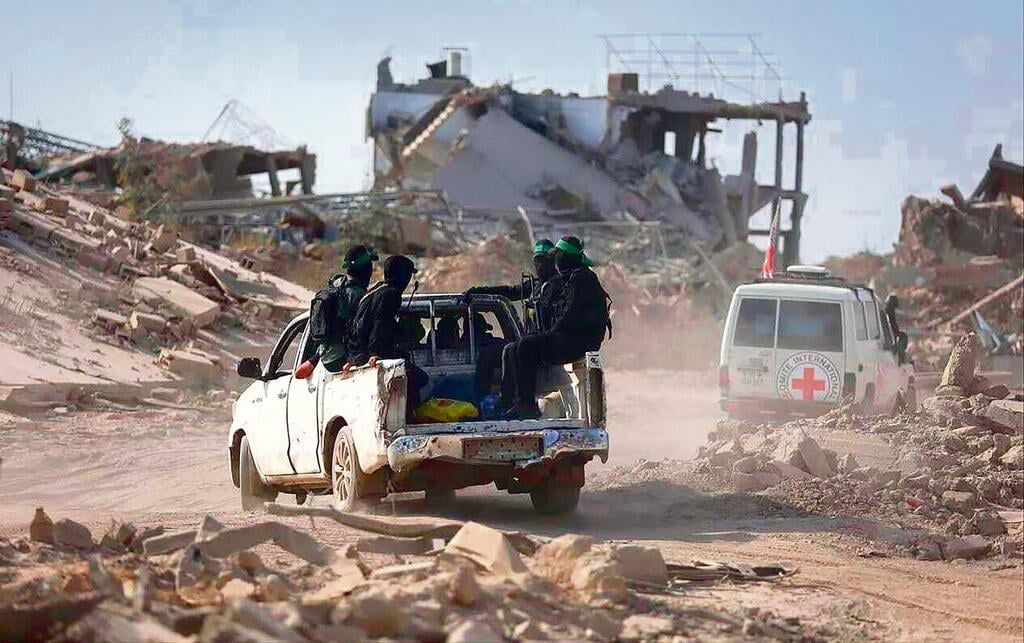
The past week has highlighted what many in the IDF see as a failed test period since the October ceasefire took effect. IDF troops, who had begun pulling back, were forced to halt a major operation targeting Hamas positions — codenamed Gideon's Chariots II — at the last moment.
In recent days alone, IDF forces operating around Gaza uncovered at least two underground chambers suspected to be tunnel shafts near military outposts on the outskirts of Gaza City. The chambers are under investigation and are expected to be destroyed. Troops also discovered three ready-to-fire rocket launchers at separate sites. In Rafah, Hamas terrorists attacked IDF soldiers, wounding two in direct combat. Meanwhile, a Hamas-fired rocket from Gaza fell near one of the IDF’s positions.
In response, the IDF carried out targeted airstrikes against members of Hamas’ anti-tank and weapons production units, as well as weapons depots and manufacturing workshops. The strikes followed a familiar pattern resembling pre-October 7 response cycles.
“There’s stagnation in the situation, and this stagnation serves Hamas,” IDF officers said, while noting that the army is constrained by the political reality of the ceasefire deal. “Troops are under strict orders to only engage if they are in immediate danger, even when Hamas operatives are visible just beyond the yellow concrete barriers.”
Under current deployments, coordinated by two regional IDF divisions, officers estimate it will take considerable time to fully locate and neutralize Hamas tunnels on the Israeli side of the yellow line, even before addressing entrenched Hamas strongholds across about half the territory still under its control.
Some officers also voiced skepticism over reported plans for a post-Hamas technocratic government in Gaza. “Eventually, Palestinians will be chosen, some aligned with the Palestinian Authority, others with Hamas,” said one senior official. “But beneath them, tens of thousands of Hamas civil servants will remain in place, alongside tens of thousands of Hamas military operatives. As long as there are only declarations, or symbolic handovers of a tunnel or a few RPGs, Hamas can live with that.”
Partial damage to tunnels raises concerns
In September, from the NCO Training School Brigade (BISLAH) soldiers stood at the shattered entrances of Gaza City’s Shati neighborhood. The area, already maneuvered through earlier in the war by the 162nd Division, was once again encircled for a renewed assault under Operation Gideon Chariots II. That operation was ultimately aborted, and Israeli forces pulled back to the yellow line, without destroying or further exposing Hamas’ strategic underground network used to manufacture weapons, hide fighters and commanders, stockpile arms and funds and launch attacks on Israeli forces.
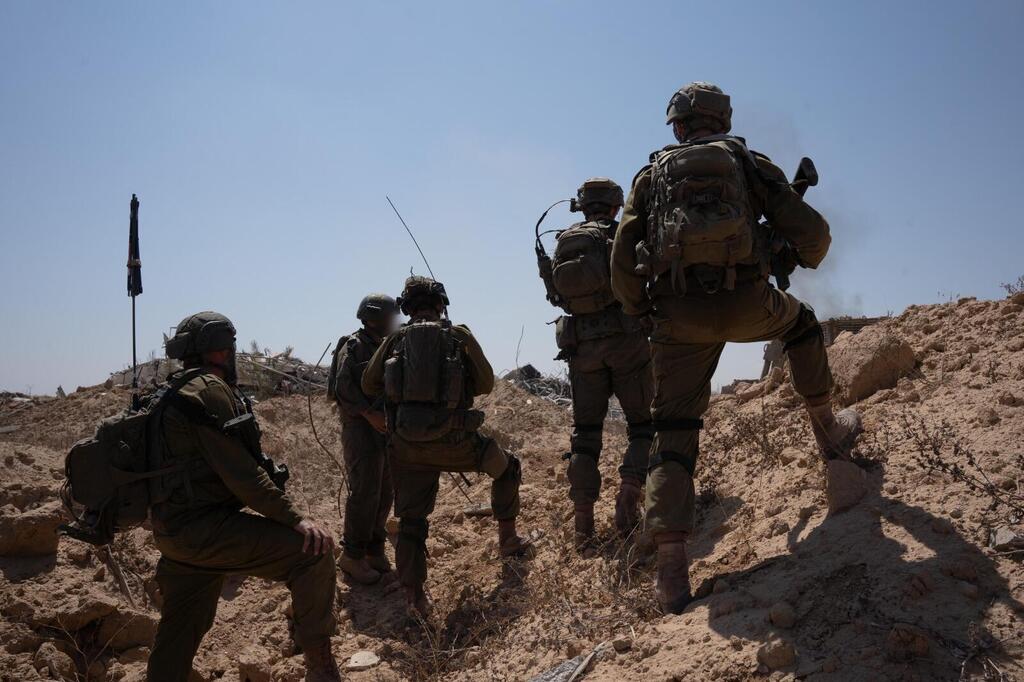
IDF forces operating in Gaza
(Photo: IDF)
A growing debate has since emerged within the IDF over whether the tunnels that were discovered during the long months of combat were truly rendered inoperable. Combat engineering experts argue that not all the methods used to demolish tunnels, including different explosives and selective sealing or the destruction of key junctions, have been sufficient to disable them or prevent reconstruction. Hamas, for its part, has invested heavily in learning from the damage, restoring tunnels deep underground and concealing their tracks.
Recent months have underscored a key finding: wherever the IDF maintains a constant ground presence, Hamas struggles to rebuild its underground terror routes.
Killing large numbers of operatives, a standard metric in traditional army-vs-army warfare, has not proved decisive in the fight against a terror group like Hamas. According to IDF assessments, nearly every young man in Gaza is viewed as a potential combatant, whether armed with a Molotov cocktail or an AK-47.
At the onset of the war, Hamas made a strategic decision to pull back most of its 24 battalions and engage IDF troops only in rare, opportunistic encounters or from a distance. That strategy, Israeli officials now say, paid off. According to conservative IDF estimates, Hamas has retained at least 10,000 of its registered fighters from before the war, in addition to thousands more recruited during the fighting.
In terms of leadership and operational knowledge, IDF officials point to recent announcements by the military as evidence that Hamas maintains command redundancy. This includes, for example, a battalion commander in Gaza City whom the IDF attempted and failed to eliminate this month, as well as a senior Hamas finance official recently killed after transferring tens of millions of dollars into Gaza in the past year. Other targeted operatives had specialized knowledge in weapons development and deployment.
Top Hamas leaders, including Gaza commander Izz ad-Din al-Haddad, remain underground. While afraid to surface, they continue to transmit messages, commands and guidance across the enclave, especially after the IDF’s withdrawal from key routes like the Netzarim Corridor in central Gaza, which had previously disrupted Hamas operations.
On Tuesday, Hamas demonstrated its ongoing guerrilla capabilities. Soldiers from the 188th Brigade killed six Hamas terrorists who were apparently attempting to plant explosives near an outpost between Rafah and Khan Younis and possibly fire at Israeli positions from a distance.
The unit commander acknowledged the deceptive calm in the sector, describing it as "only apparent." He said this is the message he delivers to his troops daily.
“The terrorists came armed, with equipment and backpacks, and were spotted in the ruins just a few hundred meters from the IDF post, beyond the yellow line,” he said. “We responded quickly and aggressively to end it 6-0. My soldiers are here to prevent the next disaster so residents of the Gaza border region can sleep at night. We don’t know how those terrorists got there or if there were more. We’re constantly training and preparing for more complex scenarios in this defensive mission.”
Hamas amassing wealth through tunnels, taxation and aid
Hamas has concealed hundreds of millions of shekels in cash inside its tunnel network, using the funds to sustain its war effort and pay tens of thousands of operatives and civil servants during the ongoing war.
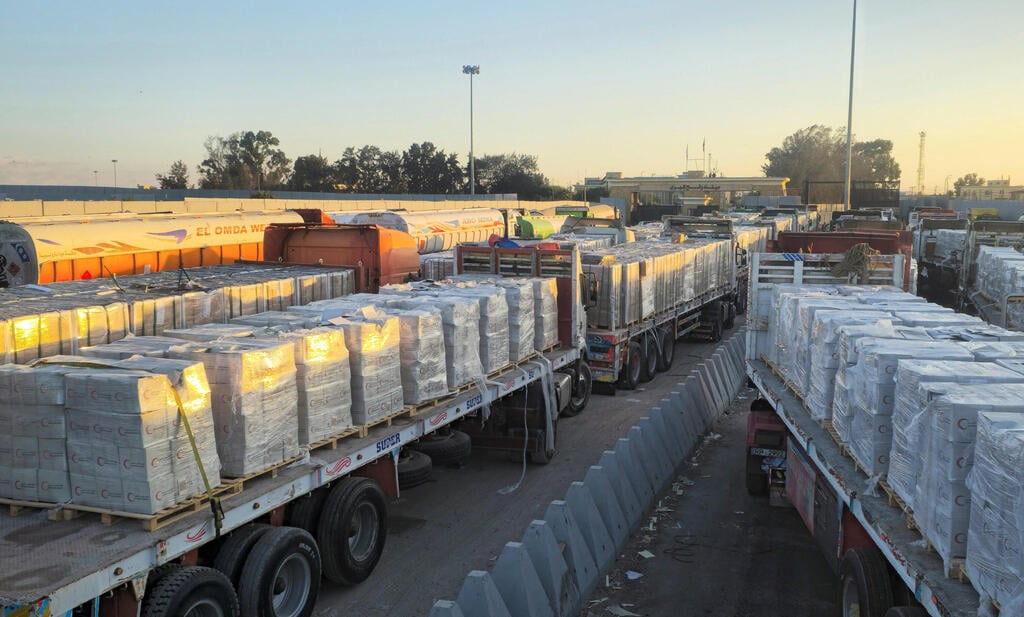
Humanitarian aid convoy on the Egyptian side of the Rafah border crossing with Gaza
(Photo: REUTERS/Stringer)
Last week, Israeli defense sources revealed that Hamas is believed to have hidden at least 400 million shekels (roughly $128 million) in cash underground during the war, with some estimates reaching as high as 1 billion shekels (over $320 million). Despite the financial strain of war, the group has maintained emergency wage payments, albeit reduced, to its personnel using these funds.
Adding to Hamas’ financial resilience is its ability to exploit humanitarian aid. Israel has allowed the entry of approximately 4,200 supply trucks into Gaza each week in recent months. Much of that aid has translated into increased tax revenues for Hamas, which collects fees at multiple points. Officials say the group has been earning tens of millions of shekels daily through this “double taxation” system, enabling it to slightly raise wages for its operatives to about 1,500 shekels (roughly $400) per month, a significant sum in the current Gaza economy.
These payments have helped Hamas maintain internal stability and avoid widespread public unrest, despite Israel’s psychological operations aimed at eroding the group’s support among Gaza’s two million residents.
“There is one undisputed fact, at least 50,000 people are born in Gaza each year,” a senior Israeli officer said. “Demographics work in Hamas’ favor. After 18 years of rule, with indirect Israeli encouragement at times, Hamas has painted every level of governance in Gaza green.”
Military officials monitoring Hamas for years say the group has embedded itself deeply in Gazan civil life, in every municipal office, every school department and every local authority.
The IDF has advised the political leadership to reduce the number of supply trucks entering Gaza, arguing that limiting aid would shrink Hamas’ income without causing humanitarian collapse. Internal reports presented to the government suggest the civilian population could sustain itself with significantly fewer deliveries of food and fuel. However, that recommendation has so far been rejected.
Officials warn that moving into the next phase of the ceasefire deal could further strengthen Hamas financially, especially if it involves economic relief measures such as the reopening of the Rafah crossing. The group’s financial reserves also remain bolstered by years of Qatari funding, which continues to fuel its operations.
Untouched Hamas battalions emerge as strategic hubs in post-war Gaza
Two Hamas battalions previously viewed as weaker have become central to the group’s post-war operations in the Gaza Strip, according to military assessments. The battalions in Deir al-Balah and Nuseirat in central Gaza, collectively referred to as the “central camps,” were largely untouched by Israeli ground operations during the war, as the IDF avoided maneuvering in those areas due to the suspected presence of hostages.
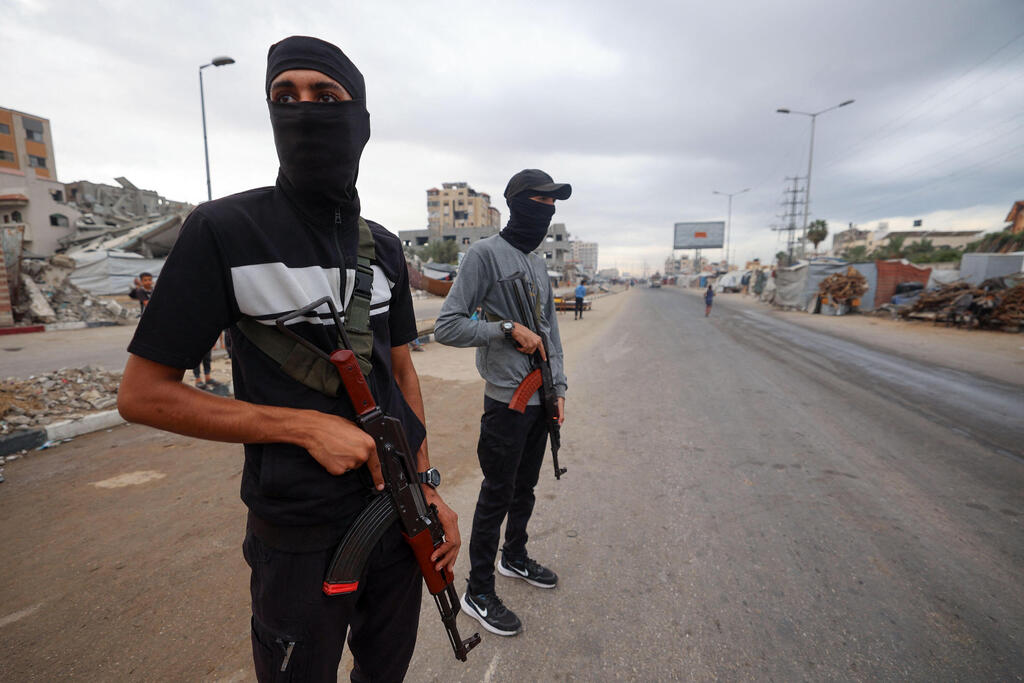
Hamas operatives in Nuseirat, central Gaza
(Photo: Eyad BABA / AFP)
Military sources say Hamas has since concentrated a significant portion of its remaining weaponry in these zones, alongside underground weapons caches that Israeli forces failed to locate in other parts of Gaza. The southern sector of Deir al-Balah is connected to another key Hamas stronghold: the displaced persons camp in Al-Mawasi, on the coast west of Khan Younis, an area where Israel conducted only limited airstrikes, including the reported targeted killing of Hamas supreme military commander Mohammed Deif.
The IDF believes Hamas has relocated weapons manufacturing workshops to Deir al-Balah and Nuseirat, where the buildings remain mostly intact compared to other cities that were heavily damaged during the war. This allows Hamas to conceal rocket and anti-tank missile production facilities more easily in densely populated neighborhoods. Recent intelligence suggests Hamas has resumed weapons manufacturing at a significant pace.
There is also growing suspicion within the IDF of renewed smuggling into Gaza from both the Sinai Peninsula and even southern Israel, using drones and sophisticated concealment methods in the hundreds of supply trucks entering Gaza daily. Some materials permitted for humanitarian use have already been diverted to serve Hamas’ operational needs.
But what Israeli officials call “the real prize” may still be on the horizon: dual-use construction materials, including cement and steel, slated to enter Gaza in the second phase of the ceasefire agreement. These are officially designated for rebuilding a new pilot neighborhood in Rafah for Gazans allowed to return through the yellow line into what Israel calls “New Gaza.” However, under Qatari pressure, some of those materials are also expected to be sent to clinics, welfare institutions and schools located in Hamas-controlled areas.
IDF Chief of Staff Lt. Gen. Eyal Zamir acknowledged upon assuming his role last year that Hamas was not defeated in the war. Now, Israeli officials warn that at the current pace, the group is on track to restore many of the capabilities that were damaged, potentially erasing some of the operational achievements gained during Israel’s extended ground campaign.