


Just two days ago, US President Donald Trump was asked whether he trusted Prime Minister Benjamin Netanyahu and replied, "I don't trust anybody." But on Sunday evening, in a striking reversal, Trump issued an unequivocal endorsement of Netanyahu, just nine days before Israel's October 27 election. What prompted the sudden change? Until now, all indications suggested Trump had no intention of intervening in the Israeli election. He even avoided meeting Netanyahu on the sidelines of the United Nations General Assembly last month, apparently to avoid accusations of electoral interference.
Behind the scenes, several figures had urged Trump to distance himself from Netanyahu, arguing that the Israeli prime minister was an obstacle to his plans, particularly the reconstruction of the Gaza Strip. Nevertheless, Trump abruptly abandoned his previous reluctance to intervene and threw his support behind Netanyahu.
European diplomats attacked in the West Bank
(Video: Amit Orfali, Roni Federman)


Gallery
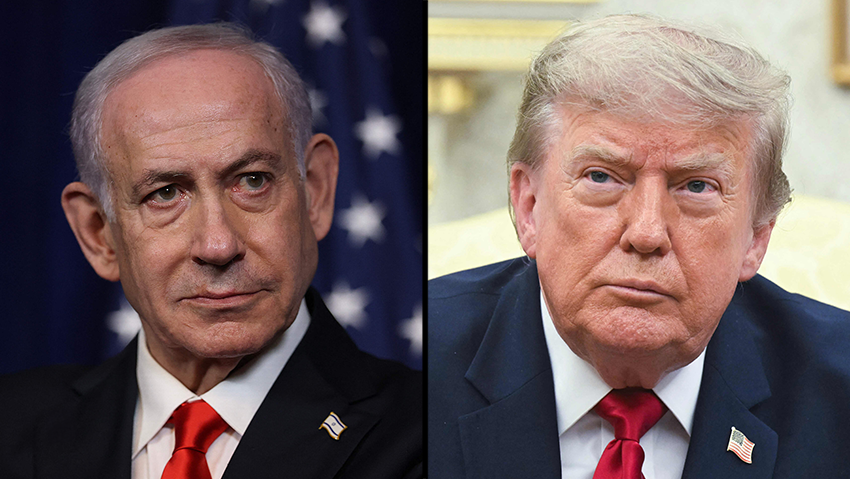
US President Donald Trump and Prime Minister Benjamin Netanyahu
(צילום: Photo: SAUL LOEB/JOE RAEDLE /GETTY IMAGES NORTH AMERICA/AFP)
Relations between Trump and Netanyahu have experienced their share of ups and downs, but throughout both of Trump's presidential terms, he has generally been careful to demonstrate support for the Israeli leader. Even so, opposition figures in Israel claim Netanyahu had pleaded with Trump and his advisers to secure a public endorsement. According to those claims, Trump's statement was a form of compensation for his refusal to allow Israel to launch an attack on Iran before the election.
Asked whether the endorsement would help Netanyahu, a senior opposition figure said: "It's a question of how it is framed. If the public understands that this is compensation at the expense of security, and that Trump is not allowing Bibi to attack Iran, it could actually hurt him."
In any case, an endorsement from Trump does not necessarily guarantee electoral success. The US president backed former Hungarian Prime Minister Viktor Orbán and even sent Vice President JD Vance to Budapest to demonstrate his support. Despite the White House's intervention, Orbán lost the election.
Democratic Rep. Daniel Goldman sharply criticized Trump's decision to campaign on Netanyahu's behalf, while also attacking the prime minister himself.
"Trump should not be expressing his opinion about democratic elections in another country, but it is not surprising that he is doing so for the anti-democratic, pro-authoritarian candidate," Goldman wrote on X. "Make no mistake: The US-Israel relationship depends on bipartisan support, and this alliance will suffer irreparable damage if the Israeli government remains in power after the October 27 election."
Trump and the risks of backing losing candidates
Trump's support for Orbán, including Vance's public appearance in Budapest, ultimately failed to secure victory for the Hungarian leader, who suffered a decisive defeat. By contrast, Trump also supported Argentine President Javier Milei, who went on to achieve a major electoral victory. Trump's approach to political endorsements, including his relationships with allies such as Brazilian presidential candidate Flávio Bolsonaro, provides another possible explanation for his decision to back Netanyahu.
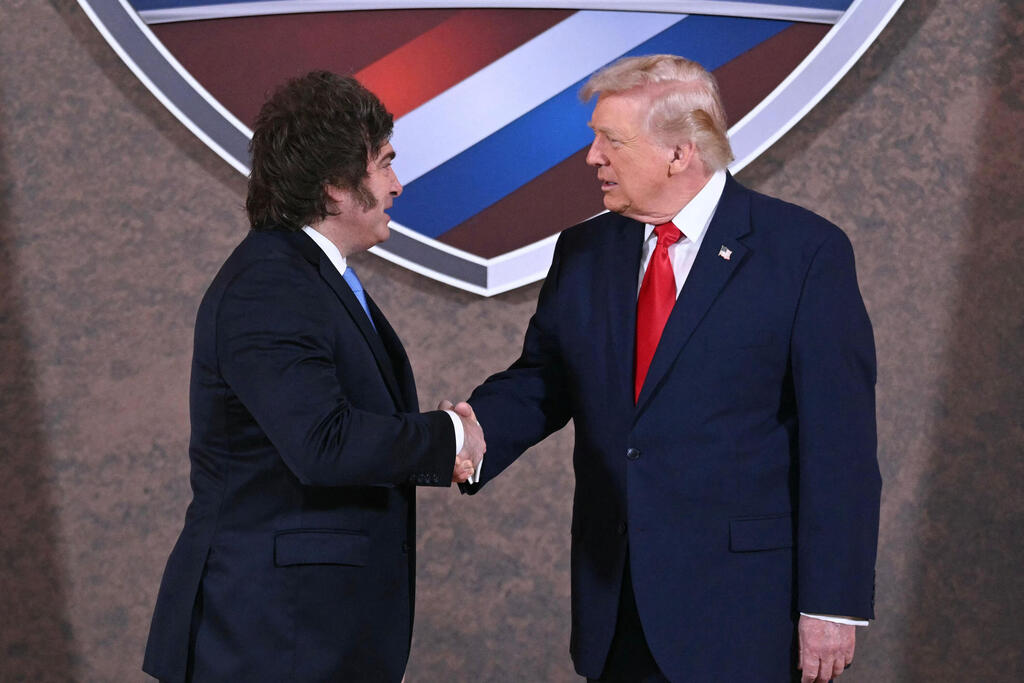
Trump and Argentine President Javier Milei. An unequivocal endorsement
(Photo: SAUL LOEB / AFP)
One assessment is that Netanyahu conveyed a message to Trump that Israel's election was extremely close and convinced him that a presidential endorsement could prove decisive. Trump also consulted John McLaughlin, Likud's American pollster, who worked on two of Trump's presidential campaigns. However, at least two Trump advisers reportedly urged the president not to publicly endorse Netanyahu.
Would Trump's endorsement have any significance if another candidate wins Israel's election and forms the next government? Probably not. Despite the forceful language of his endorsement, it is difficult to imagine Trump being unable to work with another Israeli prime minister.
Could Israel lose the United States?
Meanwhile, an attack by Jewish extremists on European diplomats Saturday in the West Bank village of Taybeh, following an assault on an American photojournalist the previous day, has triggered a diplomatic uproar. Senior Israeli officials warn that the incidents are accelerating European pressure for sanctions while also fueling anger in the United States, both among Democrats and within the Trump administration, which is already grappling with increasingly vocal anti-Israel sentiment among some Republicans.
The attacks have brought renewed urgency to a broader question about the future of relations between Jerusalem and Washington. Netanyahu himself acknowledged Sunday that Israel could lose American support after Trump's presidency ends.
According to a senior Israeli official, the responses from US Ambassador to Israel Mike Huckabee and Secretary of State Marco Rubio to the West Bank attacks were unequivocal. The official said American representatives regarded the assault on the diplomats as an act of terrorism and were particularly troubled by the fact that it occurred in a Christian Palestinian village.
Another Israeli source assessed that the attack on the diplomats had reached the attention of the White House, noting that Pope Leo XIV is American-born. Israeli officials also believe Vice President JD Vance, a devout Catholic, may contact Netanyahu about the incident.
The assault on American photojournalist Heidi Levine has provoked particularly strong anger in the United States. Senior Israeli officials note that candidates in the approaching US midterm elections have already issued sharp condemnations of Israel, while some congressional candidates have pledged to promote sanctions and block funding if elected.
A senior official familiar with US-Israel relations expressed concern that the Democrats could gain control of the House of Representatives and potentially the Senate as well. Regardless of the outcome, the official warned that Congress could become far more difficult for Israel beginning in January, even if the Trump administration continues to support the country.
The official pointed to Abdul El-Sayed, the Democratic Senate candidate in Michigan, who has been ahead in some recent polls and whose political platform includes strong criticism of Israel.
There are still many supporters of Israel within the Democratic Party, the official said, but the question is how effectively they will withstand pressure from the party's more progressive factions.
Trouble in Europe
At the same time, the West Bank attacks are further complicating Israel's already strained relations with Europe.
The European Union issued a statement condemning the attacks by violent settlers, including those targeting European diplomats, while acknowledging condemnations issued by Israeli officials. The bloc demanded accountability and effective measures to prevent further violence, and called on Israel to halt settlement expansion.
Pro-Palestinian demonstrations and public displays have continued across Europe. On Sunday, an installation in Utrecht, the Netherlands, displayed the names of 26,000 children whom organizers said had been killed in Gaza.
Pro-Palestinian installation in Utrecht, Netherlands, displaying names of 26,000 children whom organizers say were killed in Gaza
"Anyone who thinks they are protecting the settlements this way is actually endangering their future," a senior Israeli official said of the attacks.
The official described decisive enforcement against the perpetrators as "a moral and legal obligation, as well as a clear Israeli interest."
"European governments are currently under enormous pressure to take action against Israel and the settlements. The day is not far off when those governments will no longer be able to withstand that pressure," the official warned.
"People need to understand that these Jewish rioters, with their own hands, will cause countries that have not yet imposed restrictions on settlement products to do so. There is genuine public and political pressure to impose sanctions because people are seeing the images from yesterday. Decision-makers are under pressure to accelerate legislation and its implementation, and that would cause enormous damage to the Israeli economy."
Another Israeli official familiar with relations between Israel and Europe said that certain EU sanctions would require unanimous agreement among the bloc's 27 member states, meaning Germany would have to retreat from its traditional defense of Israel and abandon its veto.
"The Germans might actually do it," the official warned. "They are already hinting that they have reached the limit of their ability to defend us. We also need to see what other countries friendly to Israel, including the Czechs, Slovaks and others, will do."
The official predicted that if violence by Jewish extremists continues, sanctions will follow, with the measures primarily targeting the West Bank.
"They will try to distinguish between Israel and the territories, but we know there is no such thing as a real distinction," the official argued. "If you impose sanctions on an Israeli bank that provides regular banking services to a settler from Ariel, that bank becomes subject to sanctions, including in the United States. That will affect all of us, including trade, flights and, of course, academia."