

The Red Cross has met with the hostages and reported that some are in serious condition, just hours before the long-awaited operation to bring them home from Hamas captivity is set to begin Monday morning.
Families have been instructed to arrive early at the Re’im base in southern Israel, where the hostages will undergo initial medical evaluations after their release.
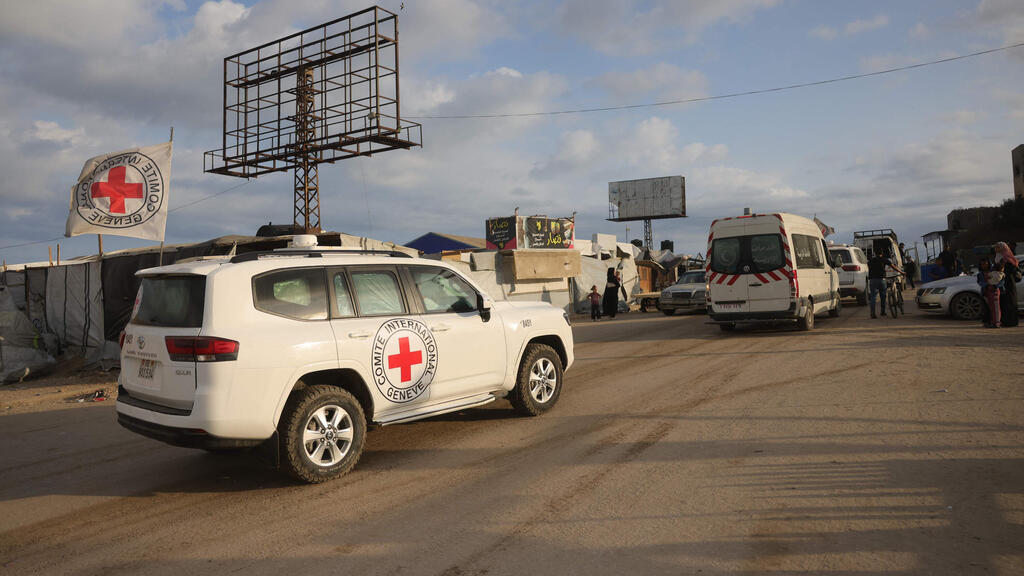
The operation to bring home the hostages held by Hamas is set to begin Monday morning, with the IDF fully prepared to carry out the transfer within an hour of notification. Military officials estimate the release will take place between 8 a.m. and 10 a.m., possibly at one of three handover points — Khan Younis, central Gaza towns, or Gaza City.
The IDF said it remains unclear how many of the hostages to be returned on Monday will be deceased. The bodies of hostages will be repatriated gradually in the coming days, beginning Monday afternoon, accompanied by short military ceremonies in the field.
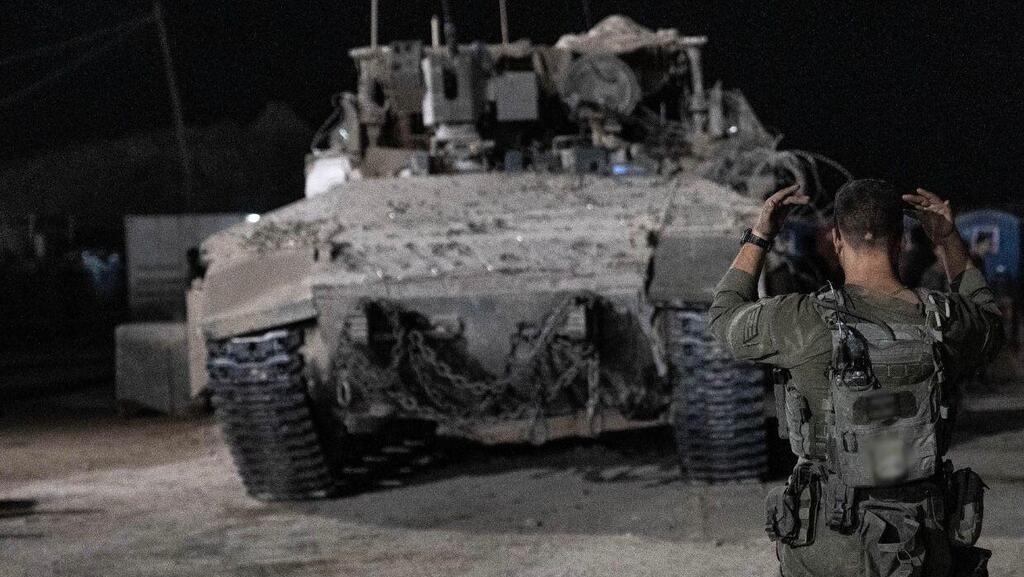
IDF forces
(Photo: IDF)
Military sources said Hamas is not expected to hold formal handover ceremonies but may attempt a propaganda move — such as calling the hostages’ families during the night or filming the handovers for media purposes. The IDF will not interfere with such calls.
According to the agreement between Israel and Hamas, the terror group must return all hostages. The IDF clarified that if any of the hostages’ remains are not delivered within 72 hours, Israel will provide Hamas with precise coordinates of burial sites and insist the bodies be recovered. “We will insist on full implementation,” the army said.
The forces tasked with the mission completed final preparations Sunday, including briefings, simulations, coordination drills and final command reviews. Special forces will enter Gaza in Eitan AFV, accompanied by tanks and infantry. The convoy will stop at a pre-designated point secured by heavy ground and aerial protection. Air support will be used to isolate the area and prevent the approach of unauthorized individuals. Red Cross representatives will hand the hostages over to Israeli troops there.

The initial intake point where the hostages will arrive
(Photo: IDF)
At the site, soldiers will conduct immediate identification checks and ensure no explosives or tracking devices — including those possibly implanted in the body — have been placed on the hostages.

(Photo: IDF)
The armored convoy will then proceed to the hostage intake center at the Re’im base in southern Israel, where the freed hostages will undergo preliminary medical evaluations. Each will be received in a separate room for private debriefing and medical assessment before reuniting with their families.
The initial intake point
(Video: IDF)


Afterward, the hostages will be airlifted by Israel Air Force helicopters to hospitals — Sheba Medical Center, Tel Aviv Sourasky Medical Center and Beilinson Hospital in Petah Tikva — where they will begin long-term physical and psychological rehabilitation.
Under the agreement, Hamas is also expected to return 28 bodies of hostages. Only part of that process is likely to take place on Monday. Once identification is confirmed, the families will be notified and repatriation to Israel will be completed.

Initial intake point
(Photo: IDF)
Gal Hirsch, Israel’s coordinator for hostages and missing persons, said earlier Sunday that “the Red Cross convoy, made up of several vehicles, will expand its capacity. It will include between eight and 10 vehicles — jeeps, a minibus and an ambulance if needed. I’m in constant contact with the head of the Red Cross delegation; they received all the equipment they requested from us.”
“There will be a single phase of release for all 20 hostages,” Hirsch added. “We have teams trained for the first contact — experts in psychological care and in giving a sense of safety.”
He said the Re’im reception compound “has undergone a full upgrade and expansion because this time all living hostages will be released at once, unlike previous operations in smaller groups. We are prepared to receive all families and provide them with privacy and proper conditions.”
Hirsch noted that Prime Minister Benjamin Netanyahu personally visited the site on Friday to receive a detailed briefing and review the readiness of the military and health systems. “He gave several instructions, and we are fully prepared for the process,” Hirsch said.