

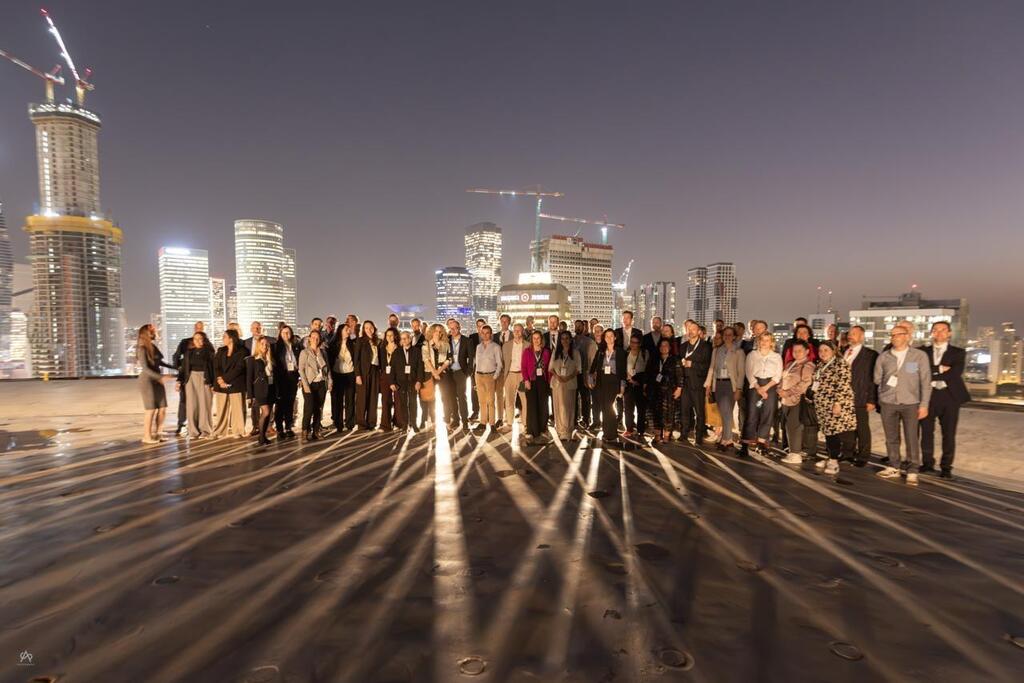
One hundred sixty young German leaders arrived in Israel this week for an intensive political, cultural and human-rights program aimed at reshaping how a new generation in Germany understands Israel beyond social media snapshots.
The delegation landed on a chartered plane painted in bright colors to mark 60 years of diplomatic relations between the countries. But Israeli officials said the real purpose of the initiative, known as the Plane Project, is to close a widening knowledge gap among young Germans who often encounter Israel only through the lens of war and conflict on TikTok and other platforms.
Israeli Ambassador to Germany Ron Prosor, who accompanied the group, said many young Germans lack even basic awareness of modern Israel or the history that shaped it. “There is an alarming amount of ignorance,” he told ynet, noting that large segments of the younger generation do not know what the Holocaust was. “People assume everyone understands the region, the neighbors, the fact that Israel is a democracy and a multicultural state, but they do not. What they have seen in the last two years is Israel only through the prism of war. It deeply concerns us.”
The Ministry of Foreign Affairs organized and funded the delegation and said it is part of an unprecedented wave of hundreds of similar visits this year, bringing influencers and emerging leaders to Israel as a strategic tool in the information struggle faced by the country.
High-level meetings across Israel
On their first day, the participants met Yuval Raphael, a singer who survived the Hamas-led massacre at the Nova music festival, and heard her account of the attack. The group is scheduled to meet President Isaac Herzog, Knesset Speaker Amir Ohana and other officials. Prime Minister Benjamin Netanyahu sent a recorded greeting. Some delegates will also meet the Israeli rapper Jimbo Jay.
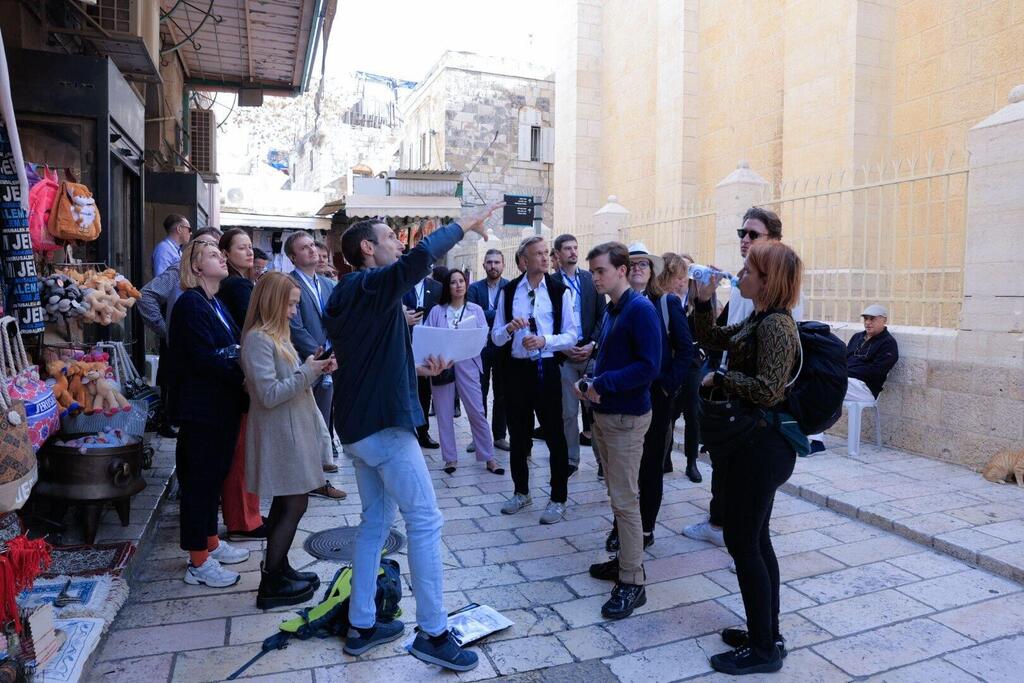
The itinerary includes visits to Yad Vashem, Jerusalem’s Old City, the Nova festival site, the Gaza border community of Nahal Oz, and a meeting with Druze spiritual leader Sheikh Mowafaq Tarif. Delegates will also meet representatives of Arab citizens of Israel, tour Israeli startups and visit the defense firm Rafael, the Technion and Nvidia’s Israeli operations. They will share dinners at Jerusalem’s Mahaneh Yehuda market and at a Bedouin encampment in the south.
Witnessing Oct. 7 up close
Many participants said direct encounters with survivors of the Oct. 7 attack profoundly changed their understanding.
Annina Pomeranke, a journalist with Germany’s ARD, said hearing survivors and witnessing the aftermath firsthand gave her reporting “an entirely different dimension.” She said it was painful to see protesters in Germany calling Hamas “freedom fighters” and denying the violence carried out on Oct. 7. “Being here makes everything much more tangible and meaningful,” she said.
Bo Müller, a state chair in the Young Liberals of Hamburg, said videos from the attack were “beyond comprehension.” He said meeting Nova survivors “hit me straight in the heart” and strengthened his conviction to speak out for Israel. “Maybe only a small voice, but one that will not go silent,” he said.
(Photo: Eran Zino)
Niklas Dejong of the Junge Union in Rhineland-Palatinate said the cruelty shown in footage from the massacre left him “shaken to the core,” noting that many victims were his age.
Another participant, who asked not to be named, said he was struck by the contrast between Israel’s image abroad and the reality he experienced on the ground. “Here in Israel you actually feel safer than in some streets in Berlin,” he said. “Jerusalem feels calm. The positivity and resilience of people living under constant threat is remarkable.”
A shifting atmosphere in Germany
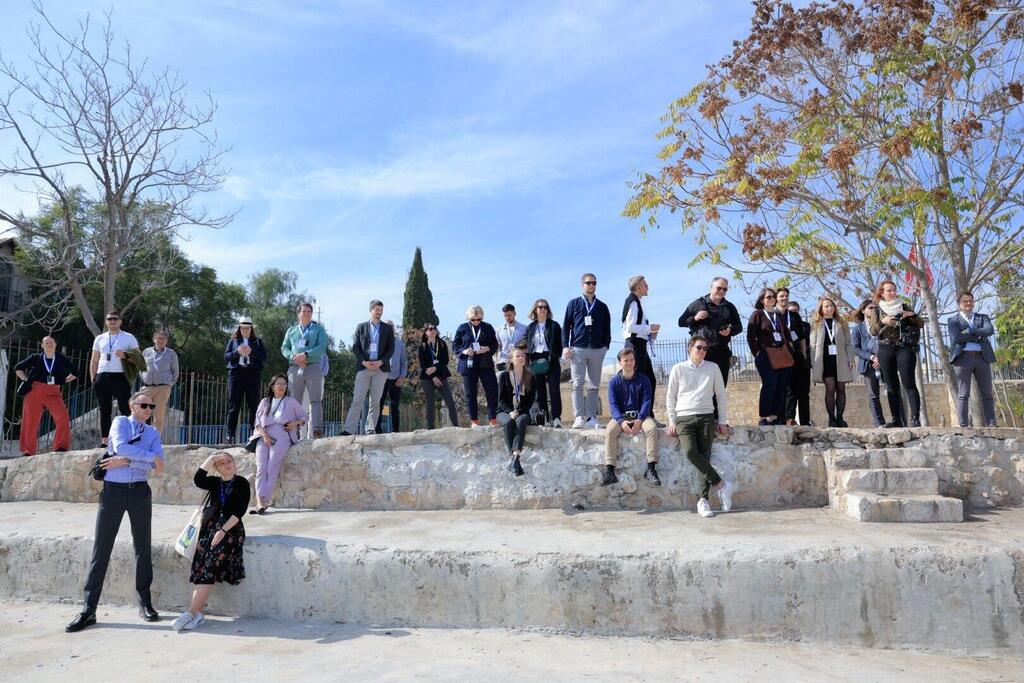
Participants also described growing polarization among young Germans regarding Israel, including radicalization on both the left and right.
Aisha Glass, a German-Turkish AI professor and singer from Hamburg, said that after publicly thanking the Foreign Ministry for inviting her, she received hate messages and a concert of hers was threatened with cancellation. “Audiences celebrate cultural diversity when I sing in Hebrew, Greek, Turkish, English and German. But the moment I share a positive experience from Israel, I am attacked,” she said.
Kai Beitelmann, a founding member of BAG Shalom within Germany’s Left Party, said parts of the political left often adopt highly critical or openly hostile views of Israel. “Precisely for that reason, it is important to come here and remind people of the political and social diversity in this country,” he said.
(Photo: Eran Zino)
Giner Belki, an integration official from Berlin-Neukölln, said rising antisemitism in Germany shows “we have not done our homework.” She stressed the need for stronger German-Israeli ties and said all forms of extremism that target Israel must be confronted so Jewish children can live openly and safely. “In the end, antisemitism harms all of us,” she said.
'Future ties depend on youth exchanges'
Prosor said the delegation is the result of months of coordination with leaders of Germany’s 16 federal states. Unlike a similar initiative a decade ago, this year’s participants were selected by the states themselves. The group’s average age is 28 and includes political activists from across the spectrum, including Greens and Social Democrats often seen as critical of Israel, as well as several Muslim immigrants.
He said no participants canceled despite pressure in Germany. “The image of Israel there is not at its best,” he said. “Our challenge is with the younger generation, where you see radicalization from left and right. We want them to know the real Israel, not the filtered version. I want them to see the internal debates and the multicultural reality.”
Prosor said long-term efforts such as student and youth exchanges are essential. “When someone comes here and experiences Israeli reality, it stays with them for life,” he said. “That is the real bridge between our peoples.”