

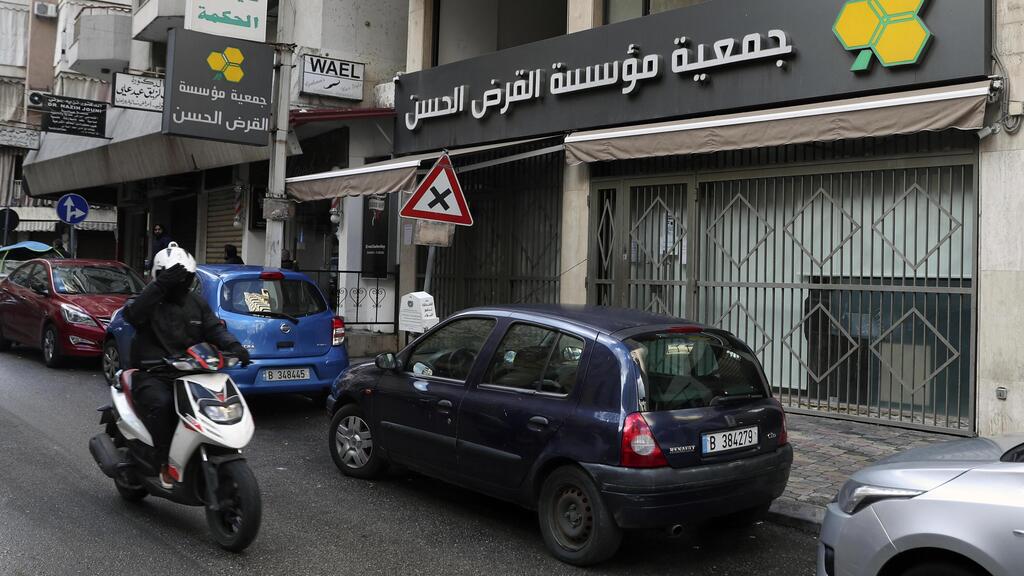
Hezbollah has tried in recent days to open a new branch of Al-Qard Al-Hasan, the institution known as the terrorist organization’s “bank,” in the Tyre area. During the war, the institution was repeatedly targeted in IDF strikes. According to Lebanese reports, residents of southern Lebanon oppose its opening out of concern that the area will become a target because of Hezbollah’s presence.
The IDF has heavily struck the bank’s branches across Lebanon in recent years, with the latest strike taking place in March, immediately after Hezbollah joined the war alongside Iran and fired missiles at Israeli territory. But now, the terrorist organization is trying to revive the bank and open new branches. All this comes as the Lebanese army is supposed to disarm Hezbollah with the aim of dismantling it completely.
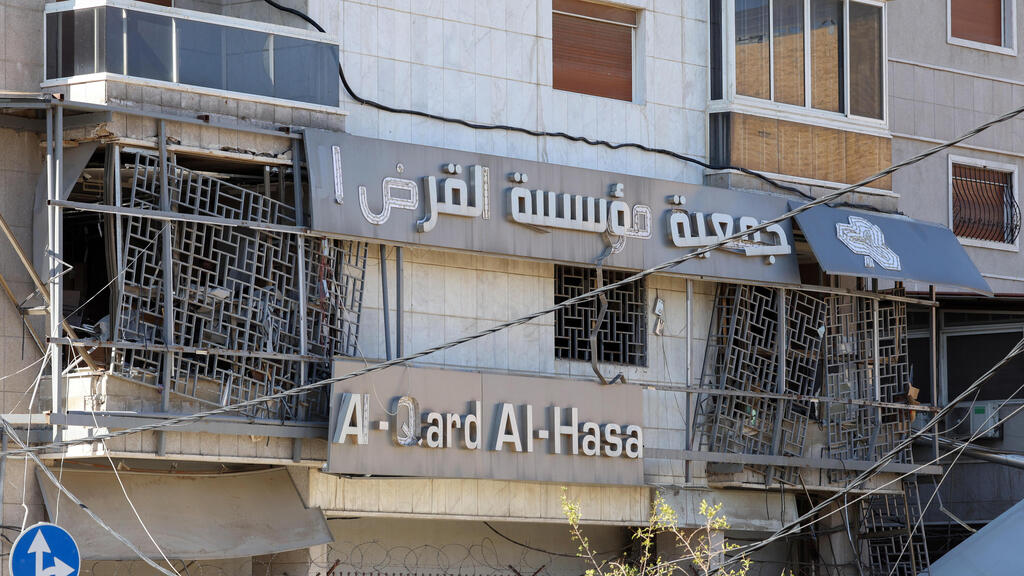
Another bank branch after an IDF air strike
( Photo: Mohamed Azakir/Reuters)
On Wednesday, Lebanon’s An-Nahar newspaper claimed that Hezbollah had “taken a step back” in light of the public opposition that erupted. According to the newspaper, the terrorist organization’s hesitation was intended “so as not to arouse resentment toward it.” A Lebanese website that publishes reports against Hezbollah quoted political activist Harry Mourad, who claimed that “there has been a significant shift in the Shiite mood. It is no longer acceptable to see the entire community standing behind every Hezbollah decision as it did in the past. We used to witness almost complete consensus, but that has changed. Hezbollah made wrong decisions that brought the community into a cycle of death.”
He added that “the decision to rebuild Al-Qard Al-Hasan while residents of southern Lebanon are still displaced naturally encounters an angry response. Every institution the party builds is a ticking time bomb that harms Shiites and all Lebanese around them. The Shiites need an alternative project to the project of killing that Iran has brought with it over the past 47 years.”
By contrast, media outlets that support Hezbollah present a different picture. They claim the bank fulfills a social and economic role and is directly tied to Hezbollah’s social environment. According to them, the ongoing harm to the organization comes from the Lebanese state. The Al-Akhbar newspaper wrote earlier this month that “harming economic institutions has become part of a political strategy.” But in May, Hezbollah Secretary-General Naim Qassem himself used the bank as a means of threatening the government, warning that “people will take to the streets” if it is closed.
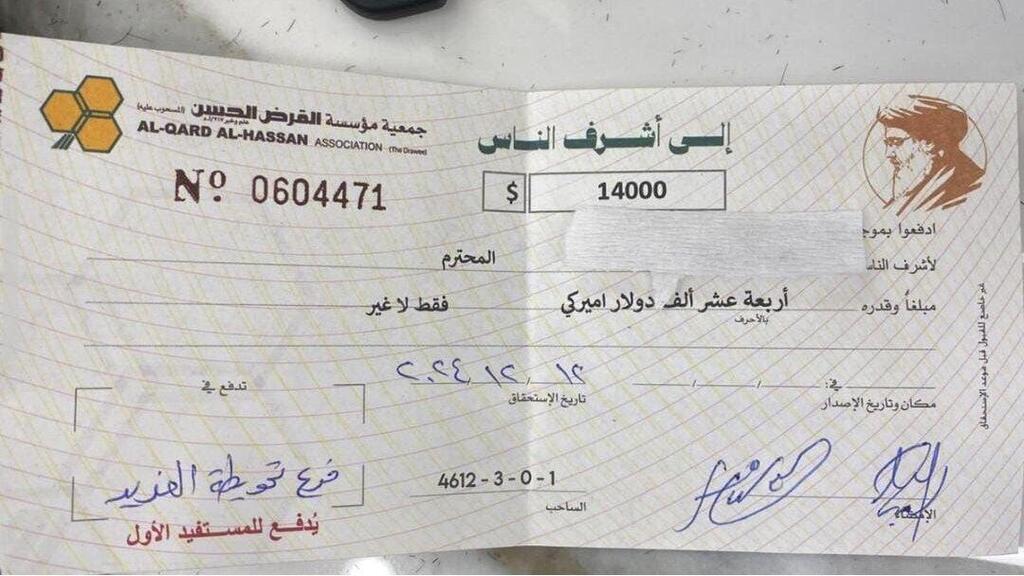
A check from Al-Qard Al-Hasan
Lebanon’s leadership, headed by President Joseph Aoun and Prime Minister Nawaf Salam, has already taken action against Hezbollah’s bank, but has not banned its activity. Last month, Lebanese Justice Minister Adel Nassar asked the prosecutor general’s office to investigate its activity, including on suspicion of money laundering. However, reports in Lebanon say there has been no progress in the investigation and that no additional proceedings will be taken against the bank unless Lebanon’s central bank provides full documentation regarding financial irregularities.
Meanwhile, even a ban imposed by Lebanon’s central bank on licensed financial institutions from conducting direct or indirect transactions with Hezbollah’s bank, as reported by Reuters in July 2025, did not prevent its continued activity. This is in addition to U.S. sanctions imposed on the bank years ago, and despite new sanctions imposed on it only last month. In fact, the only suspension of activity carried out so far came under the influence of Lebanese residents in March, also because of fear of IDF strikes against one of the branches. The Sidon municipality then announced the evacuation of the branch in the commercial market.
The bank is only one of the challenges facing the Lebanese government as part of its attempts to establish its authority and reduce Iranian influence in the country. One of the central issues is the concentration of weapons in the hands of the terrorist organization, which refuses to disarm despite the agreement with the U.S. and Israel. Hezbollah continues to oppose negotiations with Israel and is also boycotting Lebanese government decisions adopted following U.S.-mediated talks. The group says it will discuss the weapons issue only as part of an internal dialogue on a national strategy, “separate from external influences.”