

Every night since Operation Roaring Lion, one image appears in Chaya Schijveschuurder’s sleep. It is the image of Avraham Yitzhak, her younger brother, lying in an ambulance beside her with a bandage on his head, lifeless.
She speaks to him, as she spoke to him then, exactly 25 years ago, and wakes from the dream. On Aug. 9, 2001, at the Sbarro restaurant in Jerusalem, 8-year-old Chaya lost her parents, Mordechai and Tzira, and three of her siblings, Ra'aya, Hemda and Avraham Yitzhak, in a single moment. She and her sister Leah were the only family members who survived the murderous attack, which claimed the lives of 16 people. Chaya has three older brothers who were not present at the attack at the restaurant in the city center.
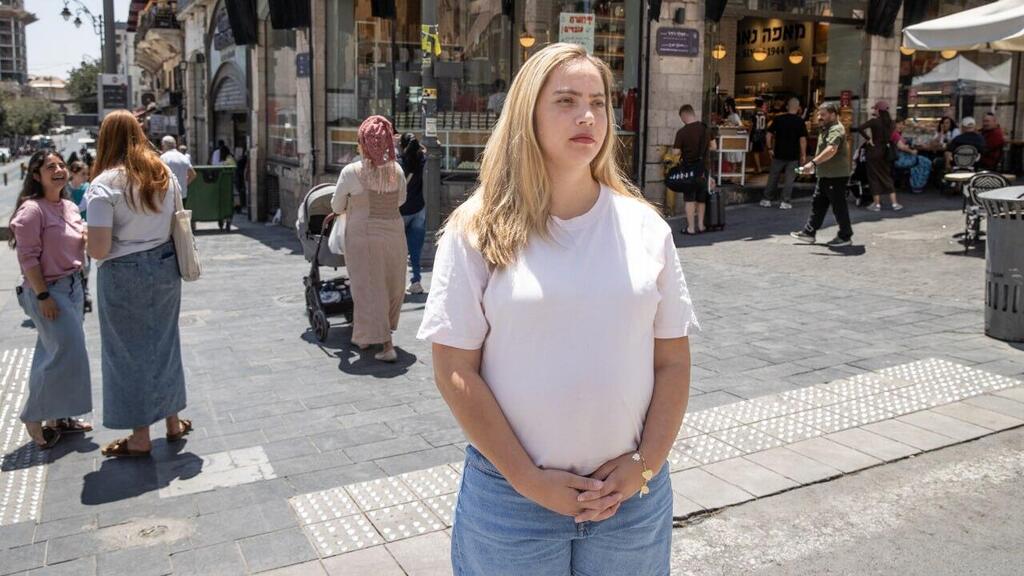
Today, 25 years later, Chaya has three children of her own. All three were named after relatives she lost in the attack: Rafael Matan, 6, after her father, Mordechai Rafael; Shahar Tzira, 4, after her mother; and Hemda, 11 months, after her baby sister, who was only 2 when she was murdered in the attack. The family lives in Rishon Lezion. “My children know that their grandfather and grandmother and their aunts and uncles were killed. I have not told them how it happened and that I was there myself. Go explain to a 6-year-old what it means to go to a restaurant and have it explode,” she says.
'I was completely burned'
The Schijveschuurder family came to Jerusalem in the summer of 2001 for a day out from the community of Neria, where they lived. At lunchtime, they looked for a place to eat, entered the Sbarro restaurant at the intersection of King George and Jaffa streets, left after Ra'aya said she did not want to eat there and then returned.
Inside the restaurant, Chaya stood in line at the cashier with her father, her sister Leah and her brother Avraham Yitzhak, while her mother Tzira sat at one of the tables with the girls, Ra'aya and Hemda. “I remember everything. The whole day,” Chaya says even 25 years later. Although she lived in Jerusalem for many years, she tries not to pass the site of the attack. “Only if I was taking the light rail to the city center would I pass there, and it is unpleasant. It brings everything back,” she explains.
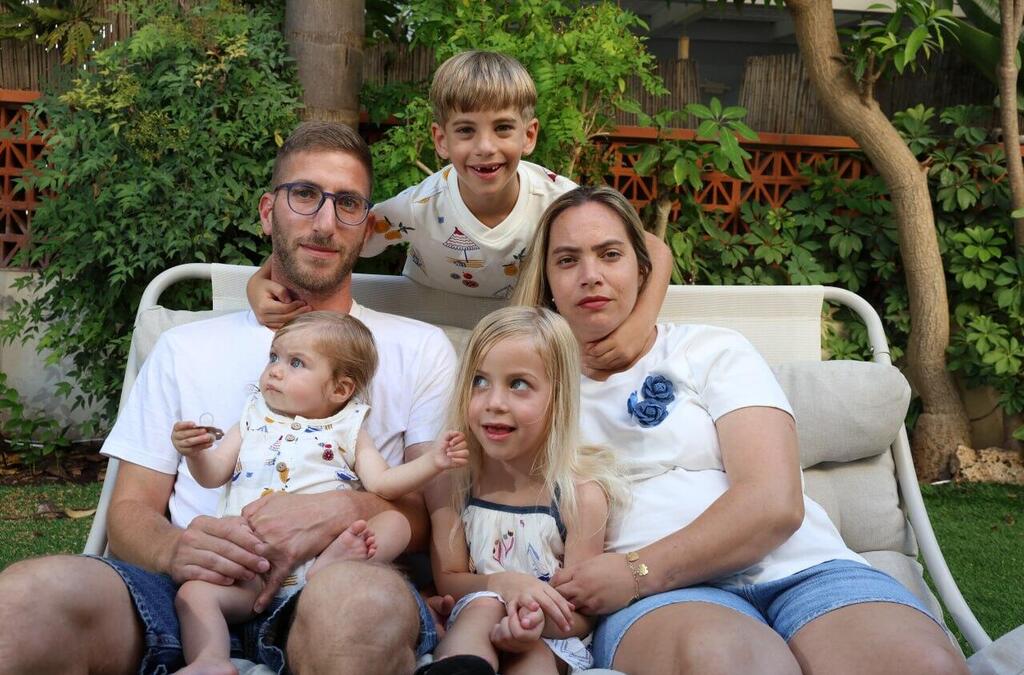
She lives in central Israel with her husband an three children, each named for a relative killed in the attack
(Photo: Shaul Golan)
She reconstructs the moments of terror without leaving out a single detail. “We were standing at the cashier, and then there was an explosion. I managed to get myself outside. I don’t know how. Everything went up in flames. There were screams and chaos. I was an 8-year-old girl. I did not really understand what had happened. I only understood that I had to get myself out. At the exit from the restaurant, I saw a pillar that was about to fall. I waited a moment for it to fall and stepped over it. The second I got out, medics jumped on me and poured water on me. I was completely burned. As for pain, I think the body has a mechanism to protect itself, and in those moments I still did not feel anything," she describes.
“At first, they put me in an ambulance. There I saw my little brother lying with a bandage on his head, and I started calling to him and talking to him, and he did not answer me. They took me out of the ambulance and started running with me to Bikur Holim Hospital. All the while, I was shouting to them, ‘Where is my father?’ and they kept telling me, ‘He will come soon.’ When I arrived at Bikur Holim, I remember how they simply tore off my clothes because they had melted so much. I said to the nurses, ‘Please don’t amputate my legs.’”
When Chaya woke up in the morning, she began asking where her family was. “They kept answering me, ‘They will come soon.’ They did not tell me there had been an attack. After the funeral, my brothers came into my room, and I saw that their shirts were torn with the tear of mourning, and my sister Leah, who survived, her whole face was black. Everyone was crying, and I did not understand. Then my brothers told me that we had been in an attack and that my father, my mother, Avraham Yitzhak, Ra'aya and Hemda had been murdered. And I immediately asked them: Who will take care of our house? Where is Mom now, who will cook for us? Who will clean the house? The most basic things. They told me, ‘Don’t worry. We will take care of everything.’”
Life after the attack was full of upheaval for Chaya. She and her sister Leah were sent to live in Switzerland with their uncle. They lived there for a year and a half, but returned to Israel because of difficulties. At some point, they moved in with their brother Meir and his wife, who took on the role of father and mother.
At 18, Chaya was diagnosed with epilepsy and underwent a series of surgeries, but she still suffers daily dissociative episodes. “Two years ago, they performed three brain surgeries on me to try to fix the epilepsy. All these years I have been in hospitals, in surgeries. I am still completely living with the injury, and because of that I also cannot work.”
How often do you think about your father, your mother and your siblings in daily life?
“There are many moments when they suddenly come up. My son Rafael is very sensitive. He says to me, ‘Mom, you miss your parents, right? I am very sad that I did not know them.’ Today, now that I have children, it hurts me that they did not get to know their grandfather and grandmother. They missed out on amazing grandparents. Over the years, it gets harder. I move forward in life and my parents are not by my side for anything. I cry because I have no way to call my mother and say to her, ‘Mom, I’m pregnant.’ But I speak to them in my own way. I absolutely believe they are watching over us. I am not religious, but when I light Shabbat candles, I ask my parents to protect the children and show us the right path in life.
“In some place, I still feel like that 8-year-old girl. Life goes on, but somewhere I am still that same girl. Going to the graves at memorial services always feels to me like the first time they took me from the hospital to the unveiling of the headstones.”
Chaya says the events of October 7 took her back, especially the war with Iran and the sirens. “It is frightening. On the one hand, I have to show strength for the children, and on the other hand, my heart is dying of fear. Since Operation Roaring Lion, every night the image comes up of me seeing my brother in the ambulance and talking to him, and I wake up from it every night with that image in my face. We live in a country that is always in a quiet war. Sometimes it is loud. A country where people live in fear.”
And despite everything, in conversation with Chaya, one can also hear quite a bit of dark humor and laughter, and see a smile on her face. “That is life. I am not depressed. Somehow you learn to live and walk alongside what I went through in life,” she explains.
A smile with tears in her eyes
On the evening of the attack, on the other side of the world, Michal Belzberg was supposed to celebrate her bat mitzvah party in the United States. After she and her family heard about the deadly attack, she decided to cancel the party. They later initiated the establishment of OneFamily, an organization that assists and supports victims of terrorism and bereaved families in Israel.
Two days after the attack, the Belzberg family returned to their home in Israel and visited those wounded in the attack. “They came to me at the hospital. I remember them, Chantal and Marc,” Chaya recalls of her first meeting with Michal’s parents.
“I remember that she was small and hurting, smiling with tears in her eyes,” says Chantal Belzberg, who would later receive the Israel Prize for lifetime achievement for her special contribution to society and the state. “I wanted to show that we were here to embrace her. It is visiting a little girl whose entire world had collapsed. I knew we had to give her a feeling of love and that we would not leave her. Twenty-five years later, we have not left her. And she has come a long way,” Belzberg says.
“When my brother called and said something terrible had happened in Israel, I cannot even describe what we felt. Right after that, Michal asked to cancel the bat mitzvah party, and two days later we returned to Israel. Michal said we could not celebrate and had to help the people who had gone through the attack. We understood there was a reality in which help was needed — people were very alone. That is how OneFamily was born.”
Twenty-five years after the organization was founded, Belzberg is calling on anyone who feels they need support to contact them. “There are people who at first do not need anything, but after some time they feel they want to be part of it. Please call us.”