

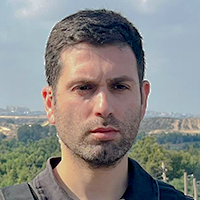
The Israel Defense Forces on Monday evening released new details about the operation that led to the recovery of the remains of the last hostage, Sergeant First Class Ran Gvili.
According to the IDF, 20 military dentists helped forces examine about 250 bodies in just over 24 hours, after intelligence narrowed the search to a specific plot inside a cemetery in the northern Gaza Strip. As part of the intelligence-gathering effort, several Gazans were detained and interrogated, providing information about the exact section of the cemetery where Gvili was buried.
Footage from the search efforts for Ran Gvili, which ended successfully
(Video: IDF Spokesperson)


Fighters react emotionally after receiving news of the hostage’s recovery
(Video: IDF Spokesperson)
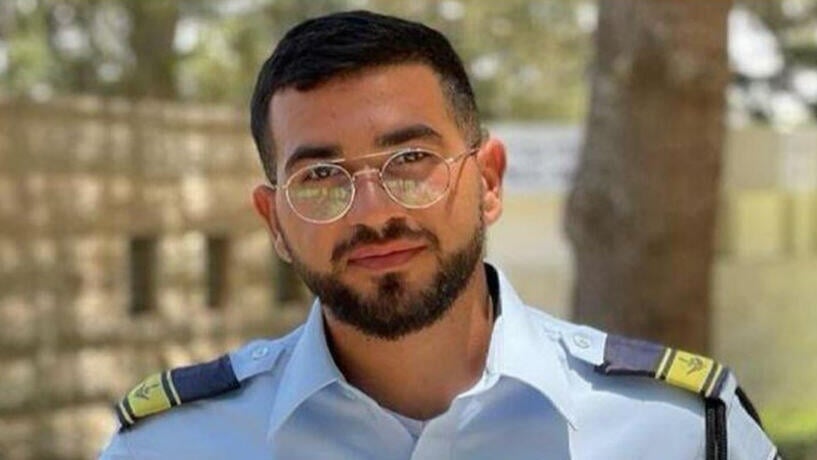
Operation “Brave Heart” was led by Southern Command forces headed by the Alexandroni Brigade, operating under the 252nd Division and in cooperation with the elite Yahalom engineering unit. The operation began over the weekend in the Shuja’iyya area. During the activity, more than 250 bodies were examined.
The IDF said efforts to locate Gvili’s burial site had continued for more than two years and were one of the Military Intelligence Directorate’s central objectives. “Planning the operation was made possible by thorough and prolonged intelligence work based on the collection, cross-checking and analysis of information from a wide range of sources,” the military said.
“The overall effort was a complex, dynamic and ongoing process that required constant validation of information, continuous assessments and close integration among all bodies involved,” the IDF added. Representatives of Military Intelligence and the Prisoner of War and Missing Persons Headquarters played a central role, it said.
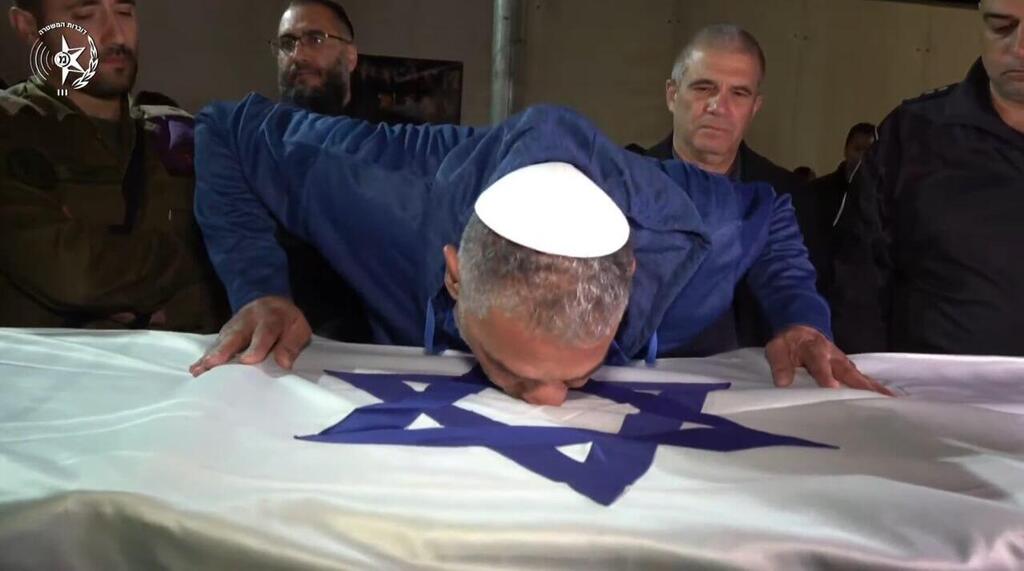
Itzik, Ran’s father, kisses his son’s coffin draped in the Israeli flag
(Photo: Israel Police Spokesperson)
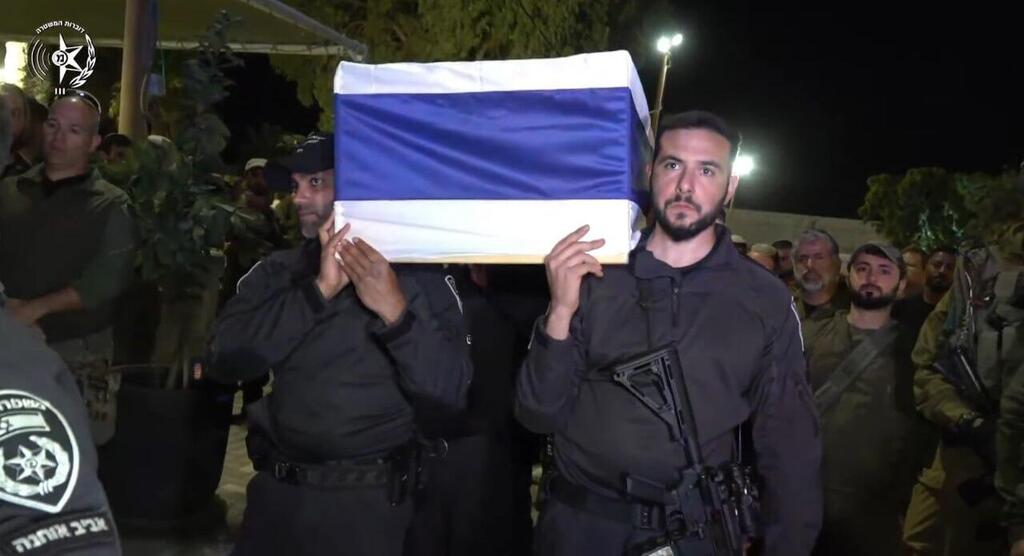
(Photo: Israel Police Spokesperson)
The focused intelligence effort significantly reduced the scope of the search from hundreds of potential graves to just several dozen within a short period of time. “Building an updated and continuously evolving intelligence picture, based on integrating diverse intelligence capabilities, enabled IDF forces to locate the captive’s remains in the shortest possible time,” the statement said.
The core identification work in the field was carried out by Unit 6017, the Medical Identification and Cause of Death Investigation Unit of the Medical Corps, which includes both reserve and regular service personnel. The IDF said the handling and burial process was conducted in coordination with the Military Rabbinate, whose representatives provided initial support and carried out preliminary identification on site when possible.
The IDF chief of staff salutes the last hostage fallen soldier, in the Gaza Strip
(Video: IDF Spokesperson)
Fighters sing after the identification of Ran’s body
(Video: in accordance with Section 27A of the Copyright Law)
More than 20 dentists from the unit worked together for over 24 hours, scanning about 250 bodies until Sergeant First Class Ran Gvili was identified.
Over the past two years, the unit has taken part in operations to recover hostages and assisted in identifying a large number of fallen soldiers, the military said. Its work includes collecting field data for medical identification, including dental records and DNA samples to verify identity.
Meanwhile, after it was reported that political leaders had earlier blocked the IDF from searching the same Gaza City cemetery in recent months, senior military officials acknowledged Monday evening that intelligence pointing to the location where Gvili was found had been known for some time.
“This was one of four hypotheses,” the officials said. “Two were at Shifa Hospital and another involved a sensitive site deep inside Gaza to which we have no access. We discussed the issue with the political leadership and there were additional regional strategic considerations.”