

Talks to advance U.S. President Donald Trump’s plan to end the Gaza war have been on hold since last week, when the United States and Israel launched strikes on Iran, triggering a broader Middle East conflict, three sources with direct knowledge of the negotiations said.
The pause threatens to slow implementation of Trump’s flagship Middle East initiative, which he has presented as a major foreign policy objective. It comes less than a month after Gulf Arab states pledged billions of dollars for Gaza reconstruction — funds now in question as some of those countries face Iranian attacks amid the widening conflict.
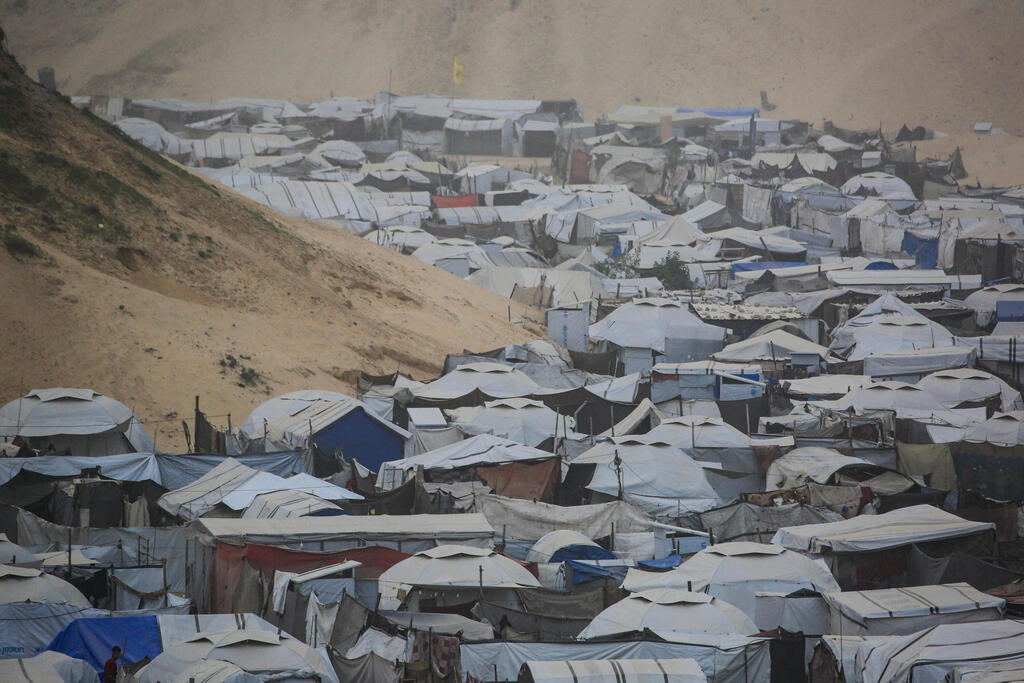
Trump’s Gaza plan partly depends on whether Hamas, the Gaza-based terror group, would agree to lay down its weapons in exchange for amnesty, a step intended to pave the way for reconstruction and additional Israeli military withdrawals. White House mediators have been conducting backchannel discussions between Israel and Hamas on the disarmament issue.
Negotiations on that and other matters were paused when the Iran war began on Feb. 28, the three sources said, speaking on condition of anonymity because of the sensitivity of the talks. The halt in discussions on Hamas disarmament has not previously been reported.
A White House official disputed that characterization, saying discussions have continued.
“Discussions on disarmament are ongoing and positive. All of the mediators agree that this is a critical step to enable rebuilding for the people of Gaza,” the official said.
Zaha Hassan of the Washington-based Carnegie Endowment for International Peace said countries including the United Arab Emirates and Qatar — which pledged funds to Trump’s “Board of Peace” mission — may now be reconsidering their commitments.
“They may be asking whether this is really money well spent now that they are dodging rocket fire,” Hassan said.
One source familiar with the Board of Peace initiative described the pause as a brief logistical delay caused by flight disruptions that prevented mediators and representatives from traveling around the region. Negotiations have frequently been held in Cairo.
Over the longer term, the source said the Board of Peace believes the conflict with Iran could potentially accelerate progress on disarmament by weakening Tehran’s influence. Iran has long provided financial and military support to Hamas.
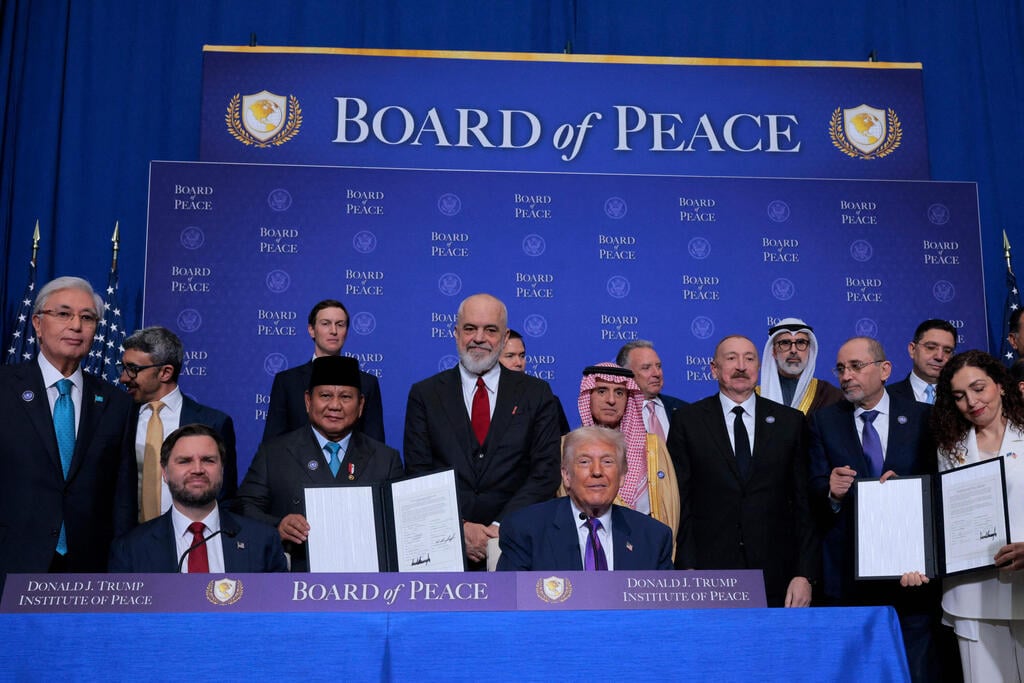
(Photo: CHIP SOMODEVILLA / GETTY IMAGES NORTH AMERICA / AFP)
Another source — a Palestinian official involved in mediation efforts — said Hamas had been scheduled to meet with Egyptian, Qatari and Turkish mediators on the day the Iran war erupted. That meeting was canceled, and no new date has been set.
A Hamas official confirmed that talks related to Trump’s Gaza plan have been frozen for now but declined to provide further details. Israel’s government did not immediately respond to a request for comment.
A Trump administration official said regional conditions had disrupted some travel but insisted discussions were continuing.
“The situation in the region has impacted some travel, but discussions and progress continue,” the official said.
Since the start of the Iran war, the IDF has reduced the pace of strikes in Gaza but has not halted operations, citing threats from Hamas terrorists. Israeli aircraft have also been carrying out attacks in Iran and Lebanon.
At least 16 Palestinians have been killed in Gaza since Feb. 28, according to local health officials.
Talal Hamouda, 46, a resident of Jabalia in northern Gaza, said he expects Israeli attacks to intensify once the Iran conflict subsides.
“The moment the war on Iran is over, they will come back at us with the same frequency, with the same violence,” he said.
Meanwhile, Hamas has continued consolidating control in areas it holds in Gaza. Sources close to the group said Hamas terrorists recently ambushed members of Israeli-backed militias in northern and southern Gaza, killing at least two people.
Trump’s Gaza plan began with an October ceasefire that left Israel controlling more than half of the territory while Hamas maintained control over the remainder. The initiative gained momentum in the weeks before the Iran war, including the reopening of Gaza’s border crossing with Egypt and new reconstruction pledges.
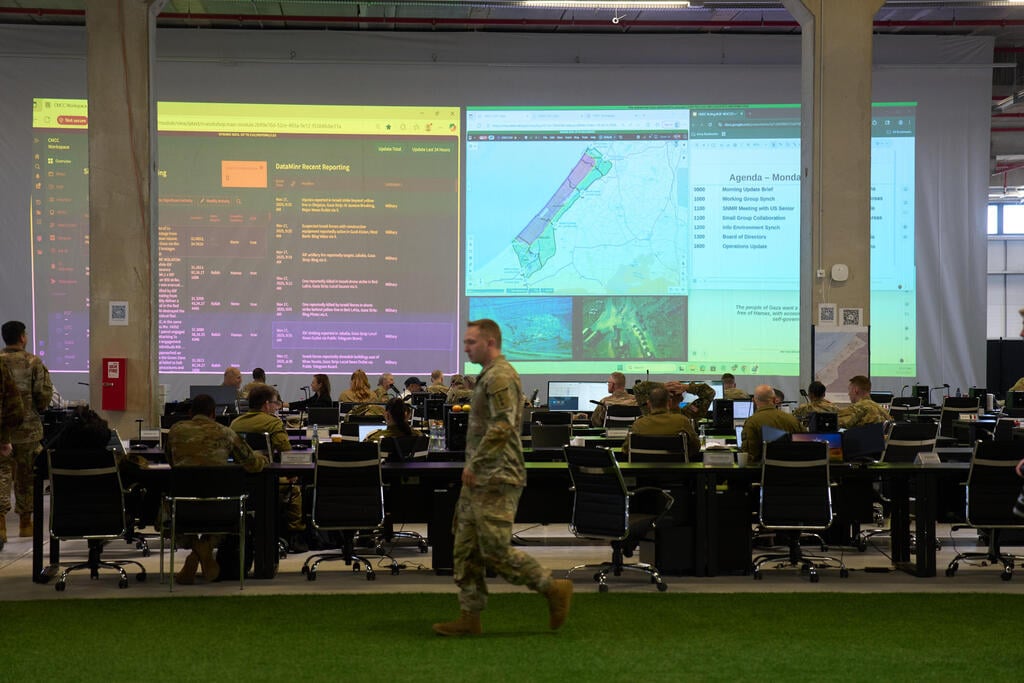
(Photo: AP Photo/Ariel Schalit)
Much of Washington’s coordination on Gaza policy has been run from a U.S.-led military compound in southern Israel. Foreign diplomats stationed there said momentum behind the plan appeared to stall as the conflict with Iran escalated.
Three diplomats said the Civil Military Coordination Center scaled back to minimal operations when the war began amid concerns the site could be targeted by Iranian missile attacks.
According to the diplomats, senior U.S. officials are now largely focused on the conflict with Iran, leaving Gaza with limited high-level attention. Working-level discussions between countries, however, have continued in hopes the plan could resume once the fighting subsides.
Natan Sachs, a senior fellow at the Washington-based Middle East Institute, said the plan’s future depends heavily on sustained engagement from Washington.
“Only sustained attention from the Trump administration can keep the plan on track — and the war with Iran has the potential to undermine exactly that,” Sachs said.
“Without it, the divergent aims of the two warring parties could easily lead to very different outcomes, and potentially to a resumption of fighting.”