


Against the backdrop of rising regional tensions involving Iran, Syria and Lebanon, the IDF and the defense establishment are finalizing a new multiyear force buildup plan aimed at preparing for future conflicts, including the possibility of a prolonged direct confrontation with Iran.
Senior defense officials met Thursday in a key discussion chaired by Defense Ministry Director General Maj. Gen. (res.) Amir Baram, during which the IDF presented its main recommendations. The plan is expected to be submitted for approval to Defense Minister Israel Katz and later to the Cabinet committee on defense procurement, headed by Prime Minister Benjamin Netanyahu.
Under the framework agreement, about 350 billion shekels are earmarked over the next decade for force buildup. The IDF is expected to generate about 100 billion shekels of that amount through efficiency measures, according to officials. While the figures are substantial, defense officials say they reflect the soaring costs of advanced weapons systems and Israel’s security needs.
The budget would cover a wide range of platforms, including Arrow missile interceptors, F-35 fighter jets, Apache attack helicopters, aerial refueling aircraft and large quantities of munitions, amid a global arms race that has driven up prices for raw materials and defense production.
The debate comes as U.S. President Donald Trump this week called for a more than 50% increase in the U.S. defense budget, saying it would reach about $1.5 trillion by 2027, underscoring broader international trends.
Fighter jet dilemma
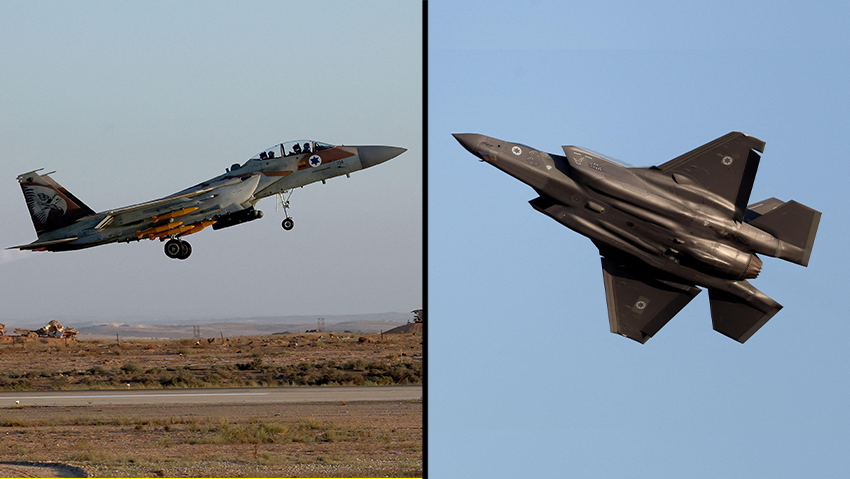
At the center of the discussions is whether to acquire another fighter squadron and which aircraft to choose. The IDF and the Defense Ministry are weighing the establishment of a fourth squadron of F-35 stealth jets, known in Israel as the Adir, versus purchasing an additional squadron of F-15I aircraft.
The F-35 is valued for its stealth and intelligence-gathering capabilities, serving as a platform that can locate targets, expose air defense systems and share real-time battlefield data. Those capabilities make it central to the opening phase of a conflict, particularly against a heavily defended adversary such as Iran. Its main limitation is a reduced weapons payload when operating in full stealth mode.
The F-15I, by contrast, is a long-range, heavy strike aircraft capable of carrying large quantities of munitions, including bunker-busting bombs, and conducting repeated sorties over time. While its intelligence capabilities are more limited, defense officials describe it as a strategic workhorse that relies on intelligence provided by stealth aircraft, drones and other systems.
The dilemma sharpened following Operation Rising Lion, which reinforced assessments within the defense establishment that a conflict with Iran would likely be sustained rather than a single strike. Officials say the opening phase would require stealth and intelligence dominance, while subsequent stages would depend on sustained firepower against nuclear facilities, missile bases, command centers and production sites.
As a result, the Air Force favors acquiring both aircraft types. If limited to one additional squadron, Chief of Staff Lt. Gen. Eyal Zamir is expected to recommend purchasing another advanced F-15I squadron, partly because some aircraft currently in service are several decades old.
Refueling, helicopters and air defense
The plan also includes the purchase of two additional aerial refueling aircraft, beyond six already ordered. The first two tankers are expected to arrive in Israel in 2026. Defense officials describe aerial refueling as a critical capability for long-range operations and sustained missions.
In addition, the IDF plans to acquire at least one squadron of Apache attack helicopters to strengthen close air support for ground forces, and to expand its fleet of heavy transport helicopters to replace aging CH-53 Yasur aircraft.
The defense minister is also expected to seek approval for multiyear procurement plans covering ground, air and air defense munitions, aimed at ensuring sufficient stockpiles and production capacity for a prolonged, multi-front conflict.
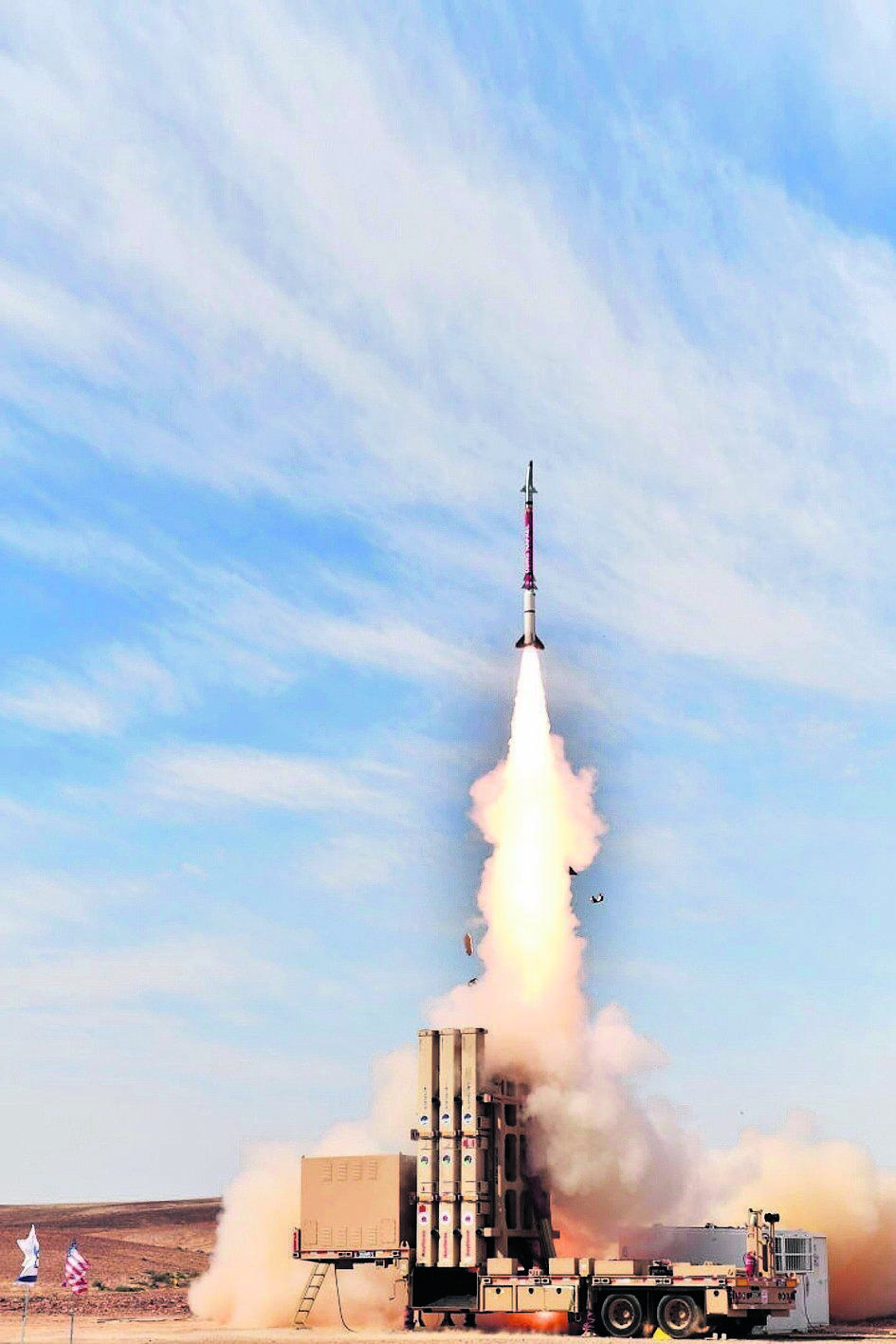
(Photo: Rafael Advanced Defense Systems)
Israel’s air defense array is based on a layered system that includes Arrow, David’s Sling, Iron Dome and a developing laser interception system. Arrow serves as the top layer for intercepting long-range ballistic missiles, primarily from Iran. David’s Sling addresses medium-range threats, while Iron Dome counters short-range rockets, mortars and drones. The laser system is intended to reduce interception costs and ease pressure on missile stocks.
Costs remain high. An Arrow interceptor can cost at least 10 million shekels, while a David’s Sling interceptor can cost up to 4 million. Defense officials say Israel’s sale of the Arrow system to Germany is expected to expand missile production lines, a move seen as strategically significant.
Ultimately, officials say the debate reflects a deeper question about the doctrine that will guide the Air Force in the coming decade. Facing Iran, they say, will require a combination of stealth, intelligence and rapid opening strikes, alongside sustained and heavy firepower. Whether budgetary and political realities will allow that approach remains unresolved.