


A large-scale military operation against Hezbollah in Lebanon, though justified, could inadvertently help Iran divert international attention from ongoing anti-government protests, an Israeli official warned Thursday.
“We have every reason to launch a major operation in Lebanon to disarm Hezbollah,” the official said, speaking on condition of anonymity to discuss sensitive security matters. “But there’s concern that a broad conflict at this time would help the Iranians deflect coverage of the unrest inside their country.”
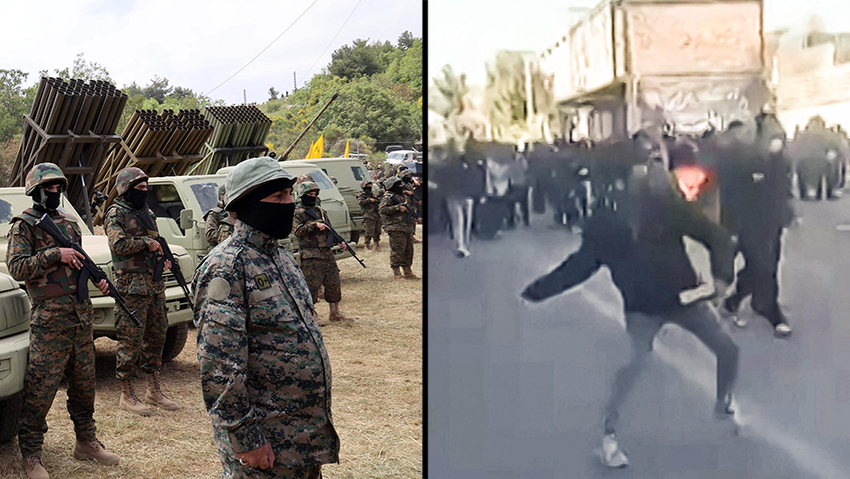
The comments came as Israel dismissed a claim by the Lebanese army that it has succeeded in disarming Hezbollah south of the Litani River.
The official described Hezbollah as actively rearming and rebuilding its capabilities with Iranian support. “Suitcases of cash are moving from Tehran to Hezbollah through Turkey,” the official said. “Lebanon is not preventing the entry of Iranian Quds Force operatives into its territory. Some are operating under diplomatic cover, as we’ve seen in the past.”
Despite ongoing Israeli airstrikes against Hezbollah targets in southern Lebanon, the Shiite terrorist group continues to maintain a large fighting force. However, the official said the current Israeli strategy reflects a recalculation, with expectations that the military will intensify what has been dubbed a “plus” version of its “mowing the grass” policy—referring to sustained, limited strikes aimed at degrading Hezbollah’s capabilities without triggering full-scale war.
“In the near term, we do not anticipate operations beyond focused, time-limited strikes,” the official said, though he cautioned that “surprises are always possible if circumstances change.”

Prime Minister Benjamin Netanyahu and US President Donald Trump
(Photo: REUTERS/Jonathan Ernst)
Prime Minister Benjamin Netanyahu, the official added, left his recent summit at Mar-a-Lago with the understanding that U.S. President Donald Trump would support any Israeli decision on Lebanon. Both Jerusalem and Washington, he said, share the view that the Lebanese government is too weak to disarm Hezbollah on its own.
Regarding Iran, the official stressed that Israel is being cautious. “The unrest in Iran could lead to regime change—or not. In either case, Israel is very careful not to interfere. You don’t insert yourself into a popular uprising,” he said. “It would cause significant harm. If we launched a broad campaign in Lebanon now, it could damage the Iranian protesters.”
He added that the protests in Iran are also affecting the Lebanese theater, suggesting that Tehran’s regional influence could be weakened by ongoing internal unrest.
Israel: Lebanon’s efforts against Hezbollah ‘encouraging beginning, but far from sufficient’
Netanyahu's office on Thursday dismissed the Lebanese army's claims that Hezbollah had been disarmed south of the Litani River, calling the steps taken so far an “encouraging beginning,” but warning they fall far short of meeting the terms of the U.S.-brokered ceasefire agreement.
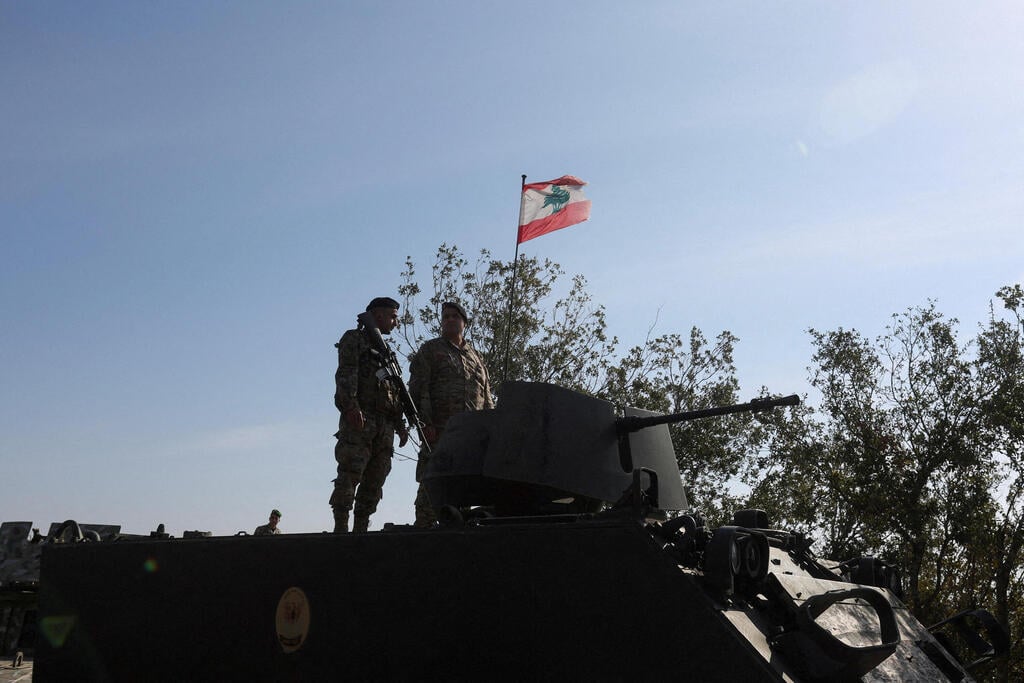
Lebanese troops
(Photo: REUTERS/Aziz Taher/File Photo)
“The ceasefire agreement brokered by the United States between Israel and Lebanon states clearly, Hezbollah must be fully disarmed. This is imperative for Israel's security and Lebanon's future,” the Prime Minister’s Office said. “Efforts made toward this end by the Lebanese Government and the Lebanese Armed Forces are an encouraging beginning, but they are far from sufficient, as evidenced by Hezbollah's efforts to rearm and rebuild its terror infrastructure with Iranian support.”
The Foreign Ministry also pushed back on Lebanese claims, saying: “Despite the statements published today in Lebanon, the facts remain that extensive Hezbollah military infrastructure still exists south of the Litani River. The goal of disarming Hezbollah in southern Lebanon remains far from being achieved.”
“Israel acknowledges the decision of the Lebanese government to address the disarmament of Hezbollah and some of the efforts the Lebanese Armed Forces (LAF) have made in this context,” the ministry said. “Nevertheless, these efforts are limited. Hezbollah continues to rearm with the support of Iran, whose foreign minister is arriving today for a visit to Lebanon.
“Hezbollah is rearming faster than it is being disarmed. Furthermore, it is regrettable that there are instances of cooperation between elements within the LAF and Hezbollah.”
Israeli strike on vehicle in southern Lebanon


They stressed that IDF strikes on Hezbollah targets are not hindering disarmament efforts. “On the contrary—they advance it. Israel expects LAF efforts to disarm Hezbollah to continue south of the Litani and throughout all other parts of Lebanon, in full accordance with the ceasefire agreement.”
Israeli defense officials have identified what they describe as a significant Iranian effort to assist Hezbollah’s recovery, both financially and through the deployment of Iranian Quds Force operatives to Lebanon. These operatives, officials said, are entering Lebanon under diplomatic cover for so-called political visits but are in fact focused on advancing terrorist activity. The Lebanese state, they said, is allowing their entry and not expelling them.
Enforcement by the Lebanese army, officials noted, has so far been concentrated on Hezbollah military positions in open areas. However, the army has avoided areas considered central to Hezbollah’s operations—namely, urban centers and its network of underground tunnels. Even south of the Litani, Hezbollah continues to maintain weapons depots, mortars and short-range rockets.
According to Israeli assessments, Hezbollah’s main military assets—including its significant rocket arsenal and elite Radwan Force—have largely been pushed north of the Litani, but the group still maintains a foothold in the south.
IDF: Radwan Force degraded, rocket capabilities significantly reduced
The IDF believes the Radwan Force is no longer combat-ready for its planned cross-border assault into northern Israel and has suffered significant losses since the start of the war.
According to Israeli assessments, the Radwan Force—Hezbollah’s specialized unit tasked with infiltrating Israeli territory—has been pulled back from the frontlines and is no longer deployed along the border as it was prior to Oct. 7.
The unit currently numbers just over 2,000 fighters, down from its original operational strength after losing an estimated 700 to 900 members during the fighting. Most of the remaining Radwan fighters are now stationed north of the Litani River, spread between Beirut and the Beqaa Valley, where Hezbollah is attempting to retrain and regroup them.
Hezbollah is believed to still possess thousands of rockets, primarily for short- and medium-range attacks. However, the IDF estimates the group has lost its previous capacity to launch massive daily barrages of thousands of rockets, strikes that once posed a serious threat to Israel’s critical infrastructure. The group is still capable of launching salvos involving dozens of rockets, but its long-range and high-volume capabilities have been severely diminished.
Hezbollah also retains the operational ability to carry out anti-tank missile attacks, bombings, sniper fire and infiltration raids, though these would likely be limited in scale and scope.
In addition, Hezbollah continues to operate from extensive underground facilities, some of them deeply embedded in mountains and rock formations. According to Israeli intelligence, the Lebanese army has not entered or dismantled most of these fortified sites, which remain active and heavily armed.