

U.S. President Donald Trump said Wednesday that Iran must surrender and say “we give up” under the pressure of the U.S. naval blockade on Iranian ports, but did not say whether additional strikes would be needed if Tehran refuses to give up its nuclear program.
Speaking to reporters at the White House, Trump said there would be no deal unless Iran gives up nuclear weapons.
“We are having talks now. The negotiations are by phone, instead of flying 18 hours each time,” Trump said. “Iran has come a long way, but the question is whether it will go far enough.”
Trump spoke after calls with Prime Minister Benjamin Netanyahu and Russian President Vladimir Putin. After the Netanyahu call, Israeli officials assessed that Trump wants to continue the naval blockade on Iran and believes it could force Tehran to surrender.
Trump also spoke by phone on Wednesday with Russian President Vladimir Putin, in the first publicly announced call between the two leaders since March 9, nine days after the United States and Israel launched the war with Iran.
Kremlin aide Yuri Ushakov said Putin presented ideas for resolving the dispute over Iran’s nuclear program, though he did not provide details. He warned that any renewed hostilities in the Middle East would “inevitably have extremely harmful consequences” and would not serve anyone’s interests.
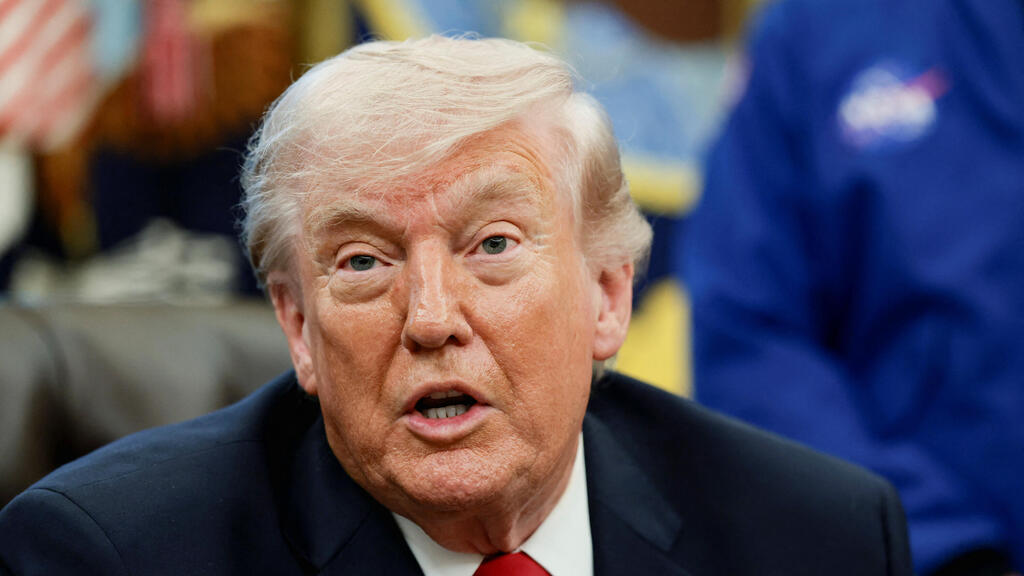
US President Donald Trump
(Photo: Evelyn Hockstein/ Reuters)
“Russia is firmly committed to providing full support for diplomatic efforts to seek a peaceful resolution of the crisis and has offered a number of considerations aimed at resolving disagreements over Iran’s nuclear program,” Ushakov told reporters after the call.
Russia has previously offered to take Iran’s stockpile of enriched uranium out of the country. Ushakov said Moscow would maintain contact with Iran, which he described as a strategic partner, as well as with Gulf states and Israel, in an effort to prevent a resumption of hostilities in the region.
Ushakov said the call lasted more than 90 minutes and was conducted in a friendly, candid and business-like manner.
On Ukraine, Ushakov said Putin proposed another temporary ceasefire to mark the May 9 anniversary of the Soviet Union’s role in defeating Nazi Germany in World War II. Trump supported the idea, according to Ushakov, who said the U.S. president believes a deal to end the war in Ukraine is close.
Trump praised the blockade, calling it “genius.”
“The blockade is genius. It is 100% foolproof, and it shows how good our navy is,” he said. “Militarily, we wiped out Iran. They have no military left, their navy is at the bottom of the sea, and their air force will never fly again.”
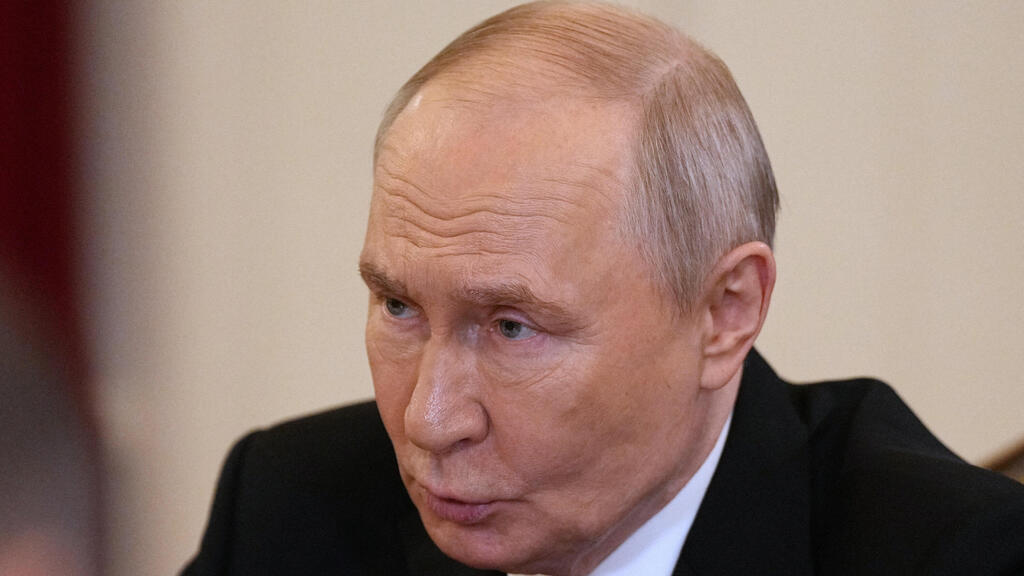
Russian President Vladimir Putin
(Photo: Dmitri Lovetsky/ Reuters)
Earlier Wednesday, it was reported that Trump had discussed the possibility of a months-long blockade with senior executives from U.S. oil companies. At the same time, he has instructed the military to prepare for a significant strike if the blockade fails, leaving Israel preparing for several possible scenarios.
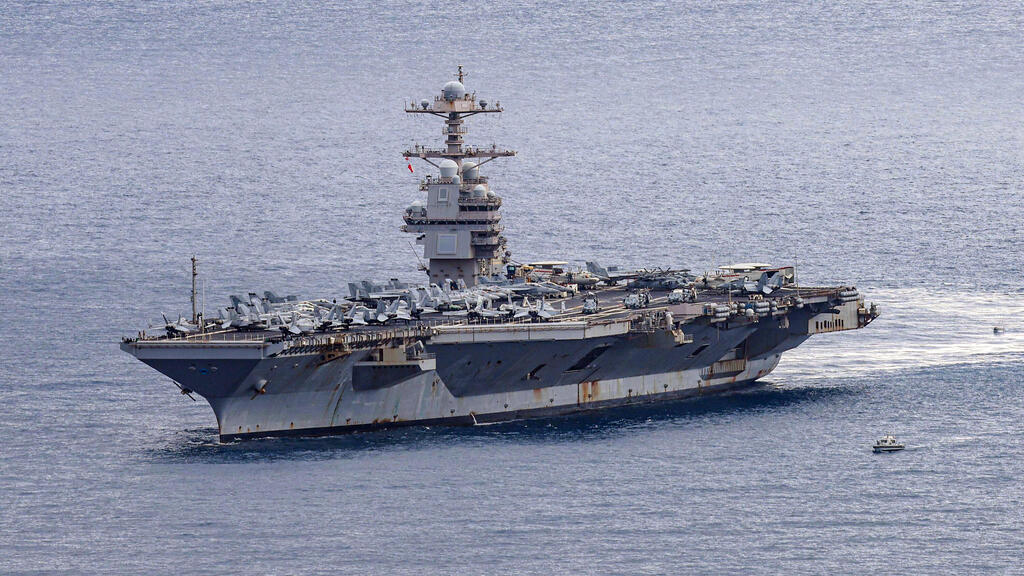
As the United States prepares for a possible military move, The Washington Post reported that one of the three aircraft carriers sent to the region will leave the Middle East and return to the United States in the coming days.
The USS Gerald R. Ford, carrying about 4,500 personnel, is expected to return after 10 months deployed in several regions. The aircraft carriers USS Abraham Lincoln and USS George H.W. Bush will remain in the Middle East, operating in the Arabian Sea, among other areas, to enforce the blockade.
In Iran, officials signaled Wednesday that Tehran would not agree to discuss the nuclear issue or halt enrichment, despite Trump’s demand. Iranian parliament deputy speaker Hamid-Reza Haji Babaei said Iran was not negotiating, but demanding its rights. He said that as long as the Americans insist on their demands and continue the blockade, there can be no negotiations.
Iranian Oil Minister Mohsen Paknejad said the United States would gain nothing from the blockade, adding that oil-sector workers were operating around the clock to ensure services continue. He said there were no concerns over fuel supply or distribution.