


Seventeen days before Israel's Knesset election, Joint List chairman Yousef Jabareen announced Saturday evening that the Arab-led alliance is prepared to provide a parliamentary "safety net" for any government that replaces Prime Minister Benjamin Netanyahu, while making clear that its support will be conditional on negotiations over the demands of Israel's Arab community.
"We will use every tool at our disposal, listen to me carefully, every tool, to replace this government," Jabareen declared in a political address outlining the Joint List's strategy ahead of the election. "We are not giving anyone a blank check. Anyone who wants our support is welcome to negotiate with us over the demands of our community."
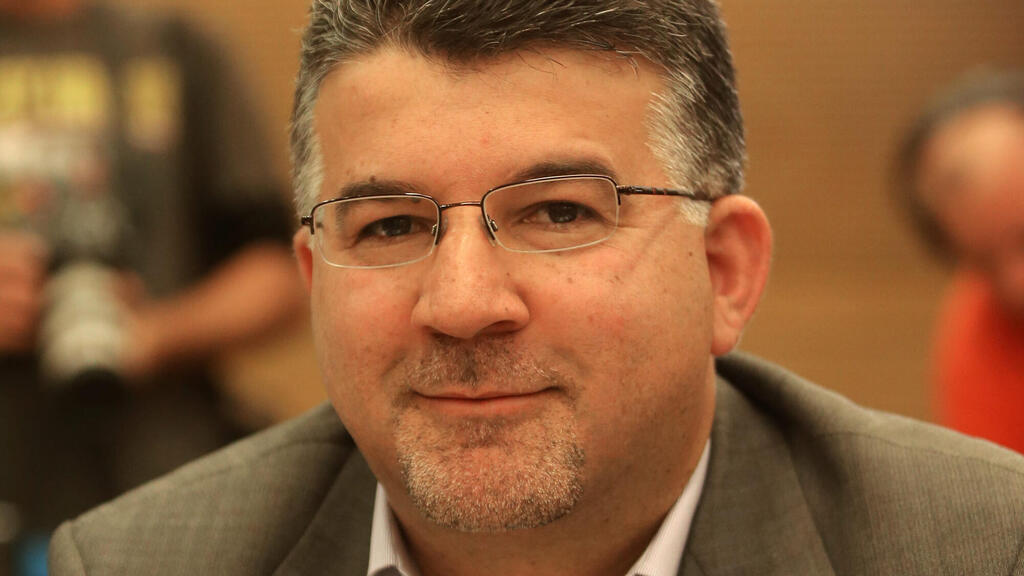
Joint List chairman Yousef Jabareen
(Photo: Alex Kolomoisky)
Jabareen described the upcoming vote as a turning point for Arab citizens of Israel, accusing the current government of racism and discrimination and warning of an increasingly dangerous political climate. "These are not ordinary elections. These are fateful elections for our future here, in our homeland, the only homeland we have," he said.
He emphasized the importance of unity among Arab political parties, arguing that their combined electoral strength could give them considerable influence over the formation of the next government. "When we are united, we are bigger and stronger, and our political weight is greater. In that situation, no one can ignore us, and we have the power to bring down this government and set our conditions for any political arrangement formed after the election."
Jabareen said the Joint List would be willing to serve as a "safety net," but stressed that its primary responsibility was to protect the interests of the Arab community. He outlined demands for a comprehensive plan to combat crime, including a clear timetable, funding and oversight, as well as measures to prevent home demolitions, expand housing opportunities, regulate building permits and recognize unrecognized Bedouin villages in the Negev.
He also called for employment opportunities, housing and education for young people, alongside protection of civil and national rights and what he described as a genuine political horizon for the Palestinian people.
However, Jabareen made clear that political cooperation would have limits. "Influence does not mean giving up everything," he said. "Influence cannot come at the price of voting in favor of war and settlement budgets, nor at the price of accepting the Nation-State Law and perpetuating Jewish supremacy."
He also rejected the possibility of remaining silent over what he described as genocide in Gaza, ethnic cleansing in the West Bank, raids on Al-Aqsa Mosque and restrictions affecting Muslim and Christian religious institutions. "In such a situation, we are not the ones exerting influence. We are the ones being influenced," he said.
Jabareen argued that meaningful political influence requires using parliamentary leverage to secure concrete achievements without abandoning fundamental principles. "According to all the data, it is impossible to establish an alternative government to that of Netanyahu, Ben-Gvir and Smotrich without negotiating with the Joint List," he said.
The declaration comes as opposition parties assess their options ahead of the election. In a separate interview, Yashar chairman Gadi Eisenkot said he would seek parliamentary approval for his proposed government even if his political bloc fails to secure a majority, although he emphasized that he would not ask Arab or ultra-Orthodox parties to support him.
Jabareen's remarks introduce another potential route toward replacing Netanyahu, while highlighting the political and ideological conditions that would accompany any negotiations. "The equation today is clear," he concluded. "A larger Joint List means greater strength and greater influence."