

The Guardian reported Thursday, citing sources in Yemen, that Saudi Arabia appears to be massing forces ahead of a possible ground offensive in al-Bayda, a south-central Yemeni province captured by the Houthis about five years ago. The sources believe Saudi Arabia is also preparing for a major naval operation against the Houthis aimed at breaking the blockade on its oil exports through the Red Sea.
According to the report, Saudi forces have been seen withdrawing from eastern Yemen in what may be preparation for a ground offensive. At the same time, Riyadh is seeking to organize a maritime coalition to protect shipping from Houthi attacks in the Red Sea and the Bab el-Mandeb Strait.

The Saudi Defense Ministry said Thursday that 14 countries, including Turkey, Pakistan, Egypt, Sudan and Djibouti, had issued a joint statement supporting a multinational maritime defense coalition.
The Iran-backed Houthis control Yemen’s capital, Sanaa, and much of the country’s Red Sea coastline. On July 20, they announced a blockade of Saudi vessels, saying it would be lifted only if Riyadh ended its blockade of Yemen.
The move has left Saudi Arabia in a bind: Iran has blocked the Strait of Hormuz, while its Houthi allies have blocked Bab el-Mandeb. That leaves Saudi oil tankers with the Suez Canal as their only alternative, a longer and more expensive route.
Alongside the blockade, the Houthis have carried out attacks not only on ships but also on Saudi Arabia itself, including against the state oil company Aramco, the world’s largest oil producer.
On July 25, the Houthis said they struck sensitive oil transportation sites inside the kingdom that connect the oil fields of Saudi Arabia’s Eastern Province with its Red Sea export hub. The attacks were launched from Iraqi territory, prompting Saudi Arabia, in coordination with the United States, to strike Shiite militias in Iraq.
Saudi Arabia has also attacked targets in Yemen in recent weeks, including at the port of Hodeidah.
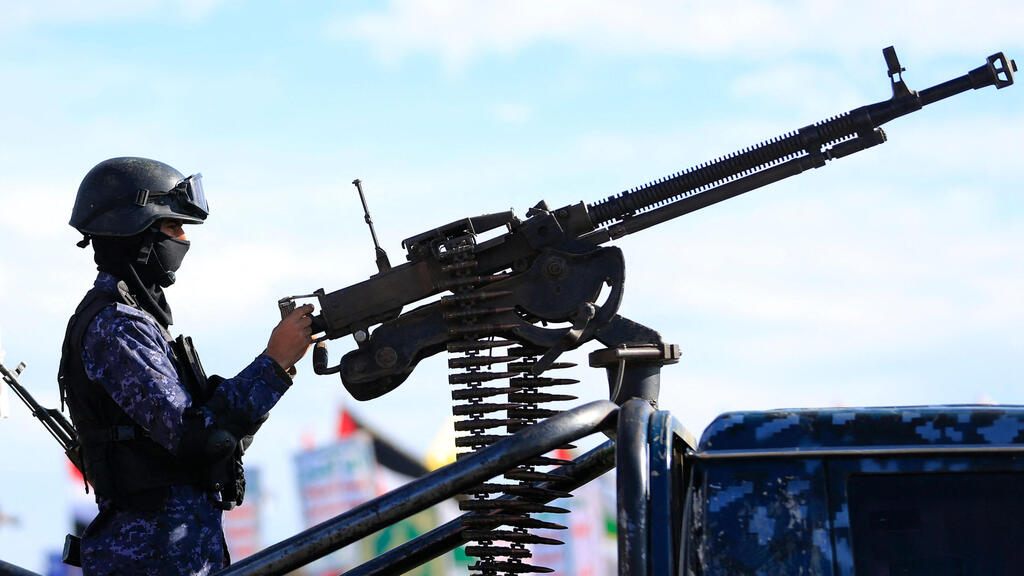
Houthi fighters at a graduation ceremony in Sanaa
(Photo: Mohammed Huwais/AFP)
Before the war with Iran began, as much as 80% of Saudi crude oil exports passed through the Strait of Hormuz. With Iran blocking the waterway, the Red Sea has become increasingly important. More than half of Saudi oil is now transported overland to loading terminals in the Red Sea port city of Yanbu.
Saudi Arabia has historically supported Yemen’s U.N.-recognized government. In March 2015, it intervened in the Yemeni civil war, assembling a military coalition aimed at driving back the Houthis and restoring the internationally recognized government to power in Sanaa.
For about seven years, the conflict was marked by an intensive Saudi-led air campaign and a naval blockade, while the Houthis responded with sustained missile and drone attacks on oil infrastructure and cities in Saudi Arabia and the United Arab Emirates. The bloody war led to one of the world’s worst humanitarian crises.
A significant period of calm began in April 2022 when a U.N.-brokered ceasefire took effect. Although the agreement formally expired six months later, a tense status quo largely held, accompanied by quiet diplomatic contacts.
That relative calm has now completely unraveled.