

Are Saudi Arabia and the Houthis heading toward a major escalation after four years of relative calm in their war? Following another night of exchanges of fire between the kingdom led by Crown Prince Mohammed bin Salman and the Iran-allied rebels who control large parts of Yemen, international concern is mounting that this front could also erupt as tensions with Iran intensify.
Saudi Arabia struck Houthi targets in Yemen on Friday night in response to the group’s attack on a Saudi vessel as part of the “naval blockade” it declared against Riyadh. On Saturday morning, the rebels responded with another attack on Saudi cities.
Gallery
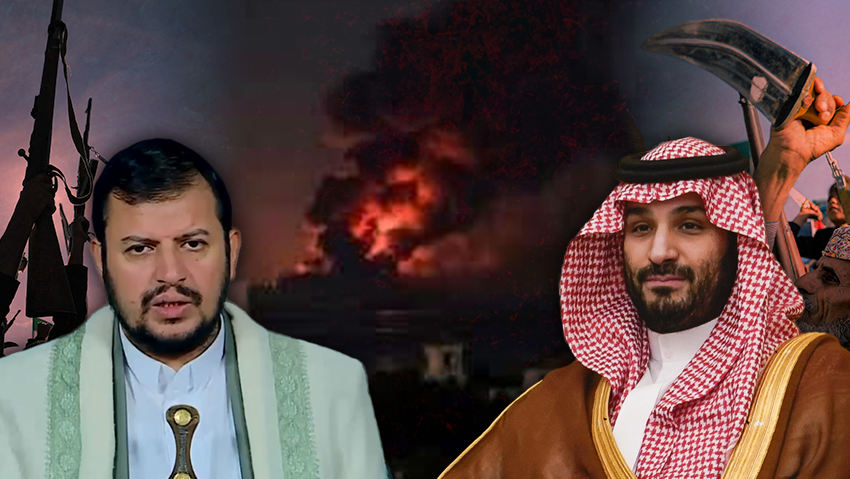
Saudi Crown Prince Mohammed bin Salman, Houthi leader Abdul-Malik Badr al-Din al-Houthi and Friday night’s strike in Hodeidah
(Photos: Nathan Howard/AP, Mohammed Huwais/AFP)
The Houthis have not officially said what they targeted, and Saudi Arabia has not confirmed the reports. Pro-Iranian channels, however, claimed that missiles were fired at the Red Sea port city of Yanbu.
Yanbu is connected to a strategic oil pipeline that allows Saudi Arabia to transport crude from the country’s east, near the Persian Gulf. The route offers an alternative to the Strait of Hormuz, through which Riyadh is currently unable to export oil because of Iranian attacks.
Reuters reported that, in an unusual development, the two missiles fired toward Yanbu were intercepted by a Greek air defense team that has been stationed in the kingdom since 2021 and operates a Patriot missile battery.
A Greek defense official told Reuters that the missiles were aimed at oil refining facilities in Yanbu. According to the report, it was only the second time the Greek team had activated the battery since its deployment to Saudi Arabia.
Saudi Arabia waged a yearslong bombing campaign against the Houthis after the Yemeni rebels seized the capital, Sanaa, in late 2014 and ousted the internationally recognized government.
Saudi Arabia viewed the takeover as a direct threat to its security and regional influence. In 2015, the kingdom formed a military coalition of Arab states and launched a broad operation that included thousands of airstrikes, a naval and air blockade and support for Yemeni government forces. The campaign was intended to halt the Houthi advance and restore the government to power.
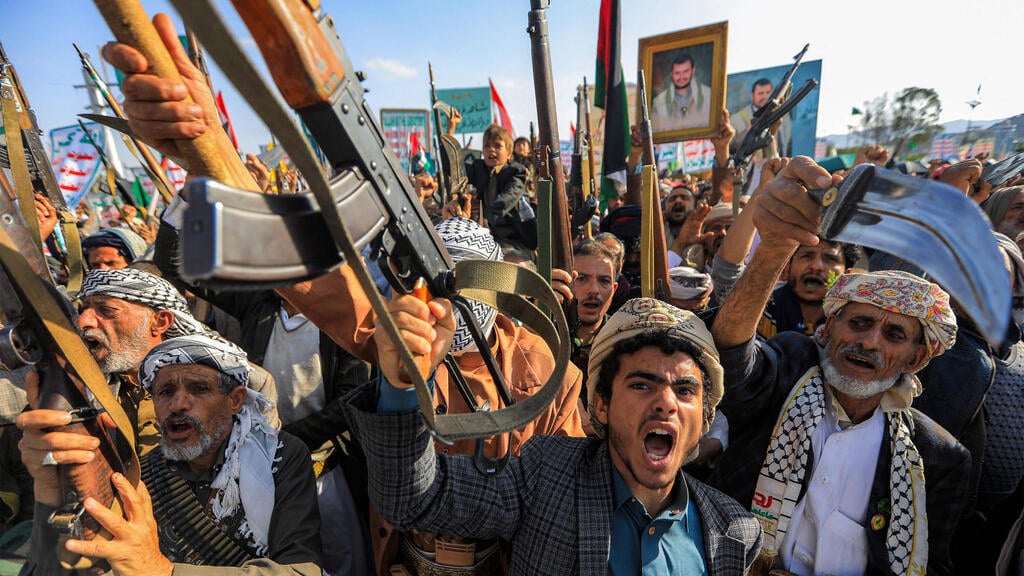
Houthi supporters in Sanaa
(Photo: Mohammed Huwais/AFP)
Although the coalition prevented the Houthis from taking control of all of Yemen, it failed to defeat them. The Houthis retained control of the country’s north and repeatedly launched missiles and drones at Saudi cities, airports and oil facilities.
At the same time, the war created one of the world’s worst humanitarian crises. The Saudi-led coalition faced intense international criticism over civilian deaths and damage to infrastructure.
Against that backdrop, Saudi Arabia changed course and reached a truce with the Houthis in 2022. A year later, Riyadh also restored diplomatic relations with Iran, previously its most bitter regional rival.
Saudi Arabia has since sought to preserve the truce with the Houthis, even after the rebels launched extensive attacks in the Red Sea and against Israel and U.S. targets following the outbreak of the war in Gaza.
The renewed escalation with Iran, however, is undermining bin Salman’s vision of focusing on economic investment. Instead, the crown prince now finds his country under Iranian fire as well.
Western diplomats and analysts who spoke with Reuters said the resumption of Houthi attacks and the group’s declared “naval blockade” are causing Riyadh to lose patience.
Yemeni military officials and analysts also told Reuters that reinforcements have been detected in recent days along the front line separating the Houthis from the Saudi-backed Yemeni government forces. The troop buildup could indicate that ground fighting may also resume.
“Since 2022, these are the most serious preparations for a conflict I've seen,” Baraa Shiban, a Yemeni analyst and associate fellow at Britain’s Royal United Services Institute, told Reuters.
Meanwhile, the Houthis have continued to issue threats.
Houthi spokesman Mohammed Abdul-Salam said Saturday that Saudi Arabia resembled Israel in what he described as its aggression, dishonesty, arrogance and hostility. He said Riyadh’s miscalculations had made it a clear enemy of Yemen.
He added that the naval blockade was only the first step in a policy of responding to a blockade with a blockade, and said the Yemeni people would pursue their rights by every means available.
The Iranian shipment that triggered the escalation: Commanders, missile equipment and gold
Reuters reported Thursday that an Iranian plane landed in Yemen on July 13 carrying commanders from Iran’s Islamic Revolutionary Guard Corps, military advisers, equipment related to missiles and drones and gold intended to finance Houthi operations threatening vessels in the Red Sea.
The delegation’s arrival prompted a Saudi strike on the airport in Sanaa that same day. The strike forced an aircraft operated by Iran’s Mahan Air to land at another airport in Yemen and marked the beginning of the current round of escalation.
According to Reuters, three days after the Iranian flight arrived in Yemen, Tehran asked the Houthis to close the Red Sea oil route if the United States attacked Iranian energy infrastructure, creating a new threat to global energy supplies.
On July 20, the Yemeni rebels announced a “naval blockade” of Riyadh. In practice, the declaration amounted to a threat against ships passing through the Bab el-Mandeb Strait, which connects the Red Sea with the Gulf of Aden and the Arabian Sea.
The Houthis presented the blockade as a response to what they say is a Saudi blockade intended to isolate them.
In announcing the measure, military spokesman Yahya Saree said the group was imposing a naval embargo on Saudi Arabia under an “eye for an eye” principle, effective immediately.
He added that the Houthis considered themselves entitled to answer a blockade with a blockade and any escalation with a corresponding escalation.
A senior Houthi official said the Bab el-Mandeb Strait would remain open to non-Saudi vessels.
Shiban said the escalation may also be an attempt by the Houthis to extract economic and political concessions from Riyadh and gain Iranian-style strategic leverage over one of the world’s most important shipping routes by expanding their influence over the Bab el-Mandeb Strait.
The political landscape has changed
Riyadh now appears to be reconsidering its approach and leaning toward renewed escalation against the Houthis.
“There is increasingly a feeling that peace with the Houthis is unattainable, and that a delayed war might prove costlier still, especially with Saudi Arabia set to host Expo 2030 and the (soccer) World Cup in 2034,” Farea al-Muslimi, a research fellow in the Middle East and North Africa program at Chatham House, told Reuters.
“It's risky, but it could help clear the way,” he added, noting that U.S. support would be critical.
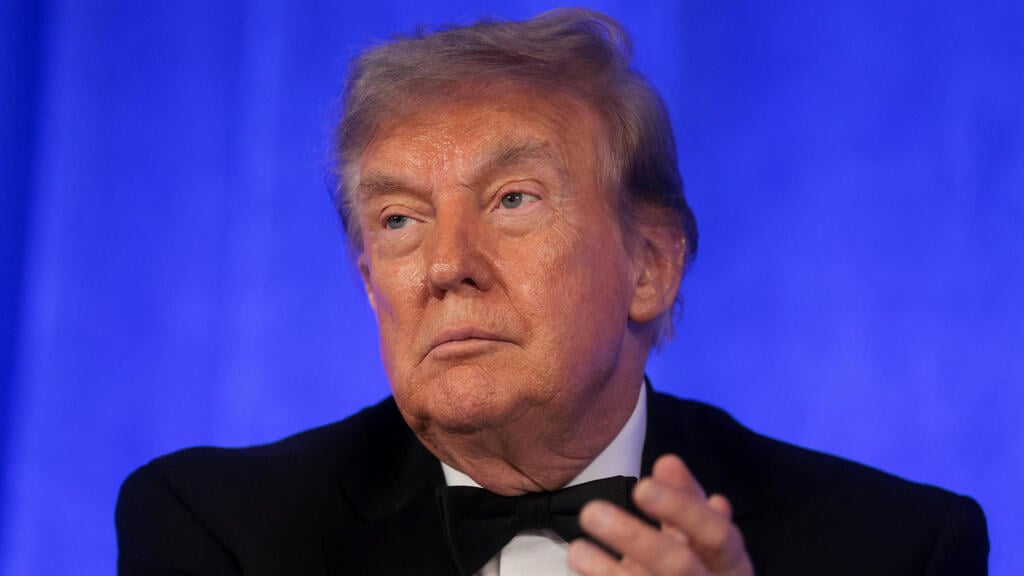
US President Donald Trump
(Photo: Jonathan Ernst/Reuters)
The Saudi strike in Sanaa, Yemen


U.S. President Donald Trump has also addressed the issue, threatening military action against both the Houthis and their patron, Iran.
On Thursday, Trump wrote on his Truth Social platform that he would hold Iran responsible for any future attack by the Yemeni rebels. His statement followed Houthi attacks on two Saudi oil tankers in the Red Sea as part of their effort to enforce the declared naval blockade, an incident that sent oil prices sharply higher.
Trump wrote that the Houthis were an extension or proxy of Iran and warned that both Iran and the Houthis would face severe military punishment.
According to Reuters, the political landscape has shifted in Saudi Arabia’s favor since it first intervened in Yemen’s war in 2015 at the head of a coalition of Arab states.
At the time, the deaths of thousands of civilians in airstrikes prompted intense pressure from the United States and European countries for Riyadh to end the war.
Analysts and officials in Yemen’s government said the Houthis’ attacks on Israel and international shipping since the Hamas-led October 7, 2023, attack, along with the rebels’ detention of dozens of United Nations employees in Yemen, have hardened the international community’s position toward the group.
Analysts say that shift now works in Saudi Arabia’s favor.
Shiban said that if Riyadh decides to intervene militarily in Yemen again, it is likely to face far less international criticism and scrutiny than it did in the past.