

An Israeli military investigation into the deadly Oct. 7 Hamas terror assault on the Urim military base reveals major security failures and a lack of preparedness that left the installation vulnerable to a devastating attack. Eight soldiers were killed and several others wounded when a group of heavily armed terrorists stormed the southern Israel base.
The report, released Friday by the IDF, describes how the base’s defensive measures were geared toward minor threats and not designed to repel a coordinated, large-scale infiltration. On the morning of the attack, only seven of the 12 security posts were manned, and no guards were on duty at the time of the breach. Poor communication further delayed the announcement of a full-scale intrusion.

Lt. Col. Asher Benishti led the 18-month investigation, which compiled findings from security footage, interviews with soldiers, and bodycam recordings recovered from the terrorists. The report details the attack in four phases and highlights both operational shortcomings and moments of individual heroism.
Attack timeline
At 6:29 a.m. on Oct. 7, Hamas launched a barrage of rockets across southern Israel. While soldiers at Urim took shelter in reinforced bunkers, a squad of 10 Hamas terrorists on motorcycles — initially en route to a nearby intelligence base — mistakenly arrived at Urim’s eastern gate.
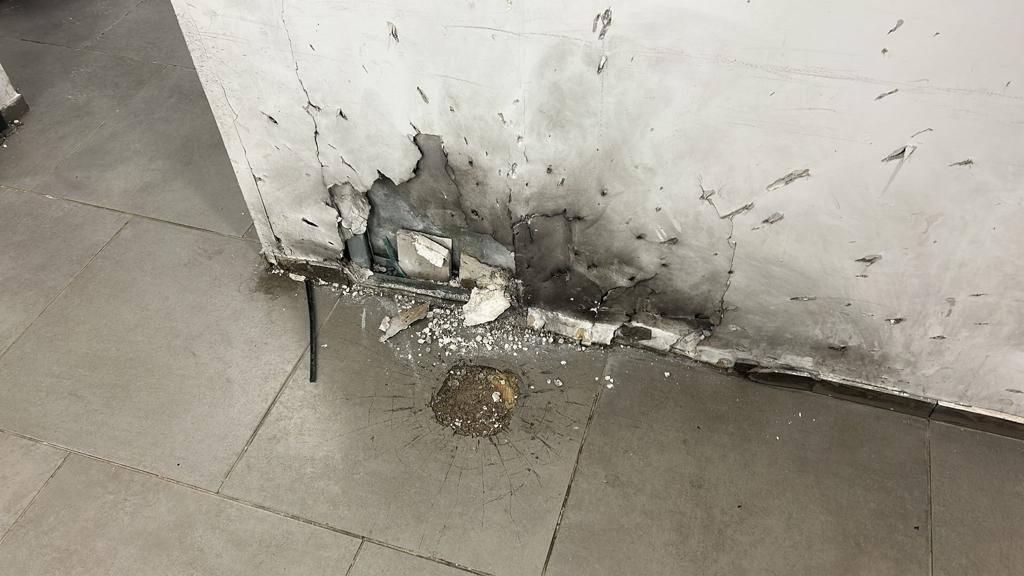
At 7:21 a.m., the attackers detonated an explosive device at the gate and breached the perimeter. By 7:26 a.m., they began a killing spree. Surveillance personnel spotted the intrusion and issued an alert, but the quick-response team came under immediate gunfire. Two female soldiers were killed, two others were wounded, and the rest retreated to shelters. A third soldier was killed at the armory bunker, which the terrorists seized as a staging point.
(Photo: IDF Spokesperson's Unit)
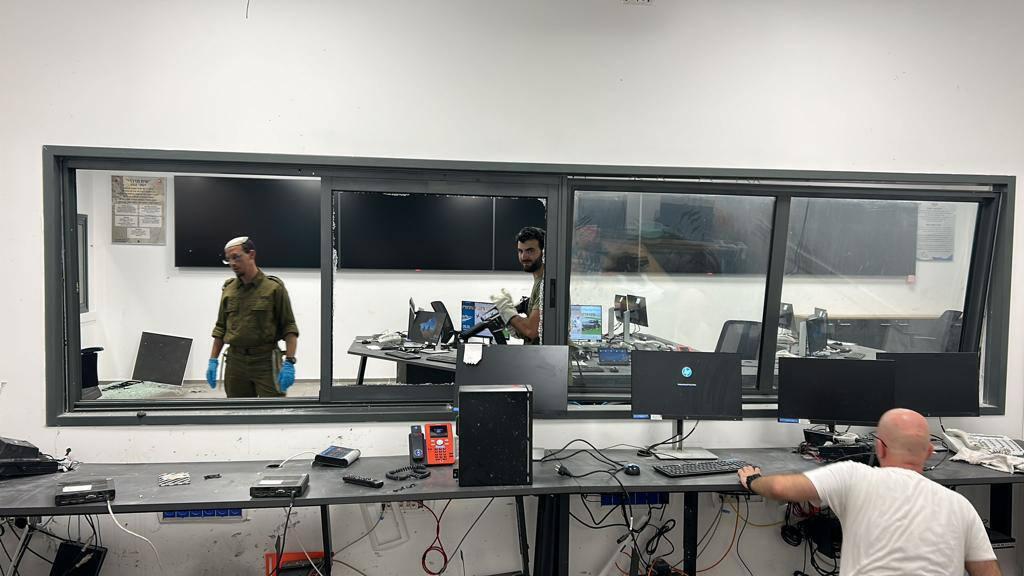
At 7:49 a.m., the attackers targeted the district command post, launching an RPG into a conference room window and searching for entry points. A technician confronted them and was killed. At 8:24 a.m., the terrorists broke into the command center, firing guns and throwing grenades. A female officer and two more soldiers were killed in a desperate defense. Two others were critically injured. The attackers searched for classified material before retreating at 8:29 a.m.
Reinforcements from the IDF’s 414th Battalion, the Counter-Terror School, and the Yahalom special forces unit arrived. By 8:35 a.m., three terrorists were killed in the armory shelter. The final two were neutralized by 10:40 a.m. Troops then swept the base, evacuated the wounded and recovered the bodies of the dead.
Heroism and systemic failure
The report praised the valor of the soldiers and officers who repelled the attackers, preventing Hamas from seizing the base or accessing critical intelligence infrastructure. Many of the defenders, including soldiers from disadvantaged backgrounds, engaged the terrorists under fire and helped prevent any kidnappings. All 10 terrorists were killed.
The investigation revealed that Urim — the farthest IDF base from Gaza attacked that day — was not under the Gaza Division’s jurisdiction. The terrorists, part of Hamas’s elite Nukhba unit, had intended to strike the nearby Yarkon base, home to the military’s elite Unit 8200. A navigational error led them to Urim instead. The smaller-than-planned force arrived with 10 fighters on five motorcycles instead of a 30-man company.
(Photo: IDF Spokesperson's Unit)
Despite this, the attackers inflicted heavy casualties due to critical defense gaps. The report noted that Urim, like other Israeli bases, was only prepared for isolated infiltrations or criminal activity — not a coordinated assault by multiple terrorists from Gaza.
The investigation also criticized the military for ignoring previous warnings. In the year leading up to the war, three internal audits — conducted by the General Staff, regional command, and internal reviewers — had flagged deficiencies in joint operations among the three adjacent bases near Kibbutz Urim. Each base reported to a different command structure, complicating joint defense.
“The pace of addressing these gaps was extremely slow,” the report stated. A joint drill had been planned after the High Holidays. In practice, the only coordinated step taken before the war was creating a WhatsApp group among defense commanders. That group proved crucial in organizing a response during the attack.
In the wake of the assault, the IDF has stationed permanent combat forces at the Urim complex and begun upgrading its defenses.