

U.S. President Donald Trump said Friday he would convene a White House Situation Room meeting to make a “final determination” on a potential agreement with Iran, even as Tehran and Iranian-aligned media disputed key parts of his account and accused him of trying to present a premature victory.
Trump said the agreement under discussion would require Iran to pledge that it would never develop a nuclear weapon, reopen the Strait of Hormuz to unrestricted traffic, remove remaining sea mines and allow the United States, in coordination with Iran and the International Atomic Energy Agency, to remove and destroy Iran’s highly enriched uranium.
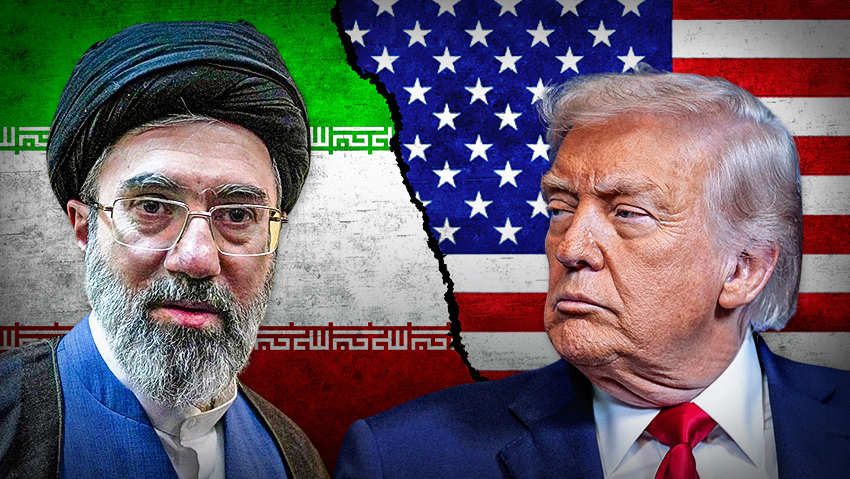
(Photo: Hamed Jafarnejad/ISNA/WANA (West Asia News Agency) via REUTERS, shutterstock, AP/Alex Brandon)
“I will be meeting now, in the Situation Room, to make a final determination,” Trump wrote on Truth Social.
“Iran must agree that they will never have a Nuclear Weapon or Bomb. The Hormuz Strait must be immediately open, no tolls, for unrestricted shipping traffic, in both directions,” he added.
Trump also said the U.S. naval blockade on Iran would be lifted, while adding that no money would be exchanged “until further notice.” In another message to ships trapped by the crisis, he wrote: “Say HELLO to your wives, husbands, parents, and families from me, your favorite President!”
A senior Iranian source told Reuters that a political understanding over the war had been reached but had not yet been finalized.
Iran’s semi-official Fars news agency, citing sources, said Trump’s comments contained a “mixture of truth and falsehood” and called them an “attempt to portray a fabricated victory.” According to Fars, the Strait of Hormuz would reopen only after the U.S. lifted its blockade on Iranian ships and under arrangements set by Tehran. The agency also said the memorandum of understanding did not include a provision for destroying Iran’s nuclear material, while claiming there was agreement on releasing $12 billion in frozen Iranian assets.
US Navy operation in Hormuz
(Video: CENTCOM)


Tasnim, another Iranian outlet aligned with the regime, said Trump’s statement should be treated with skepticism and reflected what it described as his usual pattern of one-sided remarks. It said the removal of the U.S. blockade, if implemented, would merely end what Tehran considers a violation of the ceasefire.
Al-Araby Al-Jadeed, citing an Iranian source, reported that disagreements remained on several issues. The source said there was broad understanding on Hormuz and Lebanon, but described Trump’s claim about removing enriched uranium as “wishful thinking.”
Iranian official Mohsen Rezaei also accused Trump and Netanyahu of seeking to topple Iran in order to impose a new regional order. He said Iran would force the U.S. to end the naval blockade, either through negotiations or direct action, and warned that if the blockade continued beyond a certain point, Iran would attack and “break it.”
Vice President JD Vance said Thursday that there was a tentative agreement, but that it was unclear whether Trump would approve it.
“It’s hard to say exactly when or if the president’s going to sign,” Vance told reporters. “We’re going back and forth on a couple of language points.”
The emerging deal would extend the fragile ceasefire by 60 days and open new talks on Iran’s nuclear program. It comes as Washington continues to enforce a naval blockade on Iran, while efforts continue to restore shipping through the Strait of Hormuz, a critical route for global oil and gas supplies.
U.S. Secretary of State Marco Rubio also met Friday with Pakistani Foreign Minister Ishaq Dar, whose country has emerged as a key mediator in the talks. The meeting came a day after U.S. officials said an agreement in principle had been reached on extending the ceasefire, reopening Hormuz and returning to negotiations over Iran’s nuclear program.
Iranian Foreign Minister Abbas Araghchi, speaking with his Omani counterpart, said reaching a final agreement depended on a change in Washington’s approach. He criticized what he called excessive U.S. demands and shifting American positions.