


Northern Command assesses that the significant achievements of the IDF in the joint offensive with the United States on Iran will have direct implications for the Lebanese front and for Hezbollah. For now, Israel’s primary effort remains focused on operations inside the Islamic Republic.
Meanwhile, the IDF said Tuesday that as part of a forward defense concept, it has decided to expand areas of control inside Lebanese territory to create a broader security buffer for northern residents and to prevent infiltration or anti-tank missile attacks.
IDF strikes Hezbollah targets in Lebanon


The 91st and 210th Divisions are deployed in forward defense positions along the border and in the security zone in southern Lebanon and Syria.
Preparing for Hezbollah’s entry
According to military officials, when the campaign began Saturday morning, Northern Command’s working assumption was that Hezbollah would join the fighting. The IDF prepared accordingly.
The command’s main effort initially centered on defense and force buildup. A significant decision was made not to evacuate communities in the north. That decision carries risks, including anti-tank fire and cross-border raids.
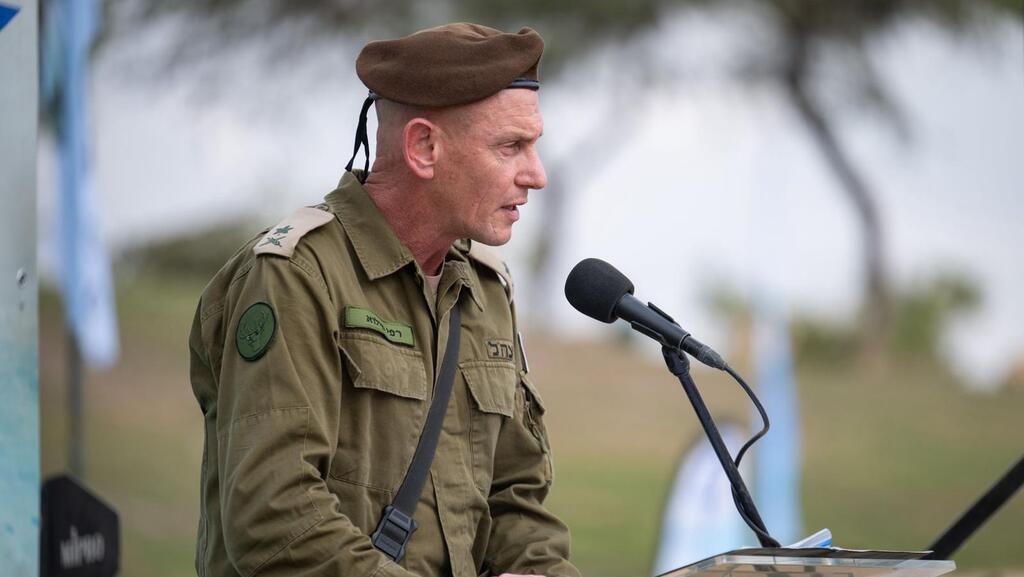
Officials said there is no evidence so far of voluntary evacuations by civilians in the north, which they view as a sign of public resilience.
At the outset of Operation Roaring Lion, the IDF decided that in the first stage, it would focus on defense in the north and avoid initiating offensive action on the Lebanese front. Preparations were made for all scenarios, but without proactively opening a second front.
In parallel, Israel sent clear messages to the government in Beirut and to the Lebanese army, warning that Hezbollah fire would be considered a declaration of war and would draw a severe response.
The message, officials said, was unequivocal: any fire would be met with a powerful response. Intelligence indicated that the warnings were conveyed forcefully within Lebanon, both politically and through the Lebanese military, in an effort to prevent Hezbollah activity.
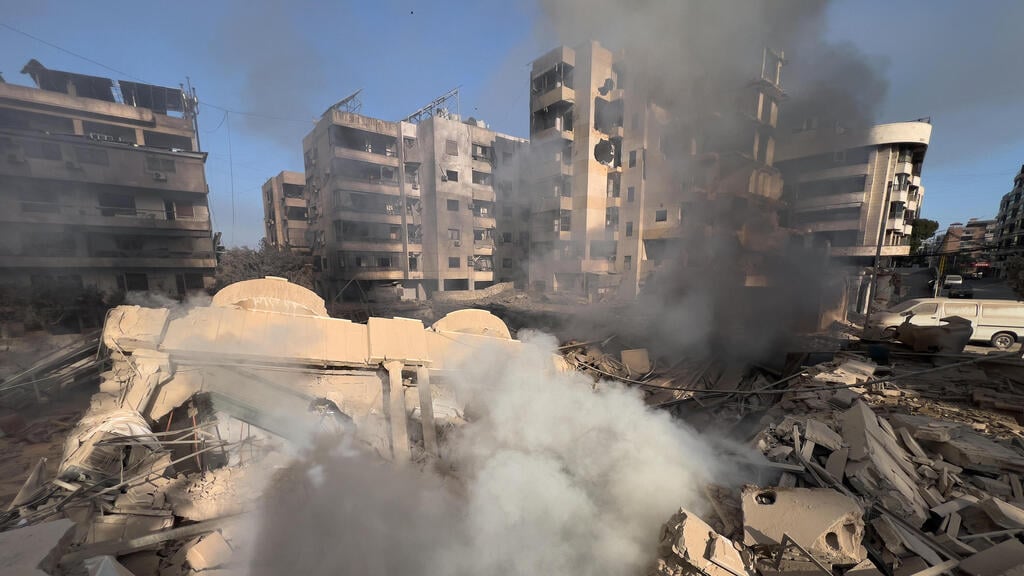
Strikes in Beirut's Dahieh, a Hezbollah stronghold
(Photo: Hussein Malla/ AP)
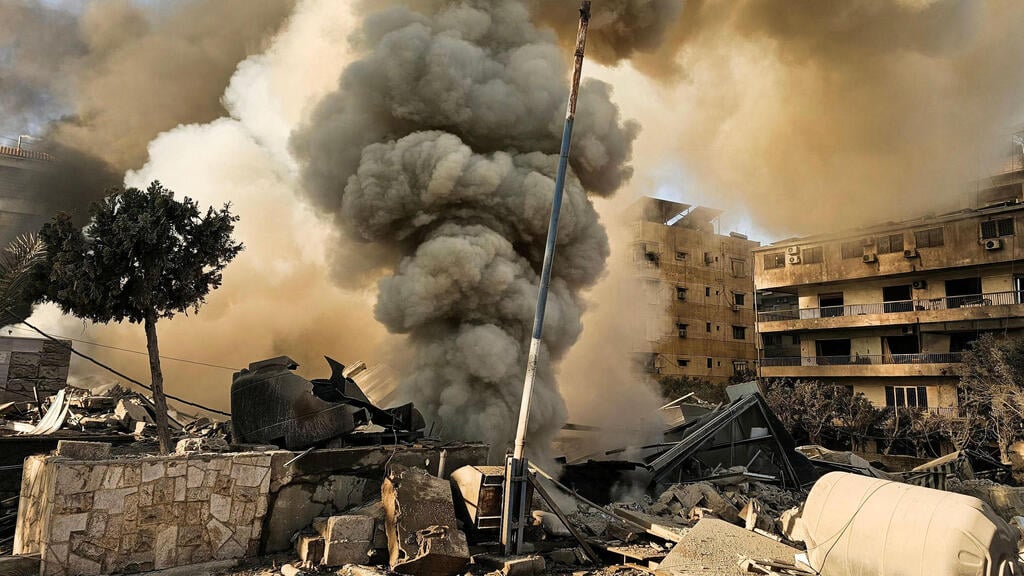
(Photo: AFP)
Lebanese authorities, officials said, understood the implications. In internal discussions, they reportedly concluded that Hezbollah should refrain from opening fire, given the likelihood of a harsh Israeli response.
The Lebanese army took several steps, including setting up checkpoints in villages, acting against Hezbollah operatives and preventing their movement southward. Still, Israeli officials cautioned that such measures cannot be fully relied upon.
Hezbollah’s strategic miscalculation
Northern Command concluded that Hezbollah was preparing for war. As events unfolded in Iran, the group weighed whether to refrain from aiding the ayatollahs’ regime.
According to military officials, the turning point for Hezbollah was the killing of Supreme Leader Ali Khamenei. That development was seen as a major event for the Shiite terrorist organization.
Hezbollah faced multiple risks in deciding whether to enter the conflict. First, it confronts significant domestic pressure within Lebanon. Second, many Shiite residents did not want another war. Hundreds of thousands remain displaced from southern Lebanon, creating internal strain.
Third is the economic factor. Hezbollah is in a severe financial crisis. It has not rebuilt destroyed villages or restored its force structure following the previous war with the IDF. Although Iran transferred roughly $1 billion to Hezbollah, most of the funds went toward salaries rather than military buildup.
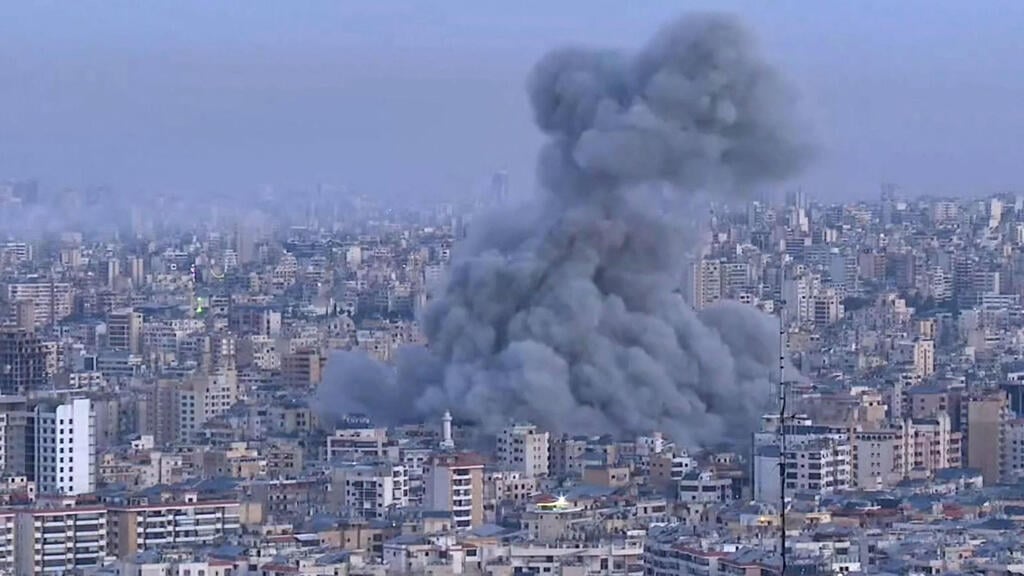
(Photo: Kamal Mehnna/ AFP)
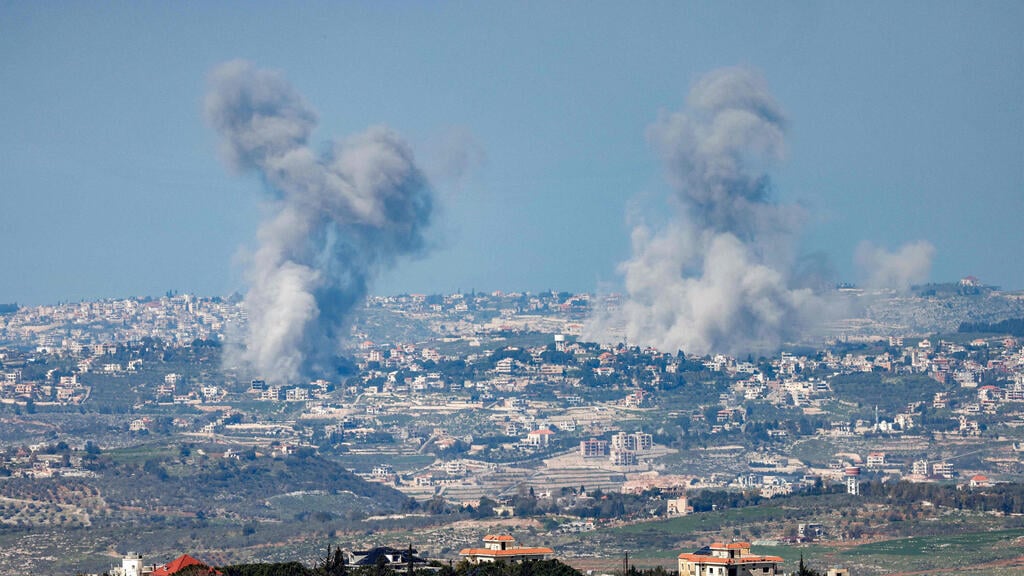
IDF strikes in Lebanon
(Photo: Jalaa Marey / AFP)
When Hezbollah joined the fighting overnight Sunday into Monday, it did so with a limited barrage. Israeli officials assessed that the goal was to test the IDF’s response and gauge Israel’s readiness.
More than 10 rockets were fired toward military targets from deeper inside Lebanon. There were no casualties and no reported damage. The fire was not precise.
However, Northern Command emphasized that Hezbollah retains significant capabilities. Thousands of rockets remain deployed north of the Litani River and in the Bekaa Valley.
The raid threat and the Radwan Force
One of the major achievements of the previous war against Hezbollah, officials said, was the destruction of infrastructure belonging to the Radwan Force, the organization’s elite unit. The unit has been significantly reduced.
Although some movement southward was observed, the infrastructure in frontline villages was completely destroyed. The unit’s ability to launch raids into Israel has been severely degraded.
Nevertheless, officials warned that Radwan operatives could still mount offensive efforts. As a result, the IDF advanced into the security zone and doubled its positions opposite key terrain in order to provide protection for northern communities.
The Syrian arena
Regarding Syria, officials said messages were delivered to the government of Ahmad al-Sharaa in Damascus warning against exploiting the situation to harm the Druze community, as had occurred previously.
They also stressed the need to secure the Iraqi border and prevent pro-Iranian militias from crossing into Syria and approaching Israel’s frontier.
Northern Command assesses that militias have the capability to reach the area, but the IDF is prepared for that scenario. Officials described the Syrian front as relatively stable.
Impact of the Iran campaign
Security officials said a significant achievement in Iran would dramatically affect Hezbollah. Beyond the $1 billion transferred by Tehran, most of Hezbollah’s other funding sources have been severely disrupted.
“This is an aging organization beginning to show signs typical of veteran movements,” security officials said. “The previous war created many families of wounded and dead who must be supported. Very little was invested in force buildup, and nothing in rebuilding villages or supporting the civilian population.”
They stressed that the current campaign targets the broader Iranian-led axis, with Hezbollah embedded within it. There is full coordination with the United States not only in the Iranian arena but also regarding Lebanon.
“There is coordination in decision-making and full freedom of action for both sides,” officials said. “The objective is to strike the organization hard. We will expand the campaign as required to protect residents. The blow Hezbollah absorbs now, together with the achievements against Iran, could ultimately lead to its dismantling.”
At the same time, officials cautioned that it is too early to determine the outcome. “There is an opportunity and a chance to significantly weaken the organization and strengthen Lebanon and the Lebanese army vis-à-vis Hezbollah,” they said.
In the coming 24 hours along the northern front, the IDF is expected to continue strikes beyond the border, including in Beirut, alongside significant targeted operations. Any intelligence window that enables a strike will be exploited.
Additional civilian evacuation measures inside Lebanon are also expected to be ordered.