


The IDF entered the 20th day of Operation Roaring Lion on Thursday, with the Air Force stretched to its limits after launching thousands of strikes across Iran since the start of the campaign, military officials said.
A senior Air Force officer said the service, which is leading the campaign alongside the Military Intelligence Directorate, has been operating at an unprecedented tempo. “In 18 days, we flew as much as we would in an entire year,” the officer said.
Air Force strikes in Iran and Lebanon throughout the war
(Video: IDF)


According to IDF figures, more than 12,000 munitions have been dropped so far, including about 3,600 in Tehran. More than 8,500 strikes have been carried out across Iran, divided into roughly 540 sorties to central and western parts of the country, about 50 of them deep inside Iranian territory.
The campaign followed months of planning that accelerated after a previous operation earlier this year. During that period, Military Intelligence built an extensive target bank and coordinated closely with US Central Command in what Israeli officials described as historic cooperation. Officials said the partnership is expected to continue beyond the current operation.
The opening strike, dubbed “Genesis” by the military, involved about 200 aircraft attacking targets across Iran. Pilots were instructed to operate under a rare “red policy,” meaning they were to release their munitions even if new threats emerged from the target area, in order to maximize the impact of the initial blow.
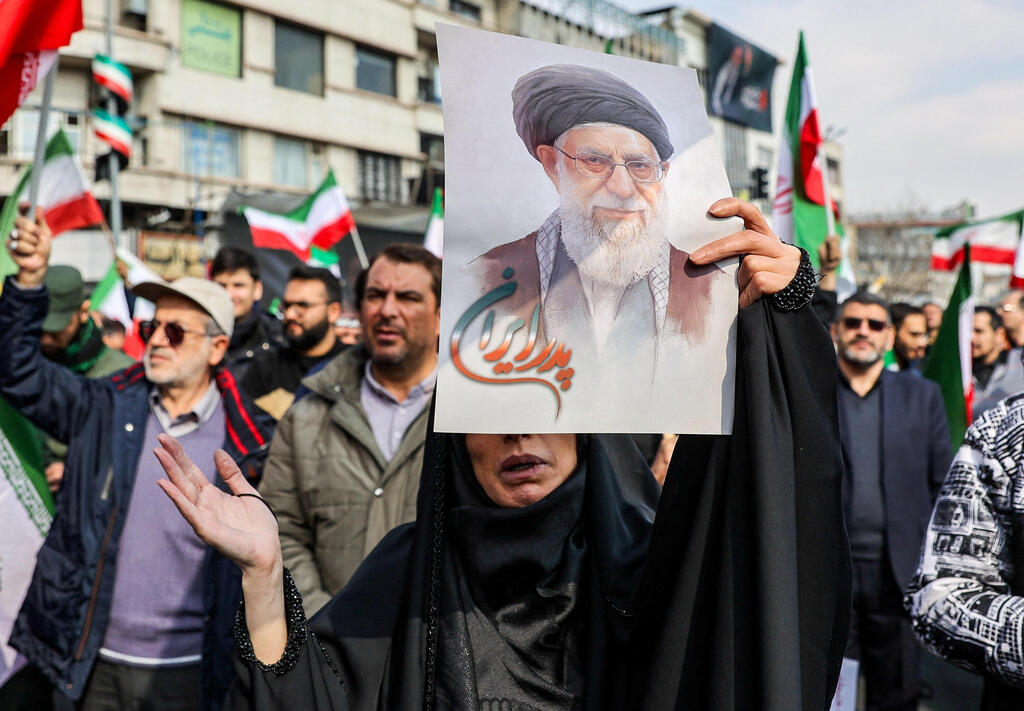
During the opening phase, 40 senior Iranian officials were killed in simultaneous strikes lasting about 40 seconds, according to Israeli security officials. Members of an Iranian intelligence leadership forum targeted in the attack might have survived had they ended their meeting on time, officials said, noting Israeli intelligence assessments that the officials were likely to run late.
The timing of the strike was determined not only for operational surprise but also based on detailed weather models developed by the Air Force to assess conditions over Iran.
While most aircraft were deployed in the opening wave, a limited number remained in Israel to defend the country’s airspace. In subsequent days, dozens of additional aircraft were launched to hunt ballistic missile sites and launchers in an effort to prevent large-scale barrages against Israel. The effort included targeting launchers, blocking tunnels used to store missiles and, in some cases, striking launchers positioned beneath overpasses.
At the start of the operation, Iran had about 470 ballistic missile launchers, according to Israeli defense data. Roughly 60% have since been destroyed or rendered inoperable. Although Iran still possesses hundreds of missiles, officials said it has struggled to produce heavy barrages, and its rate of fire has declined sharply.
During Operation Rising Lion in June 2025, Iran launched about 550 missiles. In the 20 days since the current campaign began, it has launched about 350, according to the IDF. More than 100 missiles were fired in the first two days, but since then the pace has dropped to a handful per day, sometimes one or two in a single barrage.
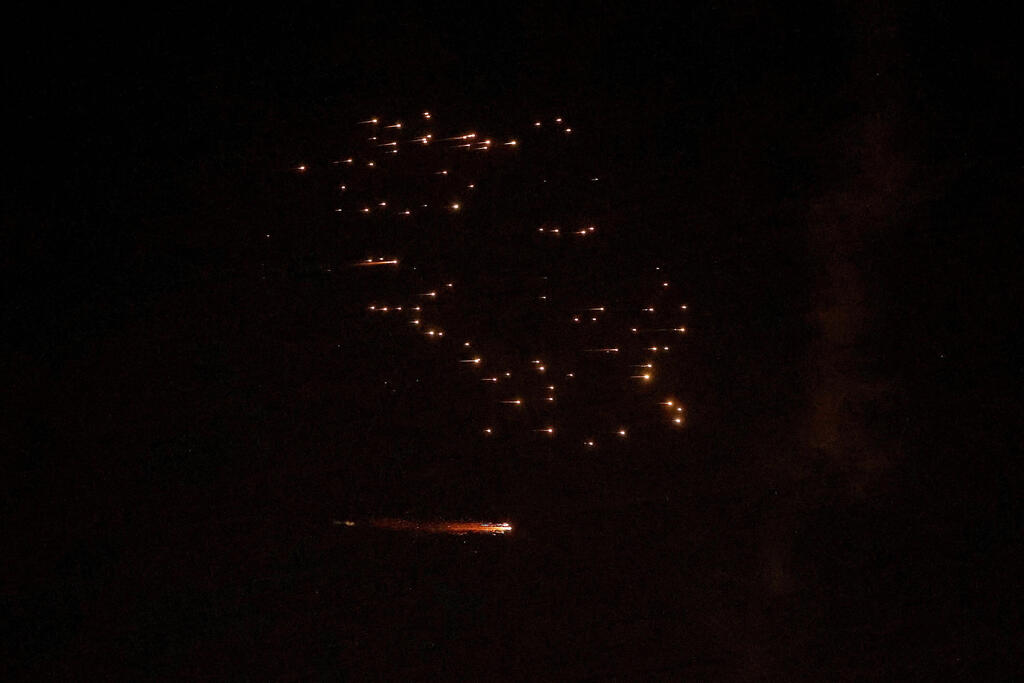
An Iranian missile with a cluster warhead
(Photo: JACK GUEZ / AFP)
Interception rates have also improved, with about 90% of missiles intercepted during the current operation, compared with roughly 80% in the earlier campaign, the military said.
Officials noted a growing use by Iran of cluster munitions. Air Force officers said such missiles are not always intercepted, partly because they can disperse in the atmosphere before interceptors reach them and because their submunitions, weighing between about 6 and 18 pounds, pose a relatively low risk if civilians follow Home Front Command instructions. However, the wide dispersal can trigger sirens over broad areas and challenge civilian resilience.
The military said maintaining air superiority remains the central and ongoing effort of the campaign. About 85% of Iran’s surface-to-air missile systems, as well as associated radar and detection components, have been destroyed so far, according to the IDF.
The operation’s primary targets have included Iran’s missile array, military industries and senior regime officials across the country. Officials declined to provide details on strikes related to Iran’s nuclear program or enriched uranium stockpiles, saying only that nuclear-related sites are included among the broader military target set.
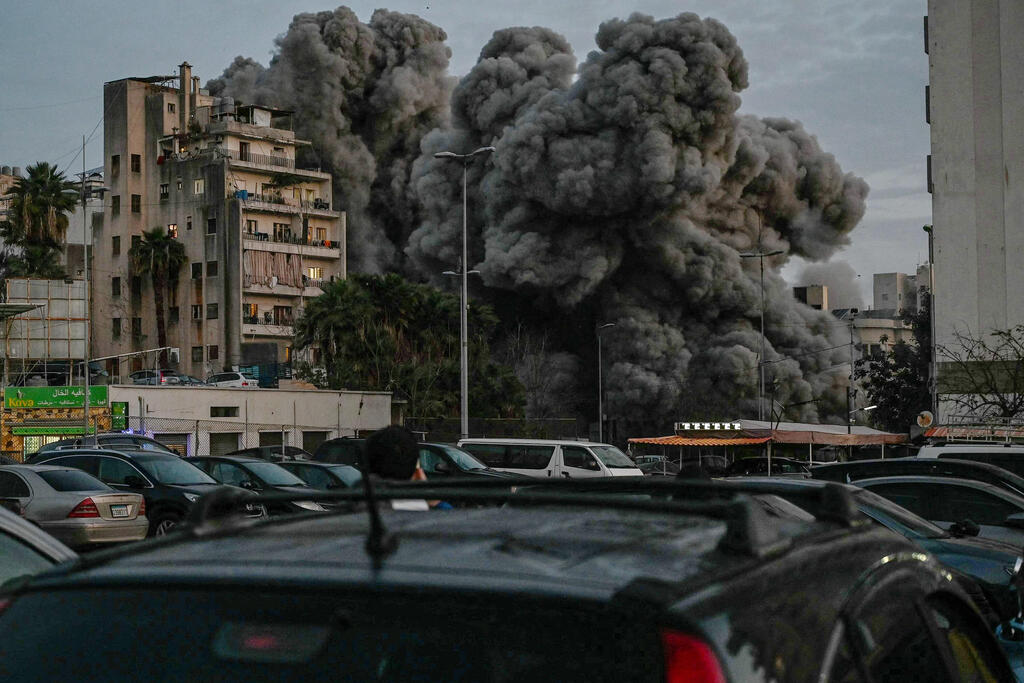
IDF strike in Beirut
(Photo: FADEL itani / AFP)
In the northern arena, the IDF said operations against Hezbollah in southern Lebanon and Beirut’s southern suburbs remain intense despite the focus on Iran. More than 2,200 munitions have been dropped on the Lebanese front, more than 220 time-sensitive targets have been struck and over 1,000 combat sorties have been carried out. Most activity has focused on Tyre, Sidon and Beirut.
Military officials said dividing Air Force resources between Iran and Lebanon has not reduced the pace of operations in the north, where hundreds of strikes continue to be carried out.