

After the latest Israel-Iran exchange, tensions in the Middle East rose again after U.S. President Donald Trump accused the Islamic Republic on Tuesday night of downing a U.S. Army Apache helicopter over the Strait of Hormuz and said “we must respond.” Shortly after midnight, U.S. Central Command announced it had launched “self-defense” strikes against Iran on Trump’s orders. “The mission is a proportional response to unjustified Iranian aggression,” it said.
Shortly after the strikes began, ABC News correspondent Jonathan Karl wrote on X that he had spoken with Trump as CENTCOM made its announcement, and said the president told him: “I think it's very important to respond. They shot down a helicopter, and we are responding as we speak. This is a response to what they did they did with our helicopter last night, and I believe the response should be very strong, very powerful, and that's what this one is.” Trump also referred to the negotiations, saying: “We also have a deal that was very good, and I believe it still will be.”
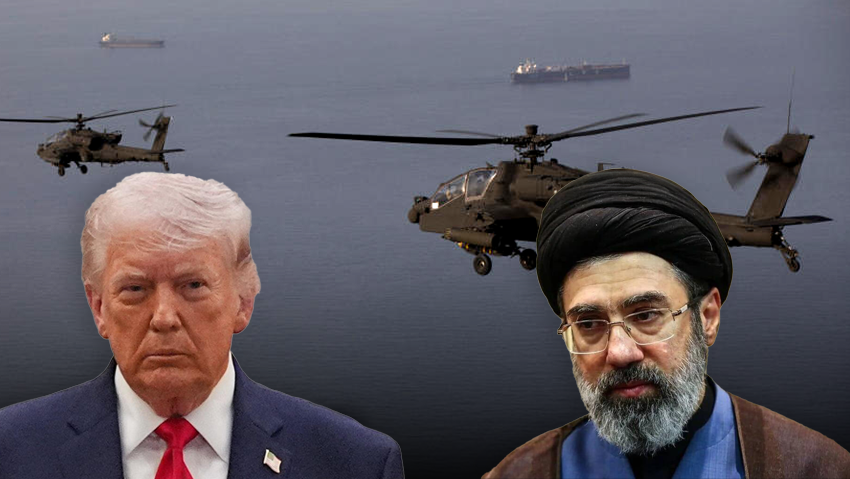
Iran reported explosions in eastern Hormozgan province, with blasts heard near the port of Sirik, on Qeshm Island and in the Bandar Abbas area.
Before the strike, Fox News reports suggested that “Trump is planning something big” in Iran. But after some time, Trump lowered the temperature, telling The Wall Street Journal that the helicopter downing was “not a big deal.” He stressed that “the pilot is fine,” adding: “The blockade has made Iran very miserable. We will continue it as long as necessary.”
Threats also came from Iran, with Iranian Foreign Minister Abbas Araghchi warning that foreign forces operating near Iranian territory face constant risks from human error or accidents, and saying the best solution is for them to leave. He added that Iran prefers diplomacy but is capable of responding in other ways.
An Iranian official referred to the downing of the U.S. Apache helicopter, telling Al Jazeera: “The helicopter was not flying over international waters. We will respond forcefully and immediately to any American attack against Iran.”
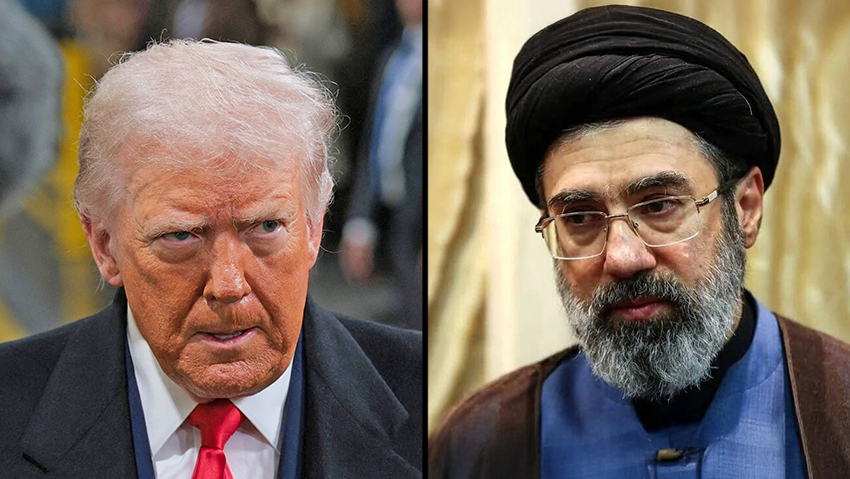
(Photo: Anna Moneymaker/GETTY IMAGES NORTH AMERICA/AFP)
At the same time, Iran’s Foreign Ministry told Al Jazeera that “the attack on the helicopter was not intentional,” an apparent Iranian signal that it wants to lower tensions. Iranian state media quoted a military source as saying that “no offensive aerial military operations were carried out in the Strait of Hormuz in the past 24 hours.” According to the source, “in the event of renewed hostile actions by the enemy under the pretext of the crash of the American Apache helicopter, there will be a decisive response.”
At the same time, far from the spotlight and the militant declarations, diplomatic efforts between Washington and Tehran are continuing in an attempt to reach an arrangement that would end the military confrontation. According to The New York Times, Trump’s aides have negotiated with Iran over four main nuclear-related components that U.S. officials say would halt Iran’s nuclear program for about 15 years.
Four points of discussion
The New York Times report, citing official and diplomatic sources, said negotiations over Iran’s nuclear program are focused on four main points:
Freezing uranium enrichment for an extended period: The United States initially demanded that Iran stop enriching uranium for at least 20 years. The Iranians responded with a willingness to halt enrichment for 10 years, and U.S. officials now believe Tehran will agree to a 15-year period.
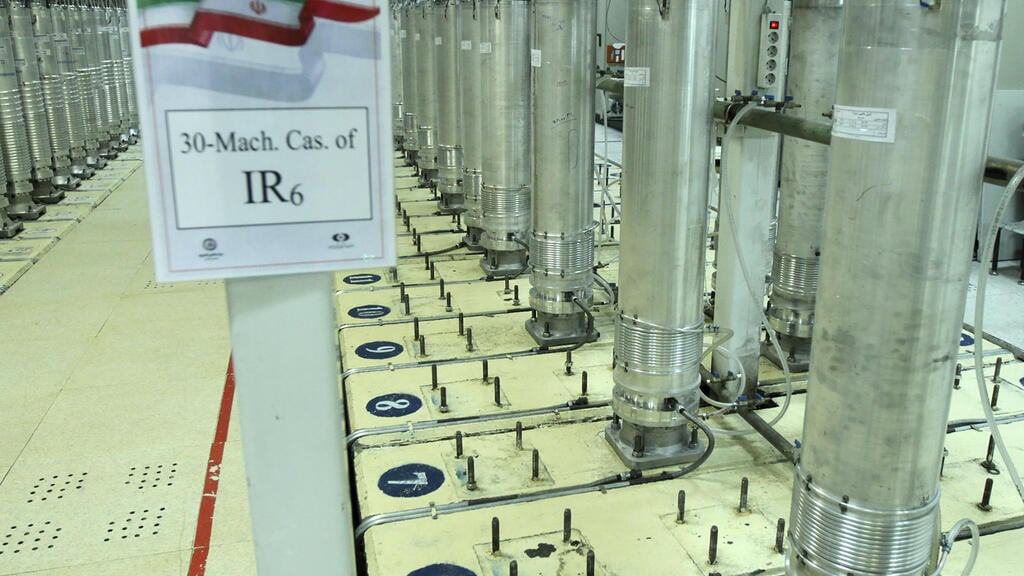
Nuclear facility in Iran; archive photo
(Photo: AP)
Handling Iran’s current stockpile of enriched uranium: Based on the emerging outline, the United States, together with the International Atomic Energy Agency, would work to dilute the enrichment level of Iran’s uranium, according to two people familiar with the negotiations. U.S. officials said the United States would serve as an observer in the process. The report noted that U.S. Secretary of State Marco Rubio has said several times in recent weeks that any agreement would have to include all 11 tons of enriched uranium held by Iran.
Dismantling nuclear sites: The United States is demanding that Iran dismantle its three main nuclear sites at Natanz, Fordow and Isfahan. The United States attacked all three in Operation Midnight Hammer nearly a year ago, damaging them. Iran, for its part, is demanding that one of the facilities remain open, among other reasons to prove it has not given up what it sees as its “right to enrich” uranium. For the United States, this is a problematic issue because Iran could use the facility that remains open to accelerate the enrichment process if it chooses, as it has done in the past.
Iran’s agreement to “snap inspections”: The United States wants international inspectors to be able to conduct “snap” inspections at any time and anywhere inside Iran. At this stage, it is unclear whether Tehran will agree. In practical terms, many of Iran’s nuclear sites are located inside military bases belonging to the Revolutionary Guards, which inspectors from other countries have not been allowed to visit.
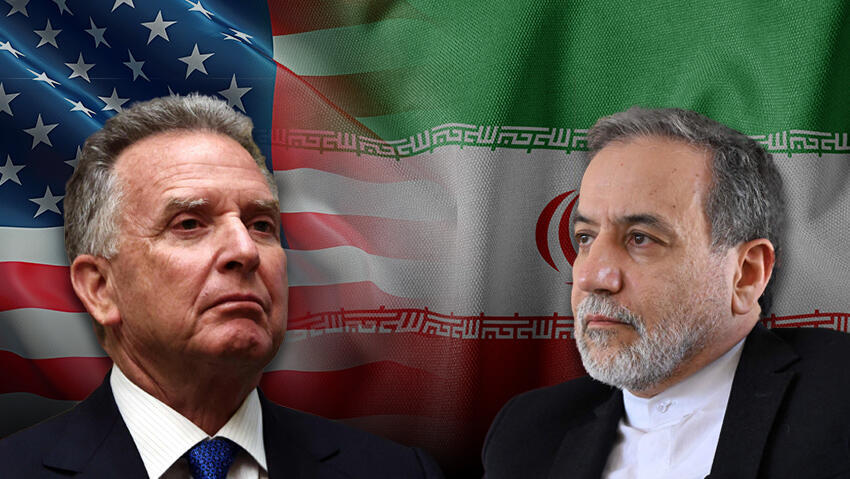
Araghchi and Witkoff
(Photo: REUTERS/Evelyn Hockstein/Pool, Amer HILABI AFP, CameraObscura82 shutterstock, Smolkov Vladislav shutterstock)
Mojtaba is not talking
According to The New York Times, one of the factors that has delayed understandings so far is Trump’s frustration over his inability to negotiate directly with Iran’s new supreme leader, Mojtaba Khamenei. According to two people involved in the mediation, Trump does not like Khamenei’s negotiating style, saying he has walked back understandings that had already been reached several times. That dynamic began after the first round of talks following the ceasefire in Pakistan in April. Last week, Trump said it would be “an honor” to meet Mojtaba, but senior Iranian official Mohsen Rezaei said in an interview with CNN over the weekend that “it will not happen.”
In such circumstances, the most effective channel of communication between the two sides is the one between Trump envoy Steve Witkoff and Iranian Foreign Minister Abbas Araghchi. According to the U.S. report, that channel proved itself this week when Witkoff used it to send messages to Iran not to escalate the exchange of fire with Israel. Officials said the channel helped lead to Iran’s announcement that it was halting its fire.
However, now that Trump has accused Iran of downing the military helicopter, it is unclear whether negotiations over the nuclear issue will resume from the point at which they stopped — which, according to the report, was “on the verge of an agreement.” In this context, U.S. media outlets have counted no fewer than 38 public statements by Trump saying the agreement was close or that Iran was desperate to reach a deal. The statements came in posts on his Truth Social platform, public appearances and conversations with reporters.
First published: 23:08, 06.09.26