

U.S. President Donald Trump is still hesitating, Prime Minister Benjamin Netanyahu says there is still much work to do, and Iran appears to be preparing for the possibility that the war will resume.
Classified U.S. intelligence assessments reported by The New York Times show that Iran has regained operational access to 30 of its 33 missile sites along the Strait of Hormuz. The findings suggest that Iran’s military remains far stronger than Trump has publicly claimed, or perhaps hoped.
US President Donald Trump
(Video: Fox News)


The assessments, dated earlier this month, present a sharply different picture from the administration’s repeated declarations that Iran’s military had been shattered by the joint U.S.-Israeli campaign. Despite the damage inflicted on missile sites, Iran has restored access to most of them to varying degrees, enough for the majority to be considered usable again.
People familiar with the assessments told The Times that Iranian forces can use mobile launchers inside those sites to move missiles to other locations. In some cases, they can launch missiles directly from pads inside the facilities. Only three of the 33 missile sites along the strait remain completely inaccessible, according to the assessments.
The Strait of Hormuz remains one of the most sensitive flashpoints in the conflict. Roughly a fifth of the world’s daily oil consumption passes through the narrow waterway, and American warships have maintained a near-continuous presence there as the U.S. enforces a blockade against Iran.
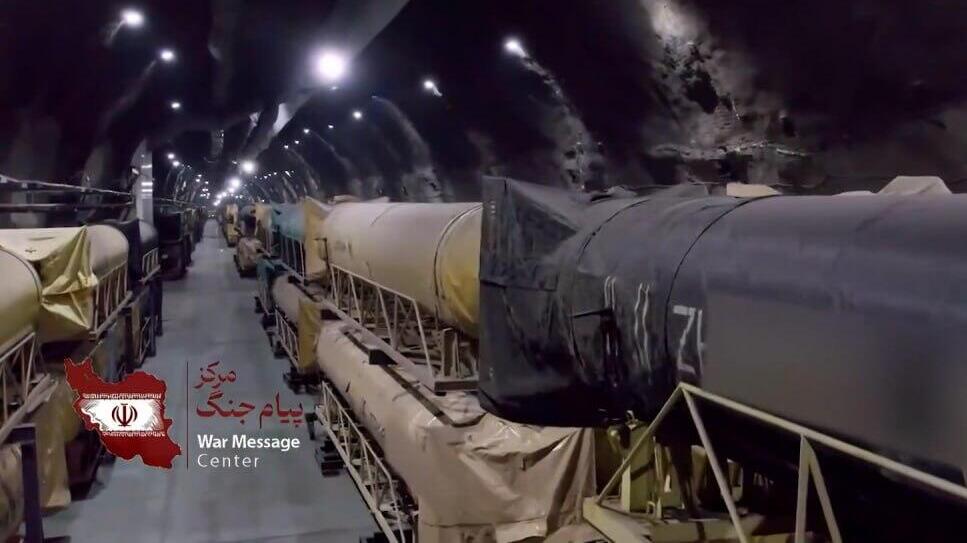
‘Iran still has much of its missile arsenal’
The intelligence assessments also indicate that Iran still has about 70% of its mobile missile launchers across the country and roughly 70% of its prewar missile stockpile.
That arsenal includes ballistic missiles capable of striking countries across the region, as well as a smaller supply of cruise missiles that can be used against shorter-range targets on land or at sea.
Military intelligence agencies also assessed, based on satellite imagery and other surveillance tools, that Iran has regained access to roughly 90% of its underground missile storage and launch facilities nationwide. Those facilities are now considered "partially or fully operational," according to people familiar with the assessments cited by The Times.
The findings directly challenge months of public assurances from Trump and Defense Secretary Pete Hegseth, who have said Iran’s military was "decimated" and no longer posed a serious threat.
On March 9, 10 days into the war, Trump told CBS News that Iran’s "missiles are down to a scatter" and that the country had "nothing left in a military sense." On April 8, Hegseth said Operation Epic Fury, the joint U.S.-Israel campaign launched on Feb. 28, had "decimated Iran’s military and rendered it combat-ineffective for years to come."
The new intelligence assessments were dated less than a month after that statement.
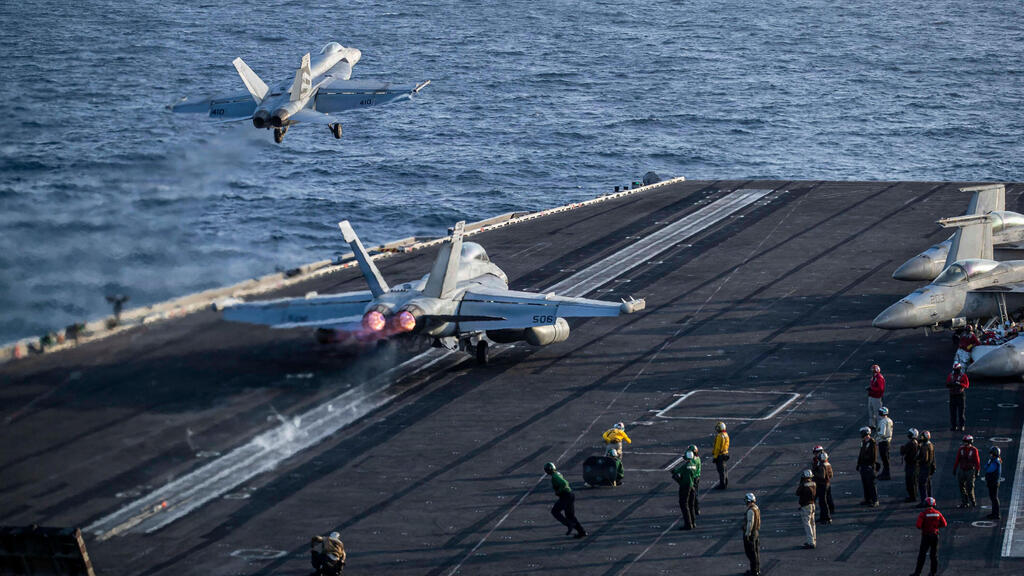
A shortage of munitions? The aircraft carrier Abraham Lincoln
(Photo: AFP/ US NAVY / NAVCENT PUBLIC AFFAIRS)
‘White House rejects the report’
The White House strongly rejected the implication that Iran had restored significant military capabilities.
Asked by The Times about the assessments, White House spokeswoman Olivia Wales repeated Trump’s claim that Iran’s military had been "crushed." She said Iran’s government knows its "current reality is not sustainable," and that anyone who thinks Tehran has reconstituted its military is either "delusional" or serving as a mouthpiece for Iran’s Islamic Revolutionary Guards Corps.
The Pentagon also attacked the report. Acting Pentagon press secretary Joel Valdez accused The New York Times and other outlets of acting as public relations agents for the Iranian regime in order to portray Operation Epic Fury as anything other than a historic accomplishment.
Trump, for his part, lashed out Tuesday on Truth Social at what he called the "fake news" media, saying it was "virtual treason" to suggest Iran was doing well militarily against the United States.
He claimed Iran had 159 naval vessels before the conflict and that all were now "at the bottom of the sea," adding that Iran had no navy, its air force had been erased, its technology had been destroyed, its leaders were gone and its economy was a disaster.

Defense Secretary Pete Hegseth
(Photo: AP/ Manuel Balce Ceneta)
‘The ammunition dilemma’
The intelligence also sharpens the dilemma facing Trump if the fragile ceasefire collapses and full-scale fighting resumes.
According to The Times, the U.S. military has already depleted stocks of several critical munitions, including Tomahawk cruise missiles, Patriot interceptor missiles and precision ground-based weapons. At the same time, the new intelligence indicates that Iran still retains significant military capability, especially around Hormuz.
If Trump orders new strikes against Iran’s missile network, the U.S. military would likely have to dig even deeper into munitions stockpiles that are already under pressure.
American officials have publicly denied that those stocks have fallen to dangerous levels. In testimony Tuesday before a House appropriations subcommittee, Gen. Dan Caine, chairman of the Joint Chiefs of Staff, said: "We have sufficient munitions for what we’re tasked to do right now."
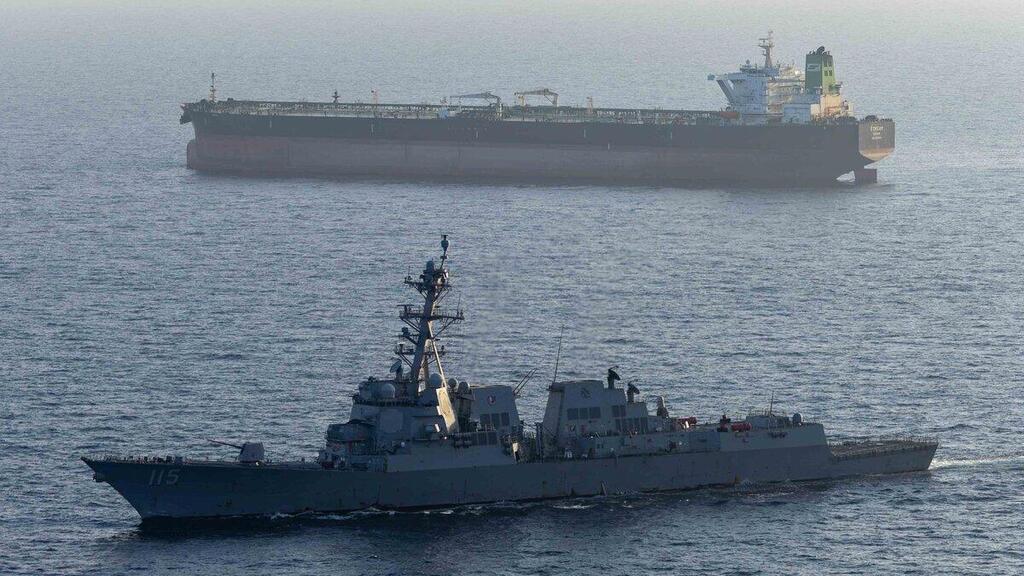
USS Rafael Peralta, U.S. Navy destroyer
(Photo: CENTCOM)
Hegseth has also dismissed concerns about depleted supplies, telling Congress that the issue has been exaggerated and that the Pentagon knows what it has and has plenty of what it needs.
But the scale of U.S. weapons use during the war has raised concerns among allies and military planners. The Times reported that the U.S. used roughly 1,100 long-range stealth cruise missiles, more than 1,000 Tomahawk missiles and more than 1,300 Patriot interceptors during the war.
Replacing those stockpiles could take years, not months, especially because the U.S. defense industry is already struggling to expand production of key components such as rocket motors.
‘War costs climb to $29 billion’
The cost of the war is also rising.
A senior Pentagon official told Congress on Tuesday that the cost of the campaign against Iran had reached about $29 billion. That was a sharp increase from an earlier estimate of $25 billion given by Hegseth two weeks earlier.
The official, Jay Hurst, said the increase reflected updated costs for repairs, replacement parts and broader operational activity.
Hegseth did not provide Congress with details of any additional budget requests the Pentagon may submit, and made clear that the administration does not intend to seek lawmakers’ approval to continue the war with Iran.
‘Ships are going dark in Hormuz’
The military picture is complicated further by the blockade around the Strait of Hormuz.
U.S. Central Command said Sunday that more than 20 American warships were enforcing the blockade against Iran. According to the Hebrew framing, CENTCOM has so far turned back 65 commercial vessels and neutralized four others.
The pressure is changing behavior at sea. More vessels are sailing without transmitting location data, a practice that can make them harder to track and more difficult to help if they get into trouble.
Ami Daniel of the maritime intelligence company Windward said there had been a "600% increase in dark activity."
Daniel said Windward had identified hundreds of Revolutionary Guard vessels patrolling the waters of the strait, which helps explain why commercial ships may be choosing not to broadcast their locations.
He also said traffic has increased in recent days, much of it involving Iranian tankers being used as floating oil storage as the blockade limits Tehran’s ability to move crude.
American officials believe Iran will feel growing pressure once it can no longer store additional oil or is forced to halt production from its wells. "I think the blockade is starting to work," Daniel said.
‘Iran is damaged, but not finished’
The U.S.-Israeli campaign caused major damage to Iran’s air defenses, military infrastructure and strategic sites. Many senior Iranian figures were killed, and the country’s economy has been battered by war and the near-total halt in oil tanker traffic through Hormuz.
But the intelligence assessments suggest that Iran’s military was not destroyed, and that its missile force remains a serious factor in any decision about restarting the war.
That gap between public messaging and classified assessments is now becoming a central problem for Washington. Trump has insisted that Iran was crushed, but the intelligence reported indicates that Tehran still has enough launchers, missiles and underground facilities to threaten American warships, oil tankers and U.S. allies across the region.
For Israel, the implications are immediate. Netanyahu has said more work remains, and he is expected to hold a limited security discussion as the future of the ceasefire and negotiations with Iran remains uncertain.
The picture emerging from Hormuz is therefore not one of a defeated Iran, but of a damaged country trying to preserve leverage: missile sites restored, tankers turning into floating storage, Revolutionary Guard vessels crowding the strait and commercial ships increasingly choosing to sail in the dark.