

U.S. intelligence assessments indicate Iran has regained access to most of its missile sites, launchers and underground facilities, undercutting the Trump administration’s public claims that Iran’s military was “decimated” in the U.S.-Israeli campaign, The New York Times reported.
The classified assessments, dated early this month, show Iran has restored operational access to 30 of its 33 missile sites along the Strait of Hormuz, the report said, citing people familiar with the findings. The narrow waterway is a critical route for oil tankers and U.S. warships.
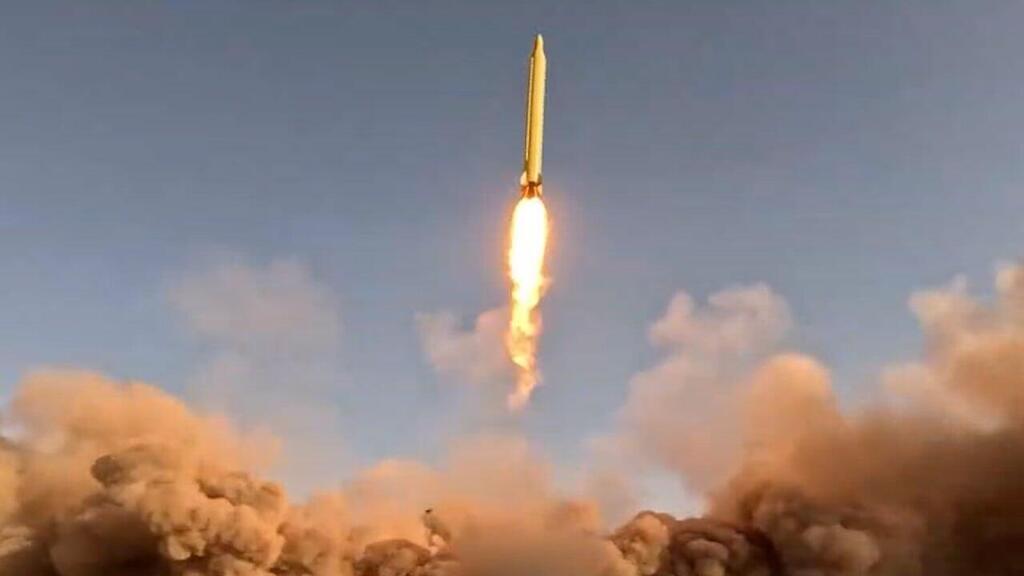
An Iranian missile launched at Israel
According to the report, Iran still has about 70% of its mobile missile launchers nationwide and roughly 70% of its prewar missile stockpile, including ballistic missiles capable of reaching targets across the region and a smaller supply of cruise missiles for shorter-range attacks on land or at sea.
U.S. military intelligence agencies also assessed that Iran has regained access to about 90% of its underground missile storage and launch facilities nationwide, which are now considered partially or fully operational, the Times reported.
The findings challenge repeated statements by President Donald Trump and Defense Secretary Pete Hegseth that the joint U.S.-Israel campaign had crushed Iran’s military. Trump said March 9 that Iran had “nothing left in a military sense,” while Hegseth said April 8 that the campaign had rendered Iran “combat-ineffective for years to come.”
The White House rejected the intelligence characterization. Spokeswoman Olivia Wales told the Times that Iran’s military had been “crushed” and said anyone claiming Iran has reconstituted its military is “delusional” or serving as a mouthpiece for the Islamic Revolutionary Guard Corps. The Pentagon also criticized the report, describing the operation as a historic success.
The assessments suggest U.S. planners may have overestimated the damage inflicted on Iranian missile infrastructure and underestimated Tehran’s ability to restore access to key sites. In many cases, U.S. forces sought to seal entrances to hardened facilities rather than destroy the entire sites, partly because of limited stocks of bunker-busting munitions, officials told the Times.
The report comes as a fragile cease-fire remains in place. Renewed fighting could pose difficult choices for Washington and Jerusalem, with Iran retaining significant missile capabilities near the Strait of Hormuz and across the country.
The Times reported that the U.S. military has already used large quantities of critical munitions, including Tomahawk cruise missiles, Patriot interceptor missiles and other precision weapons. Gen. Dan Caine, chairman of the Joint Chiefs of Staff, told a House appropriations subcommittee Tuesday that the military has “sufficient munitions” for its current missions.
For Israel, the assessments are significant because Iran’s surviving ballistic missile force remains capable of threatening Israeli territory and regional U.S. assets, even after the joint campaign damaged Iranian defenses, strategic sites and command structures, according to the report.