

With just 48 hours remaining before Americans head to the polls in the November 3 midterm elections, the United States is making final preparations for a vote widely seen as a referendum on President Donald Trump's performance. Republicans face the possibility of losing control of both houses of Congress, potentially complicating Trump's ability to advance his agenda during the final two years of his presidency. Trump is expected to participate in at least two Republican campaign rallies Sunday, hoping to mobilize conservative voters and prevent a "blue wave" that would hand Democrats majorities in the Senate and House of Representatives.
The urgency was evident at campaign rallies over the weekend. Trump appeared at an event in Daytona, Florida, where he told supporters that "these are the most important midterm elections ever." Meanwhile, Democrats enlisted former President Bill Clinton for a rally in Tupelo, Mississippi. Clinton delivered a similar message, invoking another former president, Republican George W. Bush. "My friend George Bush once said, 'Democracy corrects itself,'" Clinton told the crowd. "We're about to find out in Mississippi whether that's true."
Gallery
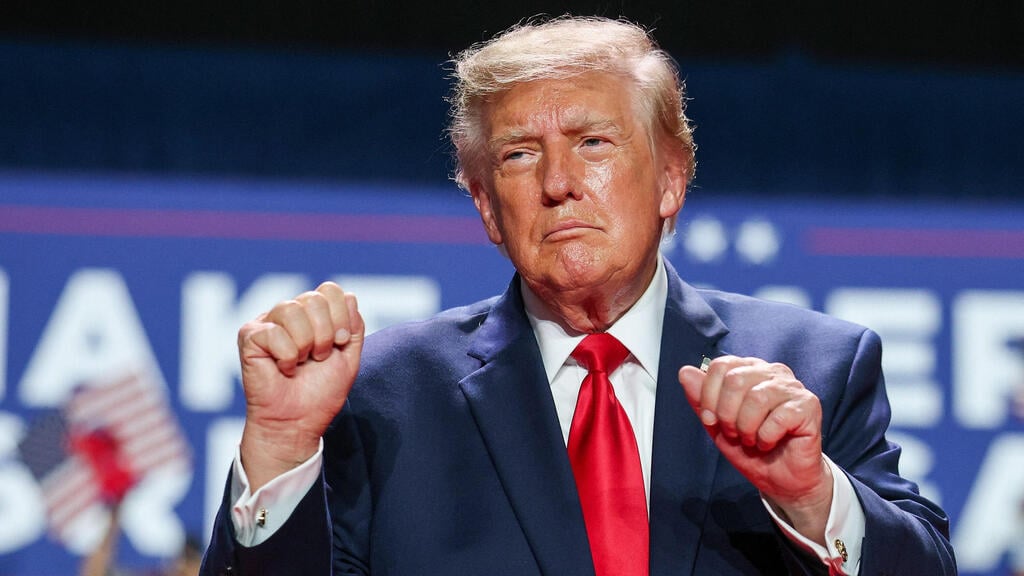
US President Donald Trump during a rally in Texas
(Photo: Win McNamee/Getty Images/AFP (Photo by WIN MCNAMEE / GETTY IMAGES NORTH AMERICA / AFP)
More than 52 million Americans have already cast ballots through early voting, over 10 million more than at the equivalent point in the 2022 midterm elections. Particularly sharp increases have been recorded in states with closely contested Senate races, including Iowa and Kansas, where early voting has surged by approximately 30%. Trump plans to visit both states Sunday. In Kansas, he is seeking to help Republican Sen. Roger Marshall, who trails Democratic challenger Adam Hamilton by 2.6 percentage points in the RealClearPolling average. In Iowa, Trump is campaigning for Republican Senate candidate Ashley Hinson, currently a member of the House of Representatives, who holds a narrow polling lead of about 0.5 percentage points over Democrat Josh Turek.
Among those who voted early was Pope Leo XIV, who made history over the weekend as the first sitting pope known to cast a ballot in a U.S. general election. Leo, the first American-born leader of the Catholic Church, submitted a mail-in ballot from the Vatican. The Vatican said the pontiff, born Robert Prevost in Chicago, believes in civic participation and has "exercised his right to vote as a United States citizen whenever he was eligible to do so," including during the more than 20 years he spent in Peru as a missionary priest and bishop.
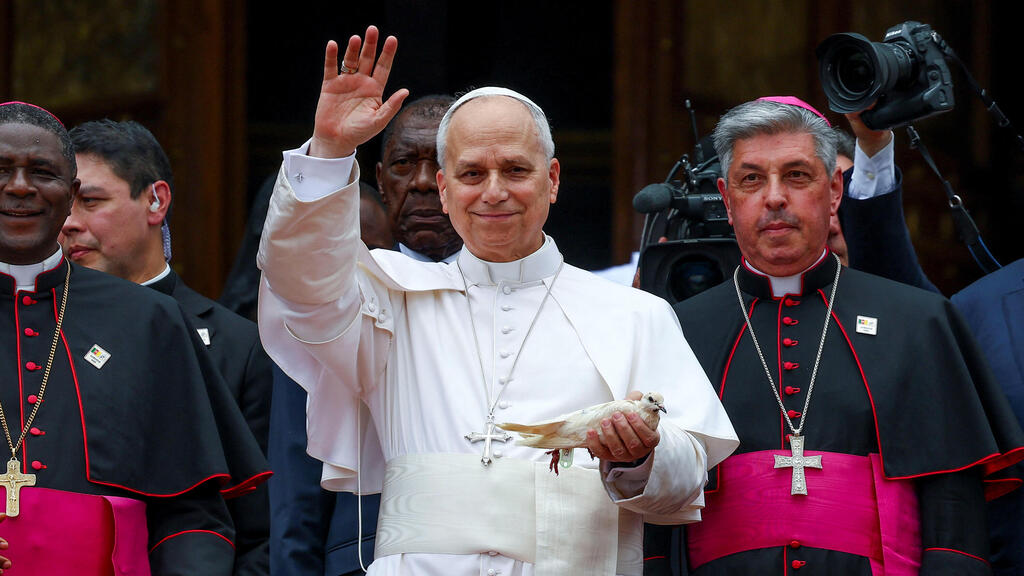
Pope Leo XIV
(Photo: REUTERS/Guglielmo Mangiapane)
As an American citizen living abroad, Leo was able to vote by absentee ballot, despite also serving as the sovereign of Vatican City. His choices remain private, but his participation attracted attention following a series of disagreements with Trump over the past year. The president has criticized the pope for repeatedly condemning the U.S.-Israeli war against Iran and calling for humane treatment of migrants amid the administration's aggressive immigration enforcement operations through Immigration and Customs Enforcement (ICE). Earlier this year, Trump called Leo "weak" and described him as captive to the radical left. The pope responded: "I am not afraid of the Trump administration, and I am not afraid to speak loudly about the message of the Gospel."
Trump's fight to hold the Senate: keeping at least 50 seats
Midterm elections are held halfway through a president's four-year term. Americans elect representatives to Congress as well as governors, state legislators, attorneys general and other officials. They are often regarded as a national judgment on the incumbent president, whose party has historically tended to lose ground in these contests. The focus is on Congress because a president whose party controls both chambers enjoys greater freedom to advance legislation. When the opposition controls Congress, the president can become a political "lame duck," facing substantial obstacles to implementing his agenda.
The Senate, Congress' upper chamber, has 100 seats, two for each of the 50 states. Senators serve six-year terms, with roughly one-third of the chamber up for election every two years. The Senate confirms presidential appointments, including Cabinet secretaries, ambassadors and federal judges, and has the power to convict and remove a president following impeachment. The House of Representatives has 435 members, all elected every two years. Seats are allocated according to population: California, for example, has 52 representatives, while Alaska has just one. Legislation approved by the House generally also requires Senate approval and the president's signature to become law.
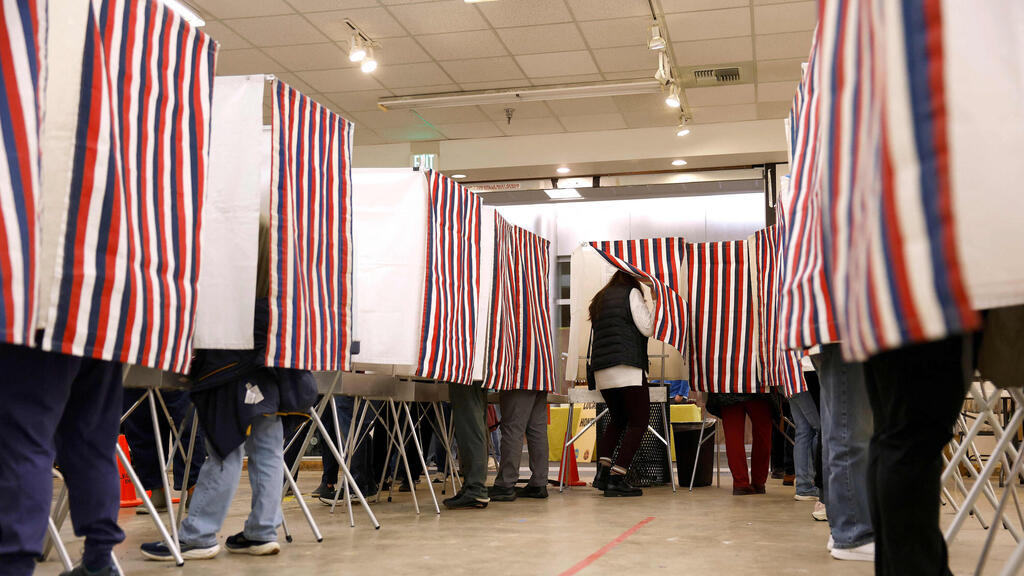
Voters cast early ballots in Alaska last week
(Photo: JUSTIN SULLIVAN / GETTY IMAGES NORTH AMERICA / AFP)
Republicans currently hold narrow control of both chambers. In the House, they have 218 seats compared with 214 Democrats, alongside one independent who generally leans Republican and two vacant seats. In the Senate, Republicans hold a 53-47 majority, meaning they can afford to lose three seats and still retain control through Vice President JD Vance's tie-breaking vote in a 50-50 chamber.
The party enters the elections under considerable pressure. Polling has indicated for months that Democrats could take control of the House, while the surge in gasoline prices following the war with Iran has intensified the contest for the Senate. Races have become unexpectedly competitive in traditionally conservative states, including Texas, Kansas and Alaska.
Michigan Democrats clash over Israel: ‘Take Israel out of the explanation’
One of the most closely watched Senate contests is in Michigan, where Democrat Abdul El-Sayed is facing Republican Mike Rogers. The race has become increasingly contentious following renewed divisions within the Democratic Party over Israel, particularly between El-Sayed and Rep. Haley Stevens, whom he narrowly defeated in the Democratic primary.
El-Sayed, a Muslim candidate from the party's progressive wing and an outspoken critic of Israel, defeated Stevens, a moderate Democrat with pro-Israel positions who received backing from the American Israel Public Affairs Committee (AIPAC), by less than one percentage point. Democratic leaders had hoped the two would put the bitter primary behind them and unite ahead of the general election. Instead, the dispute has intensified in the final days of the campaign.
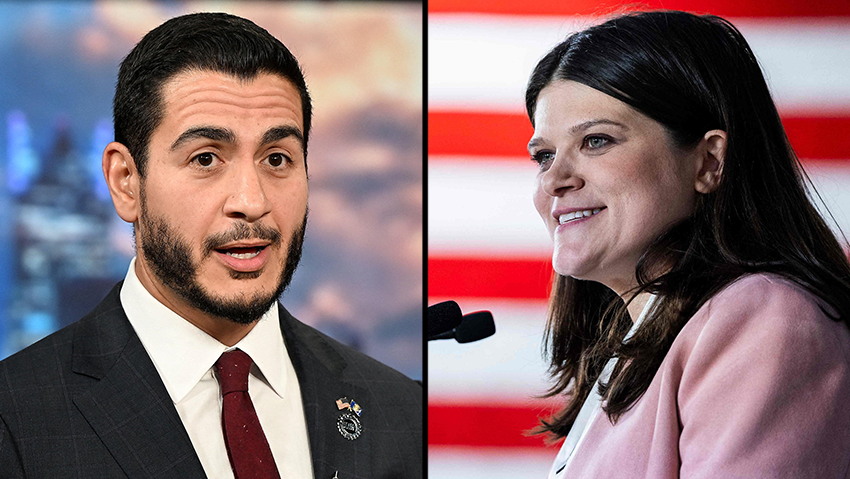
(Photo: Finn Gomez / GETTY IMAGES NORTH AMERICA / AFP, Robin Buckson/Pool via REUTERS)
Although Stevens declared after her primary defeat that she would vote for El-Sayed and encouraged her supporters to do the same, tensions resurfaced when her fiancé, Jason Turkish, announced that he intended to vote for Rogers. Hours later, Stevens appeared on CNN and reiterated that she would personally support El-Sayed, but urged his campaign to "stop the hate and condemn it" and rebuild its relationship with Jewish and Black voters.
For a brief period Thursday, it appeared that the two Democrats might reconcile. They even coordinated a joint appearance at a campaign event scheduled for Sunday at a Detroit church. But on Friday, Stevens published a lengthy social media statement criticizing El-Sayed and demanding that he condemn a controversial advertisement linking U.S. support for Israel to rising grocery prices. The ad, produced by an outside political action committee supporting El-Sayed, had already provoked considerable backlash.
The advertisement depicts an American couple shopping at a supermarket and struggling to decide which groceries they can afford. The woman asks her husband to put back a carton of eggs intended for their children. When he asks, "They don't like eggs anymore?" she replies: "No, they like eggs. But we have to set that $7 aside for killing Palestinians."
She goes on to claim that the United States provides Israel with billions of dollars to finance the war in Gaza, leaving American taxpayers to foot the bill. When her husband notes that Israelis also have universal health care, she replies: "Yeah, we're probably paying for that too." He then puts the bananas back on the shelf as well.
Stevens represents a district in suburban Detroit with a substantial Jewish community. In her statement, she criticized El-Sayed for repeatedly bringing Israel into discussions about domestic economic hardship. "Abdul promises to get money out of politics. He can start by getting Israel out of his explanation for everything Michiganders cannot afford," she wrote.
The controversial US campaign ad: ‘Eggs? We need that $7 to kill Palestinians’


Following her remarks, El-Sayed's campaign asked Stevens not to attend Sunday's church event. When reporters asked whether he wanted her to appear alongside him, El-Sayed avoided a direct answer, saying she "wants to talk about other things." Asked explicitly whether Stevens was "deliberately trying to sabotage" his campaign, he laughed and replied: "That's not a question for me."
El-Sayed has recently apologized for some of his past statements in an effort to unite Democratic voters. But in a statement Friday, he highlighted his primary victory over Stevens and suggested that she appeared "determined to relitigate the primary." He urged supporters to focus on defeating Rogers.
Rogers, who trails El-Sayed by approximately 3.5 percentage points in polling and has been courting Jewish Democratic voters, praised Stevens as "a courageous leader deserving the respect of every Michigan voter." He said she was "absolutely right" to demand that El-Sayed condemn the anti-Israel advertisement. "It is shameful and disappointing that his response to her comments makes clear he doesn't care about these concerns," Rogers wrote on X. He also said Stevens would be welcome at his campaign events.
Trump has meanwhile launched sharp personal attacks on El-Sayed. In statements criticizing the Democratic candidate, the president highlighted his Muslim identity, called him a "jihadist," accused him of siding with terrorists and even compared him with the terrorists responsible for the September 11 attacks.
Dan Sullivan versus Dan Sullivan: Alaska's unusual Senate controversy
Another controversy is intensifying in Alaska, where the Senate race has been overshadowed by the candidacy of Dan J. Sullivan, a former teacher and U.S. Forest Service employee with little name recognition or political experience. His entry into the race this summer immediately raised suspicions among Republicans because he shares a first and last name with the incumbent Republican senator, Dan S. Sullivan.
Republicans have accused the newcomer of running as a spoiler candidate intended to confuse voters and draw votes away from the incumbent, potentially helping Democratic candidate Mary Peltola win the seat. With recent polls showing Peltola ahead by approximately 1.2 percentage points, even a small shift in voting could become politically significant.
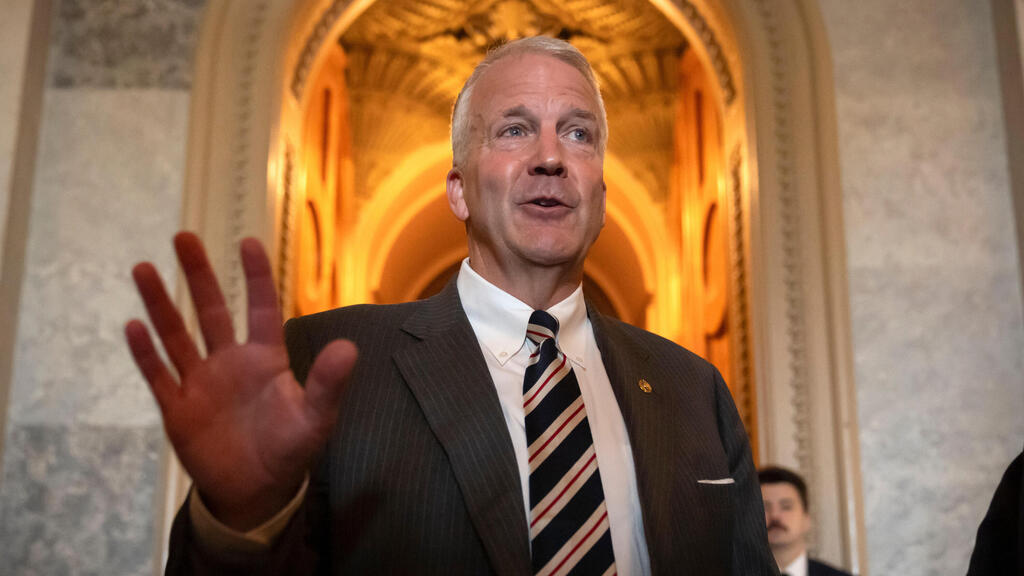
Dan S. Sullivan
(Photo: AP Photo/Mark Schiefelbein)
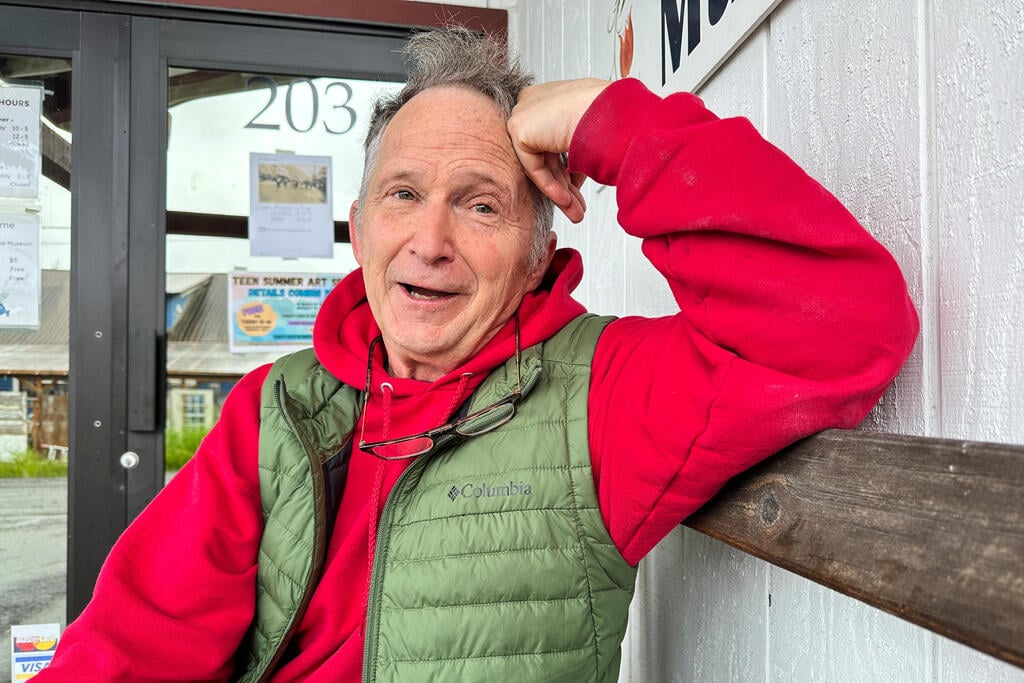
Dan J. Sullivan
(Photo: AP Photo/Becky Bohrer, File)
The controversy escalated over the weekend after Michael Heyman, the U.S. attorney for Alaska, confirmed that a federal criminal investigation into the candidacy of Dan J. Sullivan had been underway for several months. Heyman said additional law enforcement resources had been sent to Alaska following a New York Times report alleging that people associated with Peltola's campaign had been involved in recruiting the namesake candidate.
The Justice Department has issued subpoenas requiring witnesses to appear before a grand jury, as well as requests for documents and the preservation of records that could assist investigators. No criminal charges have been announced against those involved in the race.
Trump last week called for Peltola and her campaign officials to face criminal prosecution. U.S. Attorney General Todd Blanche also accused Democrats of "cheating," saying: "They're trying to take votes away from the incumbent senator, not by running a campaign and not by competing on the issues, but by putting up a person with the same name."
Alaska Gov. Mike Dunleavy, a Republican, ordered a separate state investigation. He said the New York Times report revealed "troubling new evidence" of an organized effort to deliberately confuse voters and divert their ballots. The state investigation is distinct from the federal criminal probe.
Peltola denied Thursday that she had any knowledge of an effort to recruit Dan J. Sullivan to confuse supporters of the Republican incumbent. She insisted that she had "no interest in misleading voters" and accused Republicans of using the controversy to distract from their own record.
"They can't win on their record, so they're trying to intimidate me into backing down," Peltola said. "This is just another distraction while they dodge accountability for the skyrocketing cost of living we're facing because of their tariffs and endless wars. It won't work."
Dan J. Sullivan has also denied for months that he entered the race at the request of Democrats and insists he has had no contact with Peltola's campaign.
With Americans preparing to vote Tuesday, the fight for control of Congress has become intertwined with disputes over Israel, accusations of electoral manipulation and unusually personal political confrontations. For Trump, the immediate objective is to hold enough Republican seats to preserve the Senate majority and avoid facing an opposition-controlled Congress for the remainder of his term.