


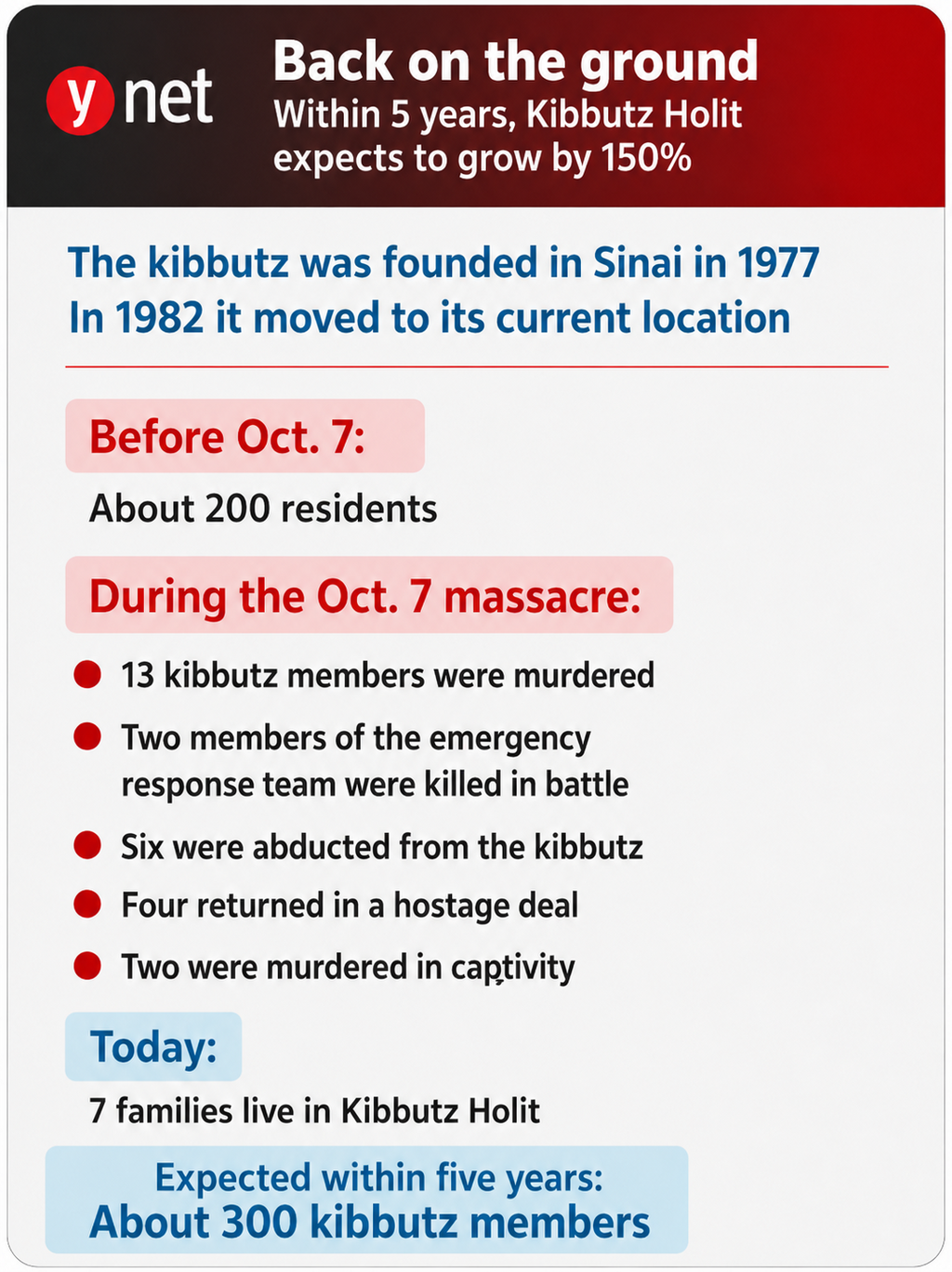
For anyone entering Kibbutz Holit, about 1.2 kilometers from the Gaza border, the community still looks like a construction site nearly three years after the October 7 massacre. Homes are being rebuilt, public buildings are under renovation and the scars of that day remain visible.
“When I heard they were starting to rebuild, I decided to return,” says Roni (“Ronileh”) Levy, a resident of the Kibbutz, whose house was badly damaged on October 7 and has stood largely deserted ever since. “I wanted to be home myself, to see, to supervise, to make sure things were being done properly.”
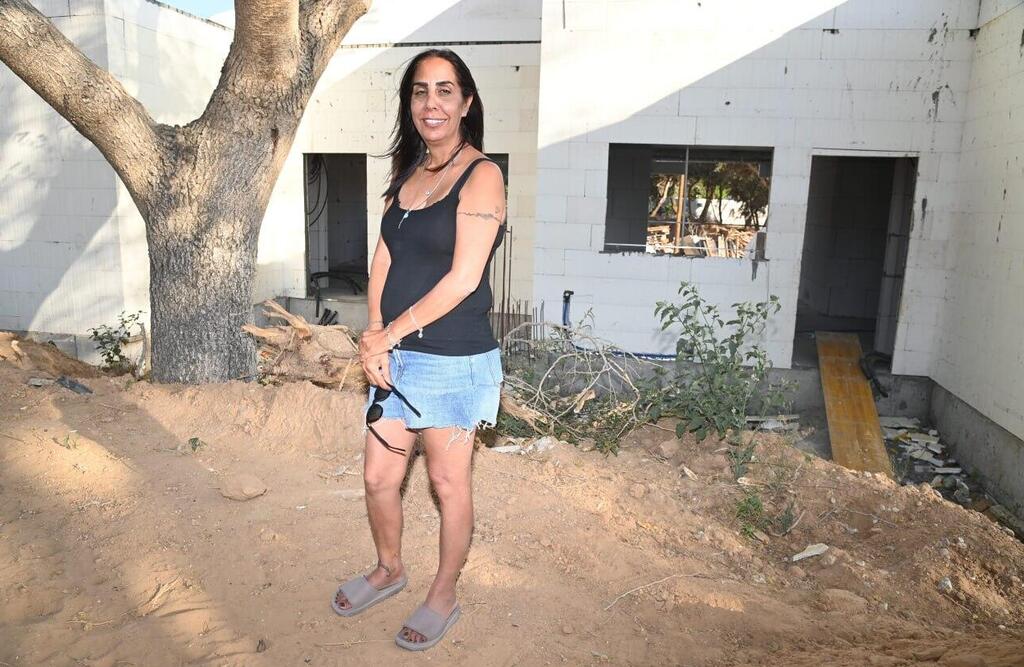
Her dog, Gurkhaam, also played a part, she said, as did the return of her sister to nearby Kibbutz Sufa. “But mainly, I simply wanted to stop being evacuated.”
The trauma of October 7 has not faded. Levy was alone at home when Hamas terrorists infiltrated the kibbutz. “On October 7, I woke up at 6:30 a.m. Slowly, I heard gunfire outside, close to the house. I understood that these shots were meant to kill. I ran to the safe room, locked it with the lock I had wisely installed years earlier and hid under the bed.”
At 7:16 a.m., she said, the terrorists entered her home. “They blew up my house. They broke and destroyed things, setting them on fire. At some point, they came close to the room. I could really hear everything. I sent my sisters a message: ‘I love you, goodbye.’ And suddenly, the terrorists left.”
Around 9 a.m., a neighbor managed to rescue her. Later that afternoon, she was evacuated by IDF forces. “When I left the kibbutz, I saw bodies lying on the road, burned cars and motorcycles. That was when I understood the scale of the disaster Holit had endured.”
After months of evacuation, Levy returned in January, while waiting for her new home to be built. “I always joke that I ruin people’s drama,” she said. “Everyone is looking for big stories of resilience, but I see things a little differently. I survived. I returned home. Joy wins.”
‘The home Michael built with his own hands’
Levy is not alone. Six other families returned with her to Kibbutz Holit before the official return, which is expected in August. For Tanya Reitzin, the widow of police officer Michael Reitzin, who died by suicide about a year and a half ago, returning to Holit also means facing immense personal pain.
Michael, an intelligence officer in the police, heard his friends and commanders fighting for their lives over the radio on October 7, she said. “In one of the hardest moments of our lives, he looked at me and said: ‘You have to let me go. I won’t be able to live with myself if I don’t get to them.’ He left the house, encountered terrorists, drew them away from the residential neighborhood and later joined the Shaldag team (special forces unit under the command of the Israeli Air Force) that reached the window of our home. For the rest of the time, he lay for long hours between the safe room and the window, ready to protect us at any cost.”
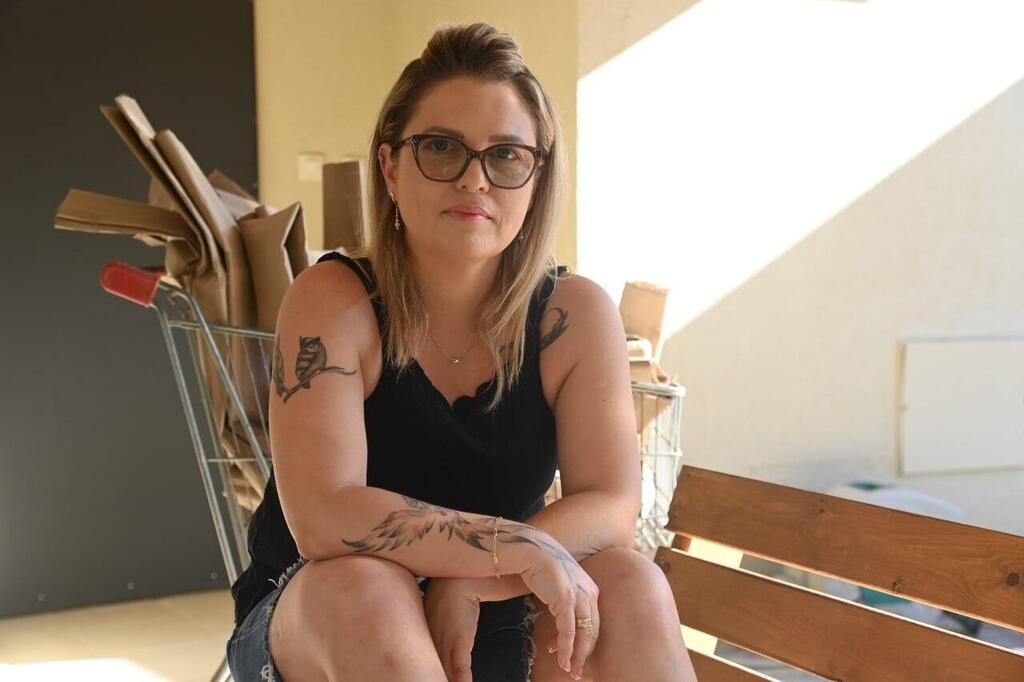
Tanya Reitzin. Her husband died by suicide: ‘The psychological wound only deepened’
(Photo: Herzl Yosef)
The family survived that day, but the emotional toll was devastating, Tanya said. “Michael returned to his police post the very next day. He kept working day and night, taking part in operations against terrorists, locating terror cells and commanding his people, while dealing with the loss of friends, commanders and subordinates,” she said.
“Outwardly, he remained the same strong, responsible and devoted person everyone knew, but inside, the psychological wound only deepened. On February 12, 2025, one year and four months after the massacre, Michael died by suicide in our home in Holit, part of which he had built with his own hands for us, the home where we raised our children, the home from which Michael made sure we got out alive.”
Still, several weeks ago, Tanya decided to return. “On June 9, 2026, after 976 days, I returned to Holit with my sons,” she said. “Many people asked me, ‘Why rush?’ ‘Why not wait a little longer until everything is ready?’ But for me, there was nothing to wait for. After everything we went through, after everything we lost and above all after almost three years of uncertainty, I knew that for us to look forward, to bring hope back into our lives, we needed to recover together in our home.”
For Eli Kabuli, who manages the kibbutz’s juicer factory, the question was never whether to return, only when. He came back to Holit in December 2025. “If they had allowed me, I would have returned much earlier, even within a week,” he said. “For me, there was never a question. This is my home. My late wife lived here, this house was built for her, and I don’t see myself anywhere else.”
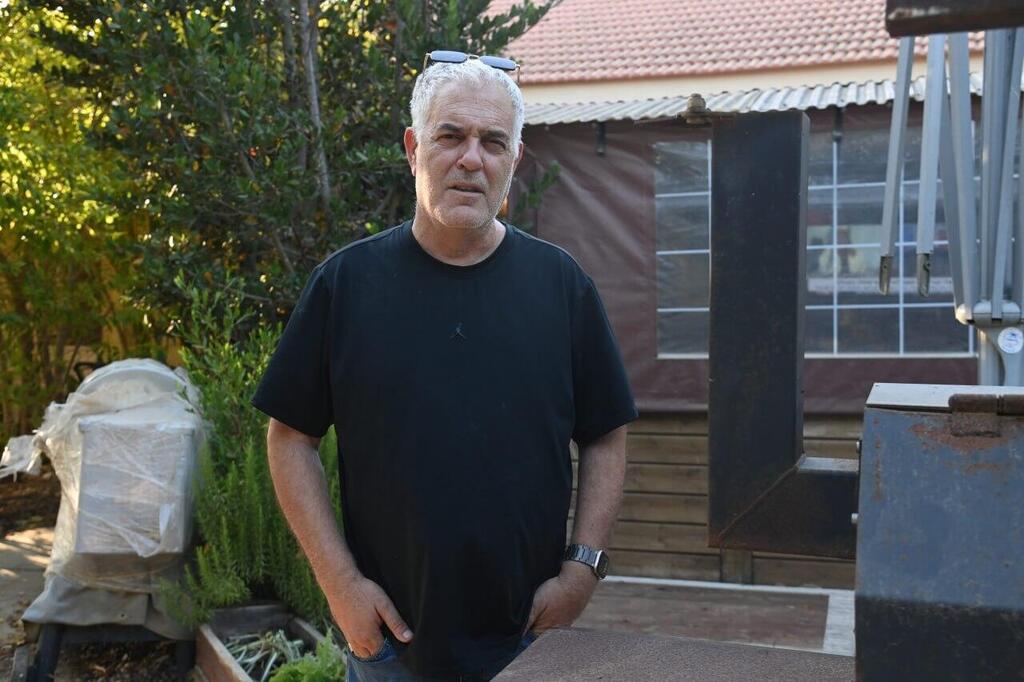
Eli Kabuli
(Photo: Herzl Yosef)
After the evacuation, Kabuli moved between Gvulot, central Israel, his sister’s home, Ein Gedi, Sdei Avraham and Revivim. At the same time, he continued managing the kibbutz’s juicer factory.
“Already at the end of 2023, we returned to partial work, and from the beginning of 2024, we returned to full activity,” he said. “I continued working with existing customers, especially a major client from Germany who decided to significantly increase his orders out of a desire to help the kibbutz and the business hold on.”
Not just recovery, but growth
Alongside the return of veteran residents, Holit is also absorbing new families who chose to join the kibbutz during the most complex period in its history. Among them are Jude and Dudu Turgeman, who were accepted as members about a month ago.
“We chose the kibbutz not simply as a place to live, but as a place to put down roots,” they said. “A place where our children can grow up with open space, community and mutual responsibility; a place that allows people to dream, create, fall and rise again. Even when life burns down what we have built, the kibbutz reminds us that a true home is not just walls, but people, land and the ability to begin again.”
As residents return, physical reconstruction is also moving ahead. The dining hall is being renewed, the dairy farm is expanding and being upgraded, cultural buildings are being renovated, and community centers, children’s spaces, a gym, a ceramics studio, a community garden and additional public buildings are being rebuilt.
All eyes are now on August, when, according to the kibbutz leadership, about half the community is expected to return after nearly three years of evacuation.
“Holit is not only a place to live; It is a home, a community and a way of life,” said Yoav Boukay, Holit's community manager. “We are deeply bound to this place, and it was clear to us that we would return, rebuild and continue to build and be built. We see the return to Holit as an inseparable part of the recovery of the entire Gaza border region, and of the entire country.”