

In the United States, analysts continued Wednesday to assess the implications of the Democrats' historic performance in the midterm elections, in which they scored stunning victories in several states considered safe Republican strongholds and seized control of both the House of Representatives and the Senate.
The "blue tsunami" will allow Democrats to sharply restrict President Donald Trump's actions over the next two years and better position themselves for the even more consequential 2028 presidential election. However, many commentators have emphasized that Americans voted for Democrats primarily as a protest against Trump and his policies, and that many voters still view the Democratic Party itself unfavorably.
Gallery

(Photos: Shutterstock, Chip Somodevilla/Getty Images North America/AFP, Salwan Georges/Getty Images/AFP, Brandon Bell/Getty Images North America/AFP, AP Photo/Mic Smith)
Midterm elections, held halfway through a sitting president's term, are almost always seen as a referendum on his presidency, and his party generally loses ground in Congress. But the Democrats' achievement Tuesday night was extraordinary, even by historical standards. Since World War II, only three previous midterm elections have seen a party flip both chambers of Congress: 1946, 1994 and 2006. The last such double victory came amid widespread frustration over the Iraq war. This time, the driving force was the war in Iran, particularly the surge in gasoline prices that followed and has placed a heavy burden on ordinary Americans.

The front page of the New York Post this morning mocks Trump following his crushing defeat, depicting him shielding himself from a 'blue tsunami'
(Photo: New York Post)
According to an exit poll conducted by The Associated Press, roughly two-thirds of voters said they felt "angry" or "frustrated" about the direction of the United States, while six in 10 said higher prices were a result of the president's policies, including his trade wars.
The survey found that 60% of voters disapproved of Trump's performance as president, approximately 70% wanted Congress to impose checks and balances on his power, and 60% believed he prioritized his personal interests over those of the country.
That frustration translated into punishment for Republican candidates, even though Trump himself was not on the ballot. He had urged voters to "imagine" that he was, hoping to energize the coalition that had delivered unexpected victories for him in previous elections, including his return to the White House in 2024. But according to the AP survey, that coalition had largely collapsed. Two years ago, Trump defeated Kamala Harris by a far more comfortable margin than expected, thanks in part to a surge in support among young, Black and Hispanic voters. This time, all three groups shifted toward Democratic candidates.
According to the survey, approximately 70% of voters aged 30 and younger supported the Democratic candidate in their House district Tuesday, compared with 2024, when the group was roughly evenly divided between Trump and Harris. About a quarter of Black men supported Trump two years ago, but only around 10% voted for the Republican candidate in their House district this time. Among Black voters overall, approximately 80% backed Harris in 2024, while about 90% supported Democratic congressional candidates Tuesday.
A similar pattern emerged among Hispanic voters, many of whom have grown angry over the Trump administration's mass deportation campaign. Although the administration promised to focus on undocumented immigrants with criminal records, the deportations have also affected members of working families. In 2024, approximately 40% of Hispanic voters backed Trump, a significant increase that proved crucial to his victory. This time, roughly 60% supported Democratic House candidates, while 70% said Trump's policies had harmed their financial situation.
The AP noted that these shifts could offer an early indication of what lies ahead in the 2028 presidential election, a race it said had effectively begun. In its analysis, the news agency suggested that the results could mark the beginning of the decline of Trump's political era. It described the Republican defeat as a clear rejection of the president, who had demanded loyalty throughout his party while burdening Republican candidates with his low approval ratings, the unpopular war in Iran and the rising cost of living. With roughly two years remaining in his final term, Trump's political influence appeared to have reached its lowest point yet, according to the AP.
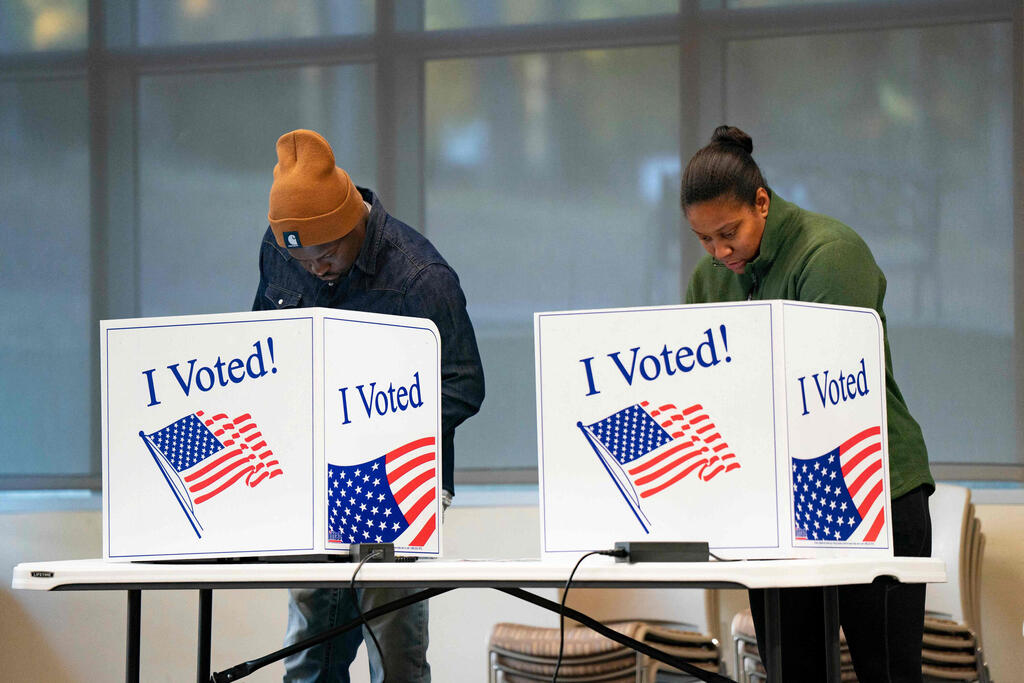
Voters at a polling station in South Carolina, where Democrats also scored a stunning upset
(Photo: Allison Joyce/Getty Images North America/AFP)
Looking ahead to the election in two years, Democrats will be able to use their control of Congress not only to try to obstruct Trump's agenda at every turn, potentially turning him into a "lame duck" president, but also to launch investigations into the president and his associates over allegations of corruption and unethical conduct during the past two years. Trump would, however, retain broad presidential powers, particularly over Iran and national security policy.
Such investigations could eventually lead to impeachment proceedings against Trump or senior administration officials, including Defense Secretary Pete Hegseth, who has long been a Democratic target. The prospect of an actual removal from office is considered extremely remote, however, because it would require a two-thirds majority in the Senate.
Nevertheless, the investigations could embarrass the president, who has already signaled an intention to grant pardons to associates, including Elon Musk, while raising the Democrats' profile ahead of the presidential election. Rep. Robert Garcia, the ranking Democrat on the House Oversight Committee, who is now expected to become its chairman, hinted at the investigations Wednesday morning with a brief message on X: "Lawyer up." He offered no further details, but the message was clearly directed at Trump and those close to him.
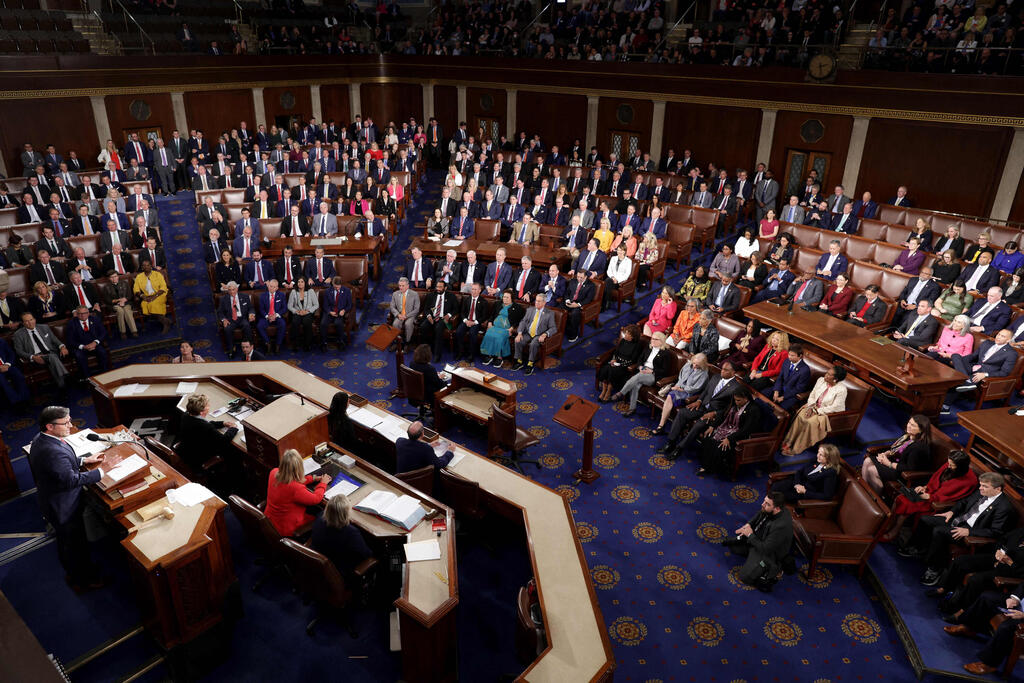
The House of Representatives chamber in Washington
(Photo: Alex Wong/Getty Images North America/AFP)
Democrats are now celebrating extraordinary victories in conservative strongholds, including several races that had not been considered competitive at all. In the House of Representatives, where Democrats held 214 seats and Republicans 218 in the outgoing Congress, exactly the number needed for a majority, Democrats managed to flip at least 27 Republican-held seats. They are now on course for a commanding majority of dozens of seats in the lower chamber. According to The New York Times, they could ultimately secure 257 seats, a figure not seen since Barack Obama's victory in 2008. The new House speaker will be Hakeem Jeffries, the first Black person to hold the position.
In the Senate, only six races had been considered closely contested before the election, with no clear favorite. But instead of a slow, nerve-racking count, five of those races had already fallen comfortably into Democratic hands by Wednesday morning.
All were states previously regarded as safe Republican territory: Ohio, where Trump won by 11 percentage points two years ago; Texas, which had not sent a Democrat to the Senate in 38 years; Kansas, which had not done so in 94 years; Iowa, where Trump won by 13 percentage points in 2024; and Maine, where veteran Republican Susan Collins had held her seat for 29 years and previously defied pollsters, but this time was swept away by the "blue tsunami." Only in Alaska had a winner yet to be declared, with counting still underway.
Democrats also flipped North Carolina, as polls had predicted, but a particularly surprising upset occurred in neighboring South Carolina, a staunchly conservative state where Darline Graham, sister of the late Sen. Lindsey Graham, was defeated. She had been widely regarded as an inexperienced and weak candidate. Trump had personally backed her candidacy as a tribute to her brother, a close political ally. The president had also championed Ken Paxton, who lost the Senate race in Texas. Paxton is a loyal Trump ally but was also considered a deeply problematic candidate because of corruption scandals and extramarital affairs.

James Talarico, winner of the Texas Senate race; the state had not seen such an upset in 38 years
(Photo: Brandon Bell/Getty Images North America/AFP)
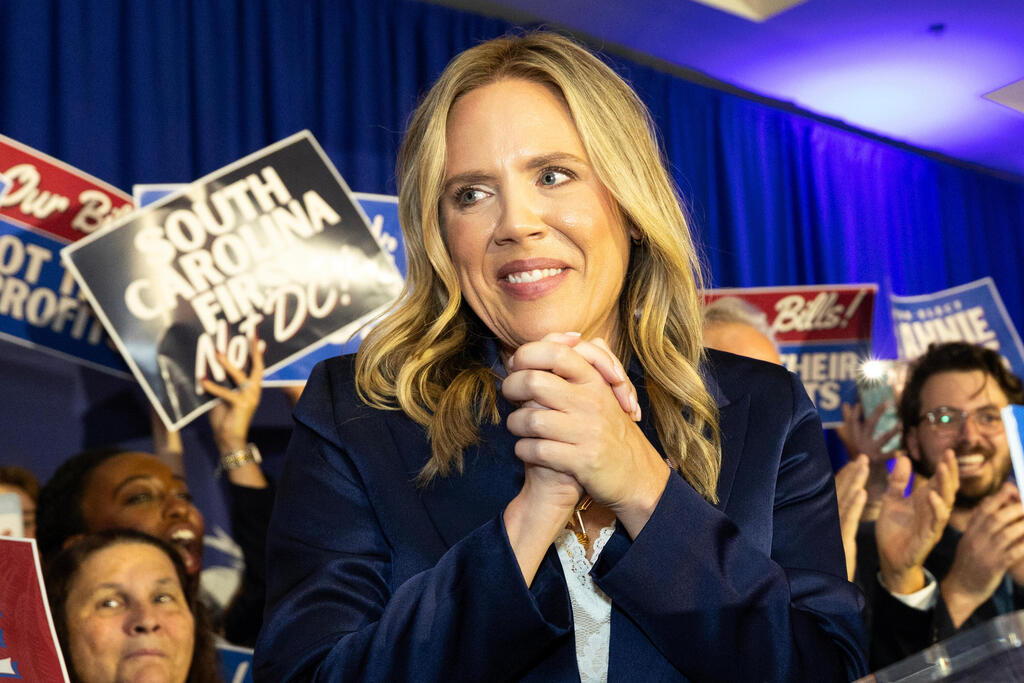
Pediatrician Annie Andrews, who pulled off a stunning victory over Lindsey Graham's sister in South Carolina
(Photo: AP Photo/Mic Smith)

Josh Turek, a former Paralympic basketball champion who scored a Democratic upset in Iowa
(Photo: Kamil Krzaczynski / AFP)
In an interview Wednesday morning with Fox News, Trump expressed no regret over his efforts to oust incumbent Republican Sen. John Cornyn in the Texas primary, clearing the way for Paxton to become the nominee with the president's backing. Cornyn was considered far more popular among the broader electorate, and many believed he might have been able to stop young Democratic candidate James Talarico, who ultimately defeated Paxton by a massive 12 percentage points, with 93% of the vote counted.
Trump said he had never liked Cornyn, whom he regarded as disloyal. He accused the senator of failing to support him when doing so was politically unpopular, only to become excessively flattering once backing Trump became fashionable. Recalling what he saw as Cornyn's opportunistic behavior, Trump said he had felt unable to endorse him. He was apparently referring to the period following the Capitol riot, when Cornyn sharply criticized Trump for inciting supporters who stormed Congress in an attempt to prevent Joe Biden's election victory.
It should be emphasized, however, that it is far from clear whether Cornyn himself could have withstood the "blue tsunami" that swept across the country. In Texas, until now the largest conservative stronghold in the United States, Democrats achieved a triple upset. In the governor's race, longtime Republican Gov. Greg Abbott, who had held office since 2015 and, unlike Paxton, had been leading in the polls, was defeated by Democrat Gina Hinojosa. She will be the state's first Democratic governor since 1994, when George W. Bush, who later became U.S. president, defeated Democratic Gov. Ann Richards.
Democrat Nathan Johnson also won the race for Texas attorney general, a position previously held by Paxton.
In his victory speech Wednesday morning, Senator-elect Talarico described his achievement as a victory of the underdog over a powerful opponent, comparing it to the biblical story of David and Goliath. His remarks came against the backdrop of enormous sums poured into Paxton's campaign by Republican donors, led by the world's richest man, Elon Musk.
"We just took back Texas. We just proved that all the money in the world is no match for the people of Texas," Talarico declared.
But if Democrats hope Tuesday night's dramatic achievement signals an easy victory in 2028, that is far from certain. According to the AP survey, the party's image remains deeply unfavorable. Roughly half of all respondents said they viewed the Democratic Party "very" or "somewhat" negatively. For the Republican Party, that figure stood at 60%.
The AP noted that these findings leave unresolved the struggle that has intensified over the past year between the Democratic Party's two main factions: the progressive left, which also embraces strongly anti-Israel positions, and the more moderate establishment wing.
Both camps will now scrutinize the results in an attempt to argue that the victories vindicate their preferred direction for the party. But candidates from both factions achieved major successes thanks to the "blue tsunami," which was directed primarily against Trump.
On the moderate side, prominent figures such as Pennsylvania Gov. Josh Shapiro and Maryland Gov. Wes Moore won reelection, as did Georgia Sen. Jon Ossoff. All three are potential presidential candidates in 2028.
Ossoff is considered one of the leading contenders, and the prospect of his entering the race has only strengthened following another double Democratic victory in Georgia. Keisha Lance Bottoms was elected governor, becoming the first Black woman ever elected governor of a U.S. state. Governors have the authority to appoint replacements for senators who vacate their seats, and Bottoms' victory would allow Ossoff to leave the Senate to pursue a presidential bid without fearing that a Republican would be appointed in his place.
Progressives also recorded significant victories Tuesday night, with anti-Israel candidates winning several races, most notably Abdul El-Sayed, who captured a Senate seat in Michigan. The son of Egyptian immigrants, El-Sayed will make history as the first Muslim ever to serve in the U.S. Senate.
His victory came despite a major controversy over his anti-Israel positions that caused an extraordinary rift within the Democratic Party just days before the election. Rep. Haley Stevens, whom El-Sayed defeated in the Democratic primary, announced that she would support Republican candidate Mike Rogers because El-Sayed had refused to explicitly condemn a campaign blaming Israel for high food prices, a campaign many viewed as antisemitic.
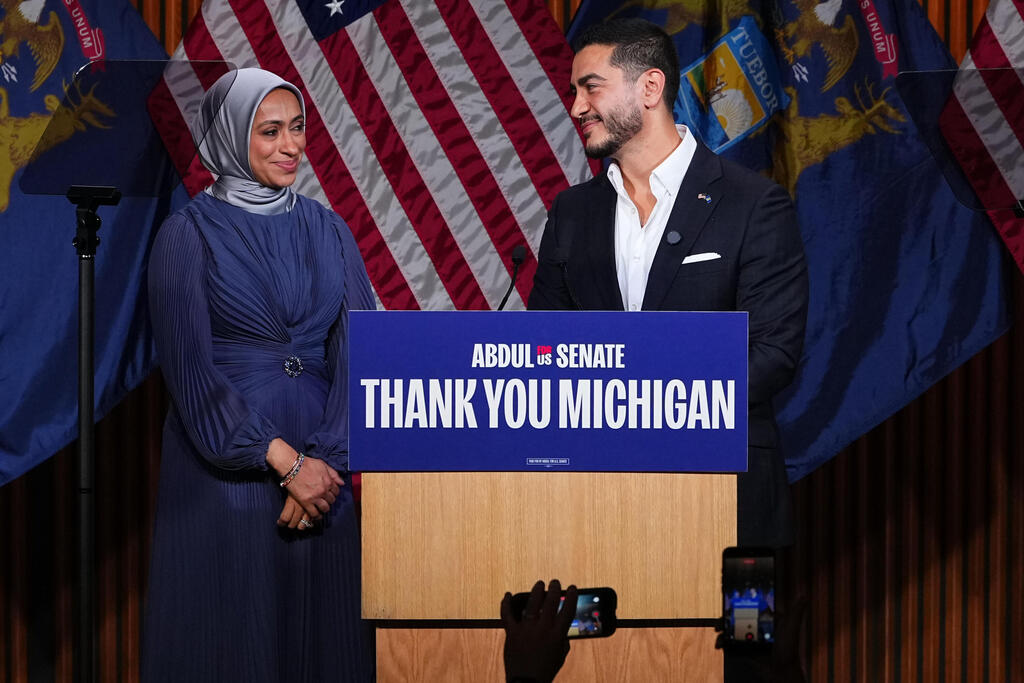
Abdul El-Sayed with his wife during his victory speech this morning; he also took aim at Israel
(Photo: AP Photo/Julia Demaree Nikhinson)
El-Sayed also overcame numerous Republican attacks portraying him as a serious threat to national security because of alleged ties to the Muslim Brotherhood, which he denied. Trump repeatedly branded him a "jihadist."
In his victory speech Wednesday morning, El-Sayed accused his opponents of focusing on his name and religious identity rather than the economic struggles facing Americans. He argued that neither his name nor his faith had anything to do with voters' inability to afford gasoline.
He also renewed his criticism of Israel, demanding an end to U.S. military assistance, which Trump had already announced Tuesday would be halted next year amid pressure from the left. El-Sayed accused critics of unfairly portraying as hateful those who believe Palestinian children should be able to grow up in their ancestral homeland without being killed with American taxpayer money. He argued that supporting equal rights to peace, dignity and self-determination was an expression of love rather than hatred, and called for Michigan residents' tax dollars to be invested at home instead of funding Israel.
Anti-Israel voices are expected to grow stronger in the next Congress, which will be sworn in on January 3. But it remains unclear whether El-Sayed's victory was driven by his position on Israel or whether he, too, benefited from the broader Democratic wave, particularly since his campaign focused heavily on the cost of living.
Either way, El-Sayed's victory in a swing state such as Michigan, which Trump won by a narrow margin two years ago, is being viewed as a significant milestone for the progressive movement. Its supporters see the result as proof that their candidates can appeal to the broader electorate beyond liberal strongholds such as New York and California.

Democratic supporters in Atlanta on election night; the battle over the party's future will continue
(Photo: Erik S. Lesser/AFP)
The question of whether Americans would be willing to elect a president from the far left in 2028, however, remains unanswered. CNN commentator Alyssa Farah Griffin addressed that issue Wednesday morning, arguing that Republicans had drawn the wrong conclusions from the 2024 election. Rather than focusing on the cost of living and taking a measured approach to immigration enforcement, she said, Trump and his party had adopted excessively aggressive positions on nearly every issue. She warned Democrats against making the same mistake, emphasizing that voters had rejected Trump's failures and excesses rather than endorsed a radical left-wing agenda.
For Republicans, the crushing defeat, which one party official characterized as a devastating setback across the entire electoral map, will require serious soul-searching. A Republican strategist told Politico Tuesday night that the loss could ultimately provide the painful corrective the party needs. According to the strategist, the results could help push out ineffective figures and poorly chosen candidates while reminding Republicans of the dangers of complacency, poor judgment and losing touch with their voters.
But with Trump still at the helm, and already deflecting responsibility for the defeat by arguing that Republicans lost because he himself was not on the ballot, it remains unclear whether the party is capable of learning those lessons.